




Cristiano Ronaldo: The Weight of Greatness, the Dream of Portugal, and the End of a World Cup Journey
 Editor's Desk
9 minutes read
Editor's Desk
9 minutes read
There are footballers who become stars. There are legends who become icons. And then there are those rare individuals whose careers transcend the boundaries of sport and become part of human history. Cristiano Ronaldo belongs to that final category.
For more than two decades, Ronaldo has represented far more than goals, trophies, or records. To millions around the world, he symbolizes ambition, resilience, discipline, and the belief that extraordinary success can be achieved through relentless effort. Admirers see him as the embodiment of perseverance; critics see him as intensely driven, sometimes polarizing. Both perspectives agree on one thing: few athletes have influenced football as profoundly as he has.
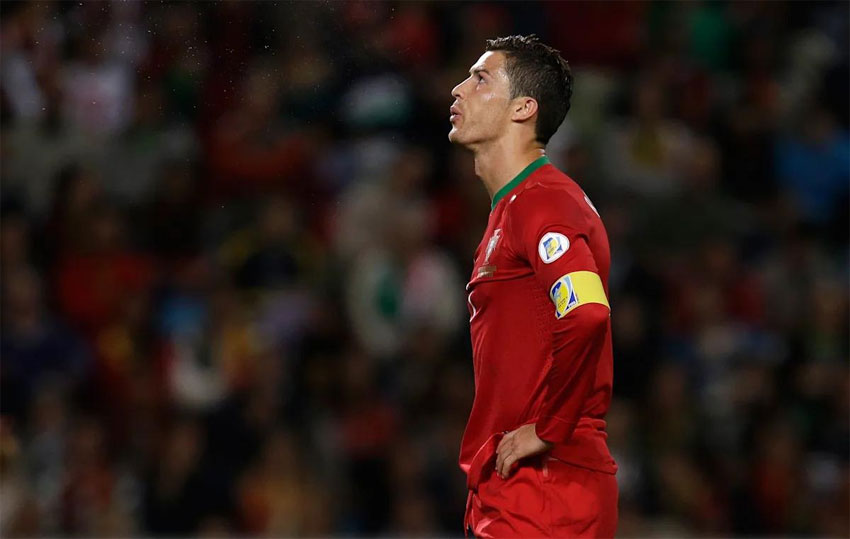
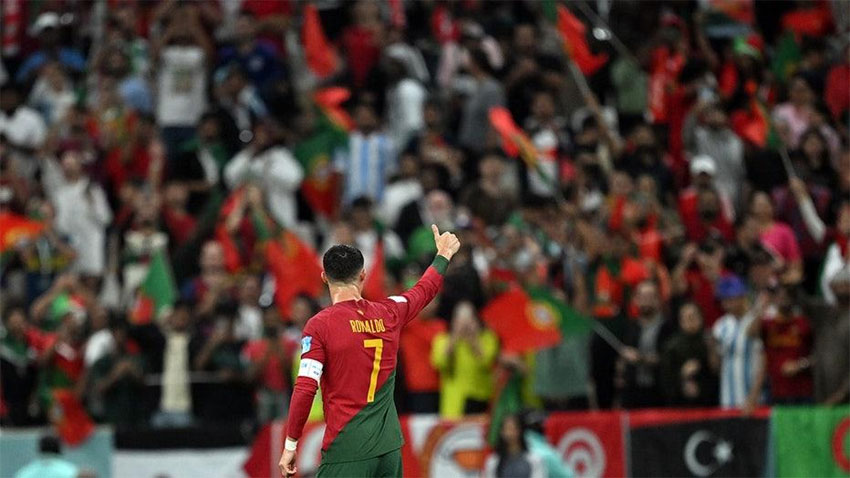
When the final whistle blew against Morocco in the 2022 FIFA World Cup quarter-final, Ronaldo walked off the field in tears. Those tears resonated far beyond the stadium. They represented the end of one of football’s most enduring dreams: lifting the FIFA World Cup trophy for Portugal.
From a Small Island to the Summit of Football
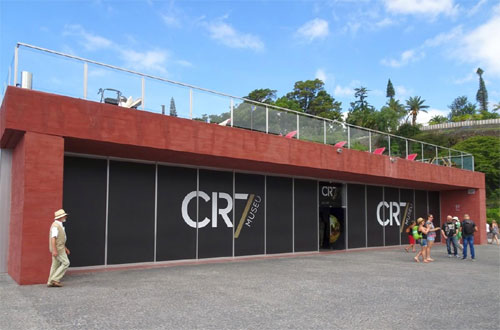 Cristiano Ronaldo dos Santos Aveiro was born on February 5, 1985, in Funchal, Madeira, a small Portuguese island in the Atlantic Ocean. His upbringing was far from privileged.
His father worked as a municipal gardener and kit man for a local football club, while his mother took on multiple jobs to support the family. Financial hardship was a constant reality. Ronaldo has spoken openly about growing up without many comforts and about leaving home at just 12 years old to join Sporting CP’s academy in Lisbon.
For a young boy, the move meant loneliness, homesickness, and enormous pressure. At one point, he was diagnosed with a heart condition that required surgery. Rather than derailing his dream, it became another obstacle he overcame.
Those early years shaped the mentality that would define his career. Ronaldo was never considered the most naturally gifted footballer of his generation. Instead, he built his reputation on relentless training, obsessive attention to fitness, and an unwavering belief that improvement never ends.
Becoming a Global Superstar
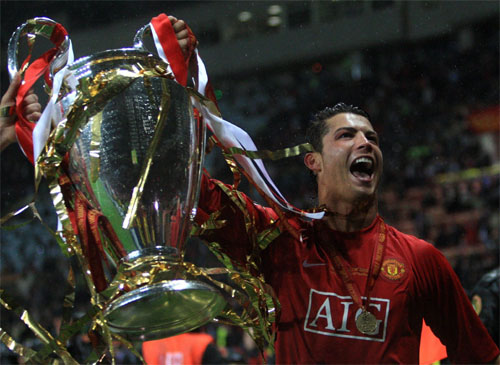 His move to Manchester United in 2003 transformed potential into worldwide recognition.
Under Sir Alex Ferguson, Ronaldo evolved from an exciting teenager with dazzling skills into one of Europe’s most complete attacking players. He won the Premier League, the UEFA Champions League, and his first Ballon d’Or.
The transfer to Real Madrid in 2009 elevated his career to another level.
Nine extraordinary years in Madrid produced numbers that often seemed impossible:
- Over 450 goals for Real Madrid
- Four Champions League titles with the club
- Multiple Ballon d’Or awards
- Countless individual scoring records
His rivalry with Lionel Messi became the defining sporting debate of an entire generation. Rather than diminishing each other’s achievements, both players pushed the standards of football to unprecedented heights.
Later spells with Juventus and a return to Manchester United further expanded his legacy before he embarked on a new chapter with Al Nassr, continuing to score prolifically while helping elevate the global profile of Saudi football.
Records That May Never Be Broken
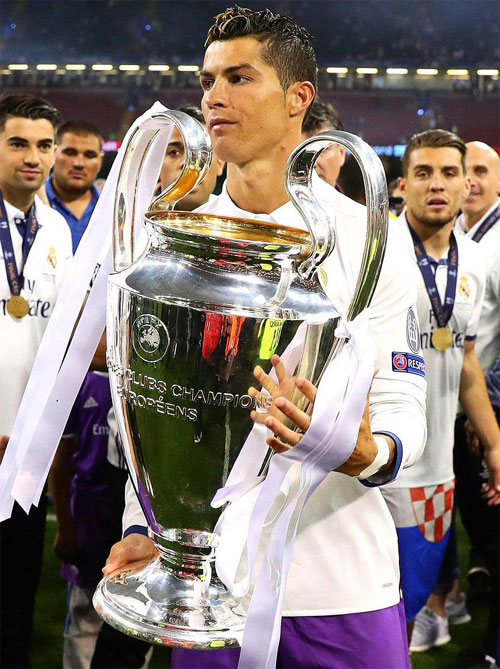 Statistics alone cannot capture Ronaldo’s influence, but they illustrate its scale.
Among his many achievements:
- Five Ballon d’Or awards
- Five UEFA Champions League titles
- UEFA European Championship winner (2016)
- UEFA Nations League winner (2019)
- Men’s all-time international goals record
- Men’s all-time international appearances record
- One of football’s highest goal scorers in official matches
- The first male player to score in five FIFA World Cups
- Hundreds of club and international victories
Longevity is perhaps his greatest accomplishment. While many elite footballers decline in their early thirties, Ronaldo remained a decisive figure well into his late thirties through exceptional physical conditioning and professionalism.
 Portugal Before Ronaldo
Portugal has long produced outstanding footballers, including Eusébio, Luís Figo, Rui Costa, Fernando Couto, and Deco.
Yet despite its rich footballing tradition, international trophies proved elusive.
Ronaldo entered the national team as a teenager carrying enormous expectations. Over time, those expectations became even greater because he was no longer simply another talented player—he became the face of Portuguese football itself.
His influence helped transform Portugal into a nation that consistently expected to compete for major honours rather than merely participate.
The Triumph That Changed Everything
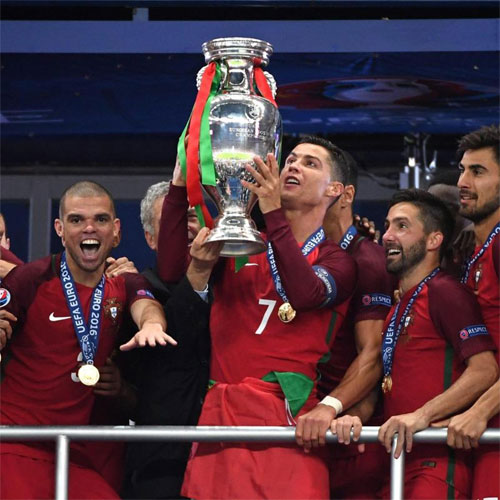
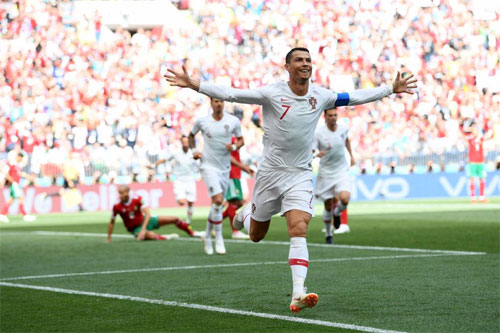 In 2016, Portugal won the UEFA European Championship.
Although Ronaldo was forced off injured during the final against France, his emotional leadership from the sidelines became one of the defining images of the tournament.
Three years later came another international trophy with the UEFA Nations League.
These victories fundamentally changed Portuguese football history. For the first time, generations of Portuguese supporters experienced major international success.
The World Cup Dream
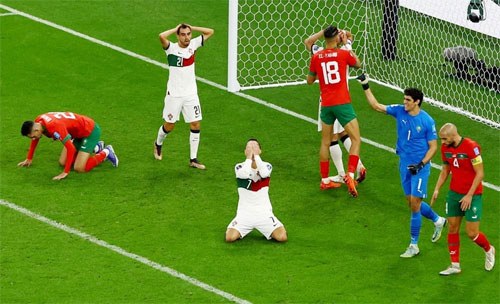 Despite every club trophy and individual honour, one prize remained beyond Ronaldo’s reach.
The FIFA World Cup.
He participated in five World Cups:
- 2006
- 2010
- 2014
- 2018
- 2022
Each tournament carried increasing emotional weight.
As he grew older, supporters recognised that opportunities were running out.
By 2022, many believed this would likely be his final realistic chance.
The Controversial Final World Cup
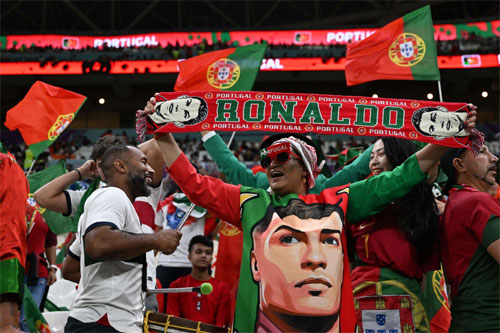 The 2022 tournament unfolded amid extraordinary circumstances.
Only weeks before the World Cup, Ronaldo’s highly publicized interview criticizing Manchester United dominated headlines. His contract with the club was terminated shortly before the tournament.
On the field, Portugal progressed impressively.
Yet the biggest story became Ronaldo himself.
Coach Fernando Santos made the difficult tactical decision to leave Ronaldo out of the starting lineup in the Round of 16 against Switzerland. Gonçalo Ramos started instead and scored a remarkable hat-trick.
The decision divided football fans worldwide.
Some argued the team appeared more fluid without Ronaldo as a starter.
Others believed a player of Ronaldo’s stature deserved to lead Portugal in what was almost certainly his final World Cup.
Neither perspective has become an accepted historical fact. Football remains a sport of opinions, and this debate continues today.
Morocco and the End of the Dream
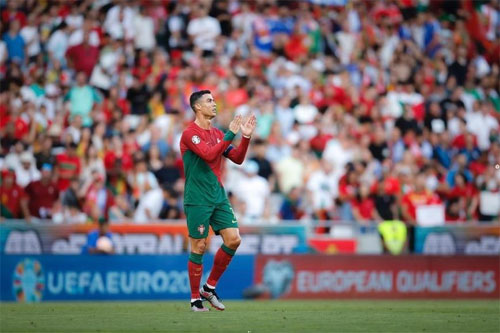 Portugal entered the quarter-final against Morocco as favourites.
Instead, Morocco produced one of the greatest defensive performances in World Cup history.
Ronaldo entered as a substitute.
He fought, created chances, and searched desperately for an equaliser.
It never came.
When the final whistle sounded, cameras captured Ronaldo walking alone through the tunnel in tears.
For perhaps the first time in decades, the man who had overcome countless setbacks had no answer.
There would almost certainly be no sixth opportunity.
The World Cup dream was over.
Did Portugal Fail Ronaldo?
This question continues to divide football supporters.
One view argues that Portugal possessed one of the strongest squads in its history and that tactical choices, selection decisions, and changing priorities prevented Ronaldo from fully contributing in his final World Cup.
Another view maintains that football is ultimately a team sport. Coaches must make decisions based on tactics and current form, regardless of a player’s legacy. From this perspective, Fernando Santos acted in what he believed were the team’s best interests.
History may never provide a definitive answer.
What remains undeniable is Ronaldo’s immense contribution to Portuguese football over nearly two decades.
Portugal’s Relationship with Ronaldo
Outside Portugal, there is sometimes a perception that the nation did not always appreciate Ronaldo fully.
The reality is more nuanced.
Millions of Portuguese supporters deeply admire him for elevating the national team and helping deliver its first major international trophies.
At the same time, because expectations became so high, Ronaldo was often subject to intense scrutiny from Portuguese media and supporters whenever results disappointed.
Such scrutiny is not unique to Portugal. Great sporting icons frequently experience heightened expectations precisely because they have achieved so much.
The Media and the Magnifying Glass
Few athletes have lived under greater media attention.
Every celebration.
Every gesture.
Every interview.
Every substitution.
Every missed chance.
Every emotional reaction.
Each became international news.
Supporters often argue that Ronaldo received disproportionate criticism compared with other players.
Critics argue that his immense fame naturally attracted greater attention and that some of his public actions invited scrutiny.
The truth likely lies somewhere between those positions.
Global superstardom brings unparalleled admiration but also unparalleled examination.
The Burden Carried by His Teammates
Following Portugal’s World Cup exit, sections of social media directed harsh criticism toward players such as Bruno Fernandes, Bernardo Silva, João Félix, Gonçalo Ramos, and others.
Some supporters believed Ronaldo should never have been dropped.
Others defended the players, emphasizing that football victories and defeats belong to the entire team.
It is important to distinguish between passionate fan reactions and broader public opinion. While online criticism can become highly visible, many supporters expressed gratitude to the squad for reaching the quarter-finals and recognized the collective nature of the sport.
The Emotional Bond Between Ronaldo and His Fans
What makes Ronaldo unique is not only his achievements but the emotional connection he has forged with supporters.
Many fans grew up watching him.
Children became adults while following his career.
Parents introduced their children to football through Ronaldo’s matches.
Entire generations measured football seasons by his performances.
When he cried after the Morocco match, countless supporters felt they were witnessing not merely a defeat but the conclusion of a chapter in their own lives.
The tears belonged not only to Ronaldo but to millions who had believed, perhaps against all odds, that one final miracle remained possible.
Beyond the World Cup
A World Cup trophy would undoubtedly have completed Ronaldo’s résumé.
Its absence, however, does not diminish what he has accomplished.
Sporting greatness is measured by more than medals.
It is measured by influence.
By inspiration.
By resilience.
By the countless young athletes who began playing football because they watched Cristiano Ronaldo.
By the standards of professionalism he established.
By the belief he instilled that talent alone is never enough without dedication.
A Legacy That Will Endure
History often remembers champions by the trophies they lifted.
But it also remembers those who transformed the game itself.
Cristiano Ronaldo transformed football.
He changed how athletes approach fitness, longevity, and professionalism.
He inspired millions to believe that extraordinary dreams can emerge from ordinary beginnings.
Whether one considers him the greatest footballer of all time or simply one of the greatest, his place in football history is secure.
The image of Ronaldo leaving the field in tears after Portugal’s World Cup exit is heartbreaking because it reminds us that even the strongest competitors cannot conquer time.
Every career has a final chapter.
Every dream has an ending.
Yet the story of Cristiano Ronaldo is not ultimately about one lost World Cup.
It is about a young boy from Madeira who refused to accept the limits imposed by circumstance, climbed to the summit of world football, inspired generations across continents, and left the game richer than he found it.
For his supporters, that legacy is worth far more than any single trophy.
This is supervised, written, directed or edited at Our Office Desk.
Any issue or disagreement can be sent to the help desk, after thoroughly analyzing we will be open for any amicable solution.

 News Desk