



Hyderabad High Court History: The 100-Year-Old Red Jewel That Witnessed a City’s Transformation
 Editor's Desk
5 minutes read
Editor's Desk
5 minutes read
By Burning Topics Editorial
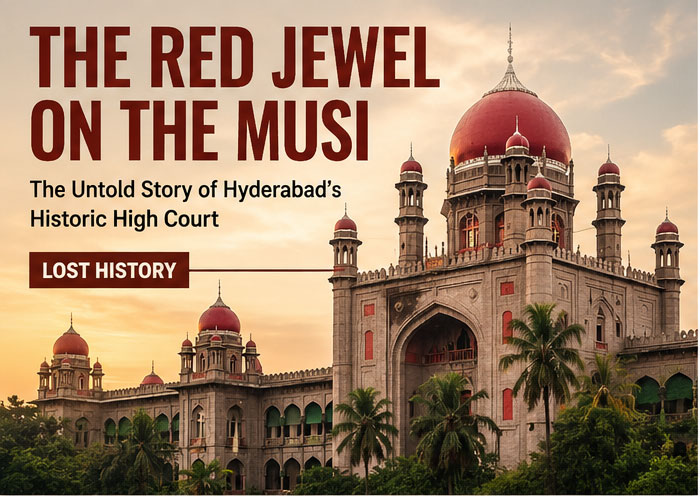
Standing proudly on the southern banks of the Musi River, the Hyderabad High Court is more than just a place where justice is delivered. With its striking red-and-white architecture, majestic domes, and rich history spanning over a century, the building is one of Hyderabad’s most iconic landmarks. Yet, despite thousands passing by it every day, few know the fascinating story behind this architectural masterpiece.
A Court Born from a City’s Tragedy
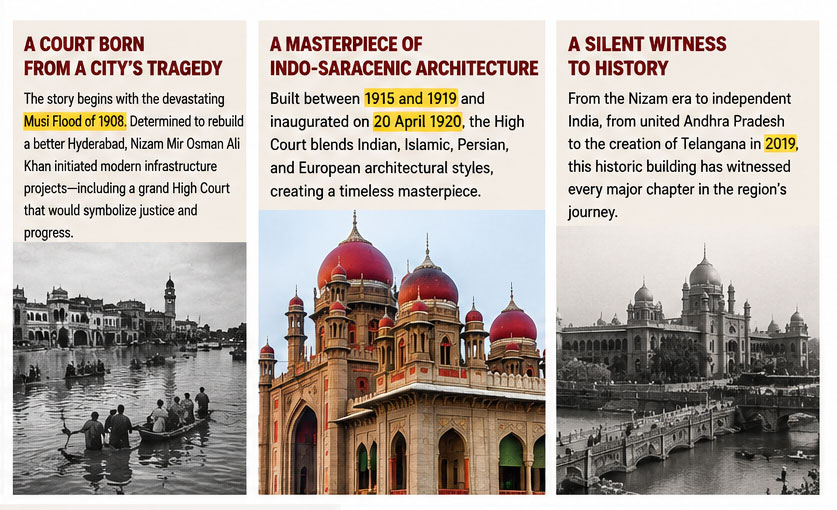
The story of the Hyderabad High Court begins with one of the darkest chapters in the city’s history—the devastating Musi Flood of 1908.
The flood claimed thousands of lives, destroyed homes, and exposed the urgent need to rebuild Hyderabad with better planning. Deeply affected by the tragedy, Mir Osman Ali Khan, the seventh Nizam of Hyderabad, initiated an ambitious programme to modernize the city. New roads, bridges, public buildings, hospitals, and government institutions began taking shape.
Among these projects was the construction of a grand High Court that would symbolize justice, stability, and the growing importance of law in the Hyderabad State.
Construction That Stood the Test of Time
Construction of the High Court began in 1915 and was completed in 1919. The building was officially inaugurated on 20 April 1920, becoming the principal court of the erstwhile Hyderabad State.
For more than a hundred years, it has continued to serve the judiciary, witnessing countless historic judgments and constitutional developments.
A Masterpiece of Indo-Saracenic Architecture
One of the first things visitors notice is the building’s stunning appearance.
Its bright red walls, white detailing, elegant arches, and graceful domes create a unique skyline that instantly captures attention.
The High Court was designed in the Indo-Saracenic architectural style, which beautifully blends:
- Indian architectural traditions
- Islamic design elements
- Persian influences
- European engineering techniques
This harmonious combination gives the building a timeless elegance that still impresses architects and tourists alike.
Did You Know?
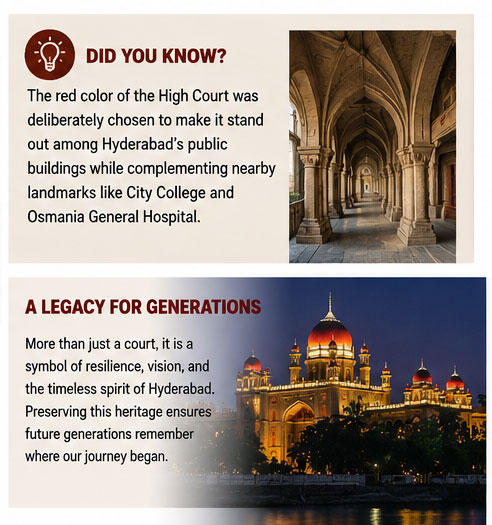
The red colour of the High Court was deliberately chosen to make it stand out among Hyderabad’s public buildings while complementing nearby landmarks such as the City College and Osmania General Hospital.
Why Was It Built Near the Musi River?
The High Court occupies a prominent location beside the Musi River.
Its elevated position was carefully selected to provide visibility, accessibility, and protection from future flooding. The building also became part of a larger urban redevelopment plan aimed at transforming Hyderabad into one of India’s best-planned princely capitals.
Even today, the view of the High Court from the nearby bridges remains one of the city’s most photographed scenes.
The Vision of the Nizam
The seventh Nizam, Mir Osman Ali Khan, was known not only for his immense wealth but also for investing heavily in public infrastructure.
During his reign, Hyderabad witnessed the construction of several iconic institutions, including:
- Osmania University
- Osmania General Hospital
- City College
- State Central Library
- Hyderabad High Court
Many of these century-old buildings continue to serve the public today, reflecting the long-term vision behind their construction.
A Silent Witness to History
Over the decades, the High Court has witnessed remarkable changes.
It served the judiciary during the rule of the Nizams, continued after the integration of Hyderabad into the Indian Union in 1948, functioned through the formation of Andhra Pradesh in 1956, and later became the High Court for the combined state.
Following the bifurcation of Andhra Pradesh in 2014, judicial administration continued until 1 January 2019, when the historic building officially became the High Court for the State of Telangana, while Andhra Pradesh established its own High Court at Amaravati.
Every era has left its mark on these historic halls.
More Than Just a Court
Beyond legal proceedings, the High Court has become a symbol of Hyderabad’s identity.
Its domes frequently appear in photographs, films, documentaries, and tourism campaigns. Visitors admire its architecture, while historians regard it as one of the finest surviving examples of early twentieth-century public architecture in India.
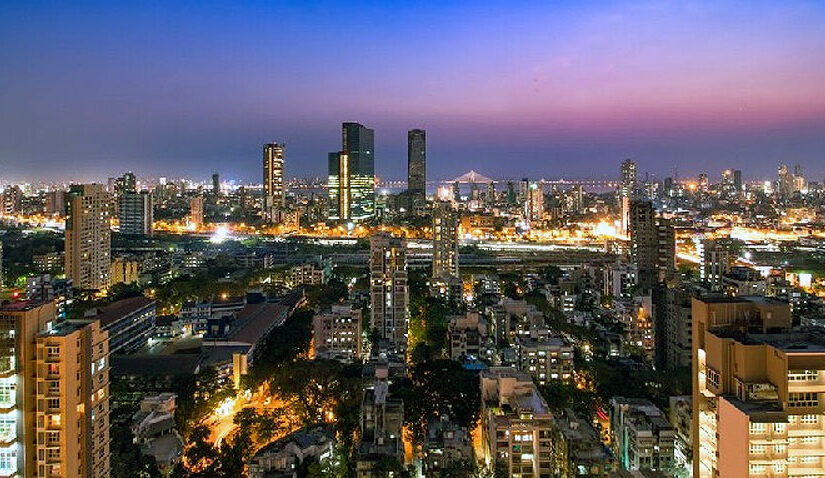
Despite the city’s rapid transformation with skyscrapers and technology parks, the High Court continues to remind Hyderabad of its glorious past.
Preserving a Living Heritage
Maintaining a century-old structure is no easy task.
Conservation efforts focus on preserving the original stonework, domes, corridors, and decorative elements while ensuring the building meets modern judicial needs. Heritage experts believe such monuments should be protected not only for their architectural value but also because they tell the story of Hyderabad’s evolution.
 Why This Building Still Matters
The Hyderabad High Court is much more than bricks and domes. It represents justice, resilience, and the vision of a city that rebuilt itself after tragedy.
As Hyderabad races toward the future, landmarks like the High Court remind us that progress is strongest when it respects its history.
The next time you cross the Musi River and catch sight of those magnificent red domes against the skyline, take a moment to appreciate not just a beautiful building, but over a century of history standing proudly in the heart of the city.
Lost History Fact
The Hyderabad High Court has been serving the cause of justice for over 100 years and remains one of the most recognizable heritage buildings in Telangana. Its distinctive Indo-Saracenic architecture continues to make it one of the finest judicial buildings in India and an enduring symbol of Hyderabad’s rich cultural and architectural legacy.
This is supervised, written, directed or edited at Our Office Desk.
Any issue or disagreement can be sent to the help desk, after thoroughly analyzing we will be open for any amicable solution.
 News Desk