


 Editor's Desk





Single-celled algae within delicate glass-like needles, Pseudo-nitzschia diatoms may be tiny, but they can play a huge role in the ecosystems they occupy.
âDomoic acid is rough. Itâs a neurotoxin. Itâs nerve damage.â
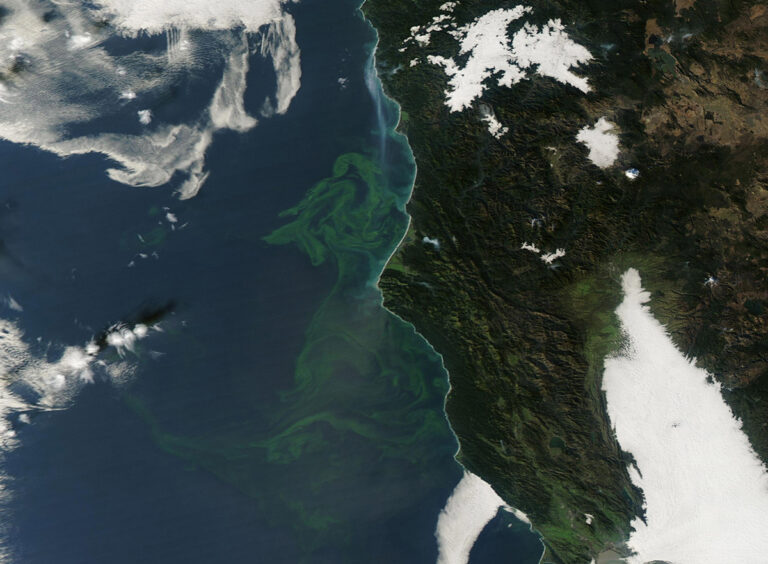
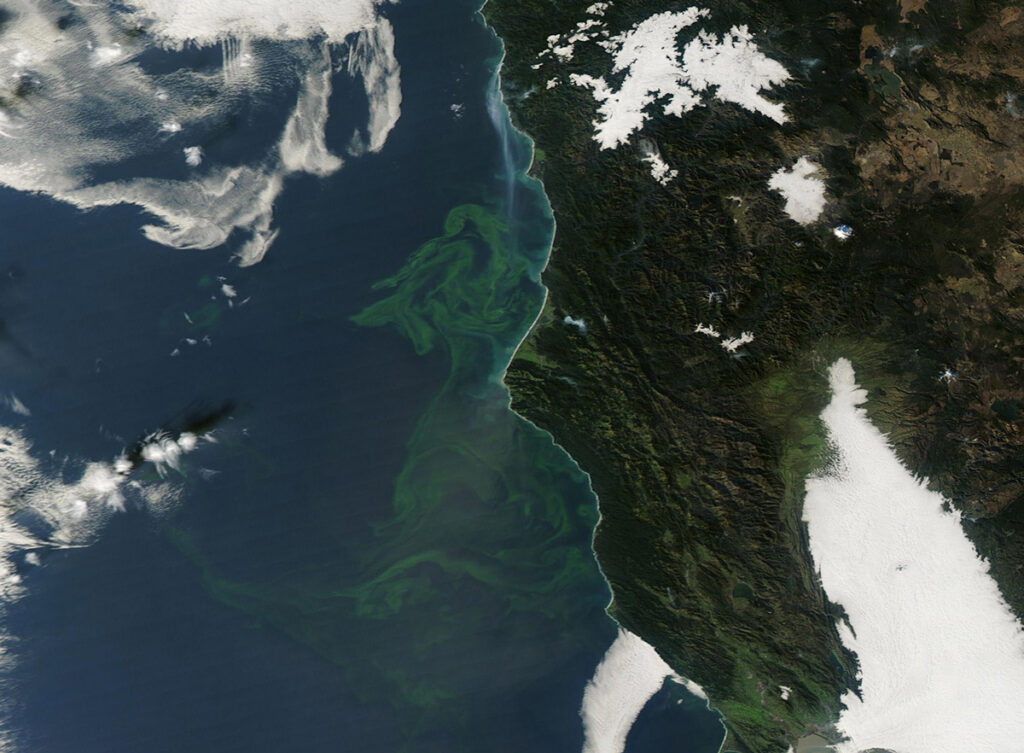
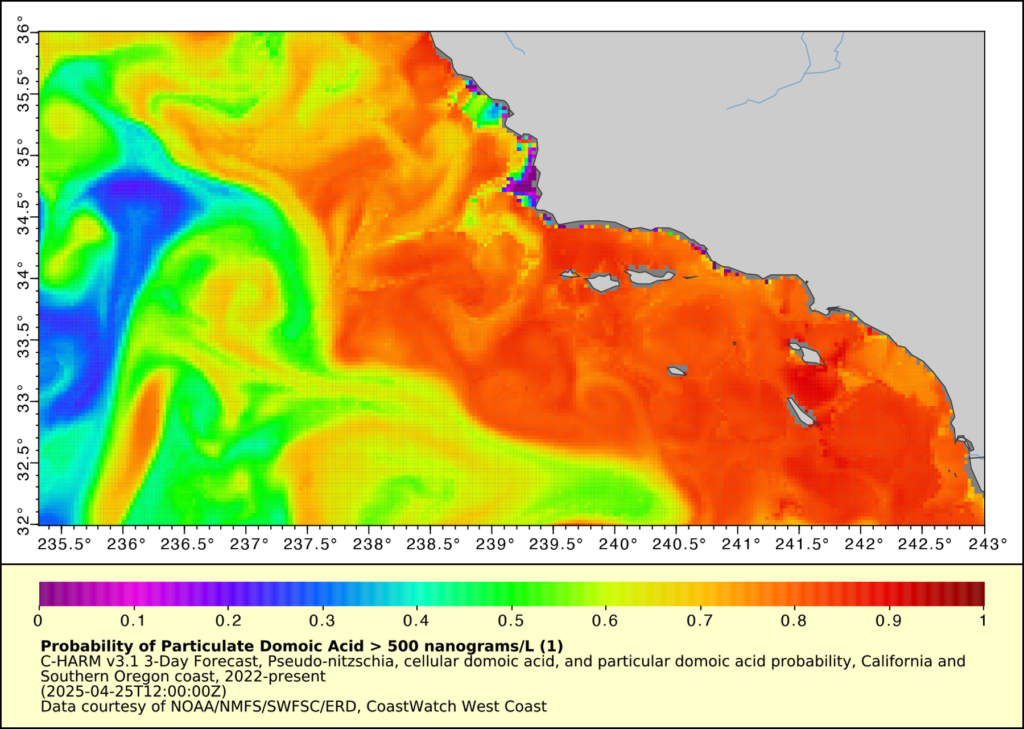
When types of Pseudo-nitzschia that make domoic acid proliferate during harmful algal blooms off Californiaâs coast, marine mammals, seabirds, and humans who eat toxin-laced fish and shellfish can become gravely ill.
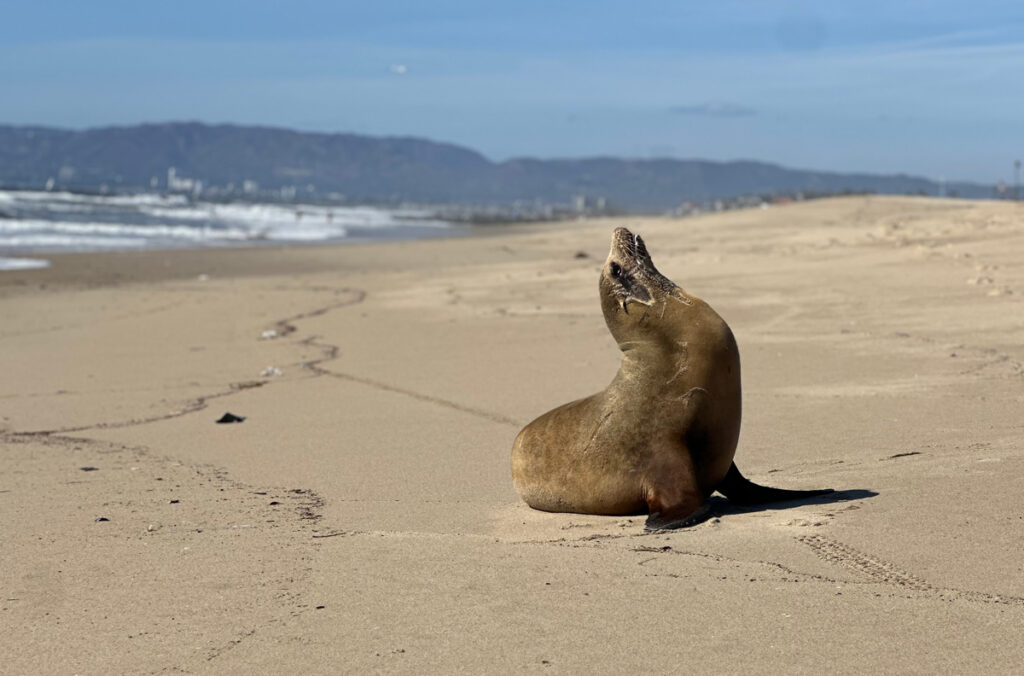
âDomoic acid is rough. Itâs a neurotoxin. Itâs nerve damage,â said Dave Bader, chief operations and education officer at the Marine Mammal Care Center, which rescues and cares for sick and injured marine mammals in Los Angeles County. Mass strandings of domoic acidâpoisoned California sea lions on the countyâs beaches were once rare but have become common in recent years. The toxin spreads through the food web as animals eat the diatoms and each other, but only some animals suffer.
In Southern California, Pseudo-nitzschia diatoms are a natural part of the phytoplankton community. For millennia, phytoplankton blooms have been tied to upwelled nutrients, which surge during La Niña and decline during El Niño. But the blooms have become more frequent and more toxic. âThereâs just much more domoic acid than there used to be,â said Clarissa Anderson, an oceanographer at the University of California, San Diegoâs Scripps Institution of Oceanography.
Worldwide, harmful algal blooms are growing more harmful, often for both global reasons like climate change and ocean acidification and local reasons like nutrient levels in wastewater runoff.
But how big a role do local factors play? To find out, Anderson and her colleagues modeled Pseudo-nitzschia diatoms and coastal processes in Southern California to discover how much the urban areaâs wastewater and runoff affect blooms and domoic acid in a study published in Harmful Algae.
Proliferating Diatoms and Toxins
Southern Californiaâs 23 million residents create a tremendous amount of wastewater. Treatment removes pathogens, but nutrients like nitrogen persist. Of the nitrogen that flows from land to sea in this region, nearly all of itâ97%âcomes from wastewater, explained Marco Sandoval-Belmar, an oceanography postdoctoral researcher at the University of California, Los Angeles, and lead author of the study. Of the remaining nitrogen, 2% is from urban or agricultural runoff. Less than 1% is natural.
Pseudo-nitzschia reproduce rapidly with nitrogen as long as they have other nutrients, particularly silicon, which they need for their glassy shells. If silicon is in short supply, the diatoms canât reproduce, but if they still have nitrogen, they keep making domoic acid. Silicon in the region, mainly found in upwelled water, has dwindled for decades, said Anderson. With less silicon rising from the deep and more nitrogen coming from land, diatoms can become domoic acid factories.
Anderson, Sandoval-Belmar, and their colleagues added a model of how Pseudo-nitzschia proliferate and produce toxin to a widely used model of coastal ocean processes and biogeochemistry. They simulated Southern Californiaâs coastal ocean over the years 2006 to 2017, including the nutrient-filled wastewater and runoff released into the ocean over that time. To check how closely the model run mimicked real-world blooms, they compared it to data collected as part of the Southern California Coastal Ocean Observing System over the same time frame. A second model run with clean water flowing off the coast simulated what domoic acid levels would have been like without nutrients from land.

According to the model runs, nitrogen from land increased domoic acid levels within 15 kilometers of the shore by about 25% on average. But these modeled toxin levels were patchy; in some places domoic acid levels increased by more than 50%. âEspecially super near the major [wastewater] outfalls, there is a lot more modeled production of domoic acid,â Sandoval-Belmar said.
Modeling makes a strong case that ânutrients are having an impact and widening the window of opportunity for blooms in Southern California,â said Kyla Kelly, water quality program manager at the California Ocean Protection Council, which partially funded the research. Kelly hopes that similar modeling can help reveal drivers of blooms farther north as well. âA handful of research is showing thereâs different drivers in the northern versus southern California Current system, which encompasses Oregon and Washington,â she said. Blooms to the north have been linked with unusually warm water, which often occurs during El Niño.
Making Harmful Algal Blooms Less Harmful
Whenever people ask Anderson what can be done to stop harmful algal blooms, she pauses.
âTheyâve been around for millennia. Weâre not going to just stop these blooms.â
âItâs really a hard thing to answer, because theyâve been around for millennia. Weâre not going to just stop these blooms,â she said, adding that Pseudo-nitzschia diatoms can also be helpful because they are food for marine life and generate oxygen.
But the toxin the diatoms produce is more of a problem than the blooms themselves. âWe canât prevent these events, but we can lower their total impact,â Bader said. âIf we remove the wastewater outfall from the equation, we donât have a problem really anymore, or we have a problem thatâs a much different scale,â he said. Smaller blooms with less domoic acid would reduce the threat to wildlife.
Methods exist to scrub nearly all nitrogen from wastewater, and there is an appetite to tackle land-based sources of nitrogen in California, Kelly said. âThe State Water Resources Control Board is considering water quality regulations to address ocean acidification, eutrophication, and the effects of anthropogenic nutrients on ocean waters,â Kelly wrote in an email to Eos. In addition, some wastewater treatment plants have pledged to reduce nutrients on their own. But it is not a simple fix: The changes will be costly and take decades to implement.
Though Southern Californiaâs enormous population is contributing to the nitrogen problem, it also means there is no shortage of coastal residents looking out for animals in distress. âKeeping an eye on the ocean helps,â said Sandoval-Belmar.
âLisa S. Gardiner (@lisasgardiner.bsky.social), Science Writer
Citation: Gardiner, L. S. (2026), Wastewater can take harmful algal blooms from bad to worse, Eos, 107, https://doi.org/10.1029/2026EO260282. Published on 8 September 2026.
Text © 2026. The authors. CC BY-NC-ND 3.0
Except where otherwise noted, images are subject to copyright. Any reuse without express permission from the copyright owner is prohibited.

News reported through various sources and compiled with AI. This is automatically generated news content from known, popular, and reliable sources available at the time of publication.
We do not take any responsibility for, nor make any representations regarding, the accuracy, completeness, credibility, or
reliability of the content.
In case of any discrepancy, error, or copyright claim, we will promptly review and remove the content in question where appropriate.
We do not claim ownership of third-party content and assume no responsibility or liability whatsoever for any information contained herein. The credit, links and images are kept intact as an honest gesture, are property of its respective owners.