

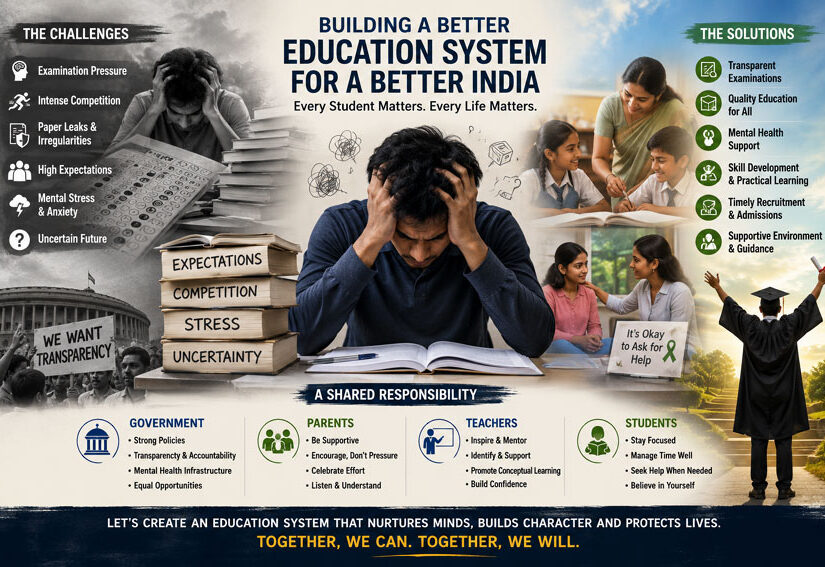





India’s Education System at a Crossroads: Reforming the System Before We Lose Another Generation
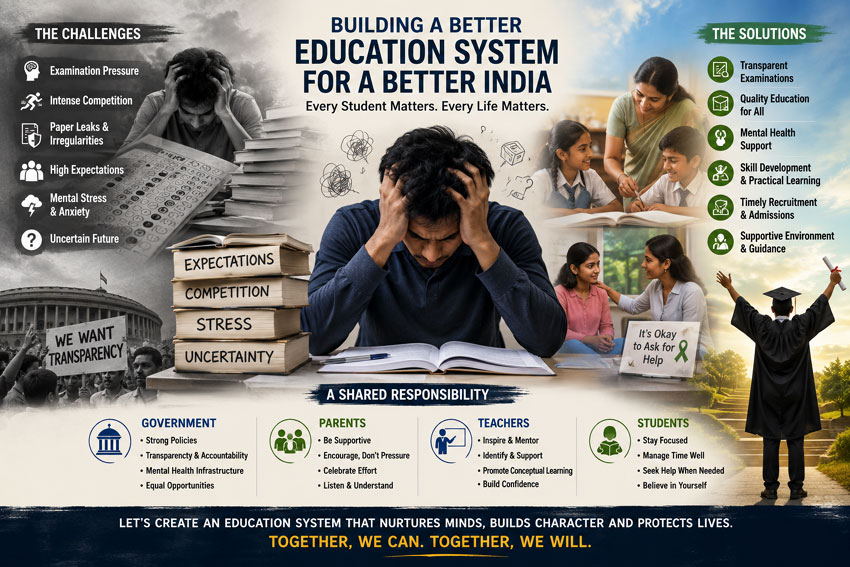
Examination stress”Education should build dreams—not break young minds.”
Every year, millions of students across India prepare for competitive examinations, school board exams, university admissions, and government recruitment tests. For many families, education represents the most reliable path toward financial stability and a better future.
However, behind every success story lies another reality—one that often remains hidden behind statistics and headlines.
Increasing academic pressure, examination-related controversies, delayed recruitment processes, uncertainty about career prospects, and rising mental health concerns have created an environment where many students feel overwhelmed. Tragically, some reach a point where they believe there is no way forward.
The conversation about education in India should no longer be limited to rankings, marks, and placements. It must also include fairness, emotional well-being, transparency, and the value of every student’s life.
Education Should Inspire, Not Intimidate
India has one of the largest education systems in the world, serving millions of learners from diverse social and economic backgrounds.
Over the years, the country has made significant progress in expanding access to education, introducing digital learning platforms, and strengthening higher education. Yet many students continue to face challenges that extend beyond the classroom.
Among the most frequently discussed concerns are:
- High-pressure examination culture
- Intense competition for limited seats
- Delays in recruitment and admissions
- Examination irregularities and paper leak allegations
- Unequal access to quality education
- Financial barriers for many families
- Growing mental health concerns
These issues affect not only academic outcomes but also students’ confidence, motivation, and overall well-being.
When Marks Become More Important Than Learning
One of the biggest criticisms of the current system is its heavy emphasis on examination scores.
Students often spend years preparing for a single exam that can influence future educational or career opportunities. While assessments are important, they should measure understanding, critical thinking, and practical skills rather than reward rote memorization alone.
Education should encourage curiosity, creativity, communication, and problem-solving—qualities that are increasingly valuable in today’s world.
The Emotional Cost of Academic Pressure
Academic competition can motivate students to work hard, but excessive pressure can also have serious consequences.
Many students struggle with:
- Fear of failure
- Anxiety before examinations
- Self-doubt
- Social comparison
- Burnout
- Sleep deprivation
- Isolation
When expectations become unrealistic, students may begin to equate their self-worth with academic performance. This mindset can be damaging, particularly for young people who are still developing emotionally.
Success and failure are both part of learning, and neither should define a person’s value.
Examination Integrity Matters
Public confidence in the education system depends on fairness and transparency.
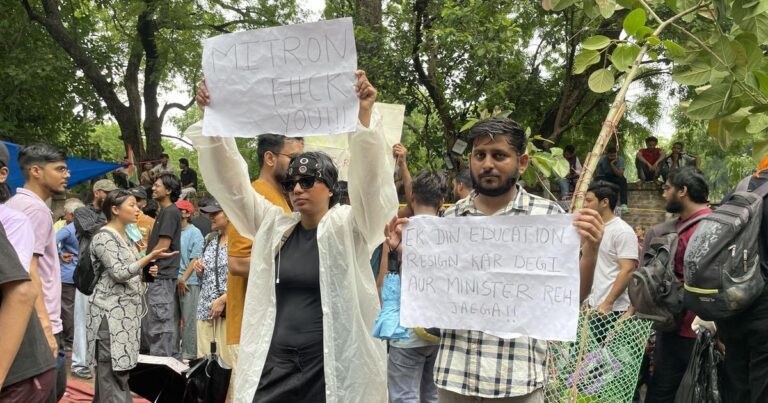
Whenever allegations of examination irregularities, paper leaks, or administrative lapses arise, students often feel that months or years of preparation have been undermined.
To strengthen trust, authorities should prioritize:
- Secure examination systems
- Strong cybersecurity measures
- Faster investigations
- Strict action against organized malpractice
- Transparent communication with students
- Timely publication of verified information
A credible examination process protects both deserving candidates and the reputation of educational institutions.
The Government’s Role
Governments play a central role in shaping educational policy and ensuring equal opportunities.
Some areas that deserve continued attention include:
1. Strengthening Examination Security
Modern encryption, secure digital systems, and strict monitoring can reduce the risk of examination-related malpractice.
2. Transparent Communication
Students should receive timely and accurate updates whenever examinations, admissions, or recruitment schedules change. Clear communication helps reduce anxiety and misinformation.
3. Expanding Mental Health Support
Educational institutions can benefit from:
- Professional counselors
- Mental health awareness programs
- Peer support initiatives
- Crisis intervention services
- Teacher training to recognize students in distress
Making mental health support accessible and reducing stigma around seeking help are important steps.
4. Modernizing Curriculum
A balanced curriculum should emphasize:
- Practical learning
- Digital literacy
- Financial education
- Critical thinking
- Communication skills
- Entrepreneurship
- Ethics and civic responsibility
These skills can better prepare students for a rapidly changing world.
5. Timely Recruitment and Admissions
Reducing unnecessary delays in recruitment examinations and admissions can help ease uncertainty for students planning their careers.
The Role of Teachers
Teachers influence students far beyond academics.
An effective teacher:
- Encourages questions
- Builds confidence
- Recognizes different learning styles
- Provides constructive feedback
- Identifies students who may be struggling emotionally
- Creates a respectful classroom environment
Students often remember teachers who believed in them during difficult times more than those who simply taught subjects.
Parents: Partners, Not Pressure
Parents naturally want the best for their children, but expectations can sometimes become a source of stress.
Children benefit most when parents:
- Listen without judgment
- Celebrate effort, not only results
- Encourage healthy routines
- Avoid constant comparisons with peers or siblings
- Respect individual interests and talents
- Seek professional support if a child shows signs of emotional distress
A supportive home environment can make a significant difference during challenging academic periods.
Students Also Have a Responsibility
While institutions and families play important roles, students can also develop habits that support their well-being.
Helpful practices include:
- Maintaining a balanced study schedule
- Taking regular breaks
- Getting adequate sleep
- Staying physically active
- Limiting excessive social media comparison
- Talking to trusted adults or friends when feeling overwhelmed
- Remembering that setbacks are part of learning
Seeking help is a sign of strength, not weakness.
Preventing Student Suicides: A Shared Responsibility
Every student life is precious, and preventing suicide requires collective effort rather than placing responsibility on any one individual or group.
Some important measures include:
- Improving access to mental health services in schools and colleges.
- Training teachers to identify early signs of emotional distress.
- Encouraging parents to maintain open and non-judgmental communication.
- Reducing stigma around counseling and psychological support.
- Promoting realistic expectations and healthy study habits.
- Building campus environments where students feel safe asking for help.
- Ensuring timely interventions when warning signs are identified.
No examination, result, or career setback should ever make a young person feel that their future is over. There are always possibilities for growth, second chances, and new opportunities.
Society Must Redefine Success
India celebrates academic excellence, but success should not be measured solely by examination scores.
Artists, entrepreneurs, scientists, teachers, healthcare workers, engineers, athletes, and skilled professionals all contribute to society in different ways.
Recognizing diverse talents can help reduce unhealthy competition and encourage students to pursue paths that match their interests and abilities.
Technology Can Be Part of the Solution
Digital technologies can improve education through:
- Online learning platforms
- AI-assisted personalized learning
- Virtual laboratories
- Skill development courses
- Digital assessments
- Career guidance portals
When used responsibly, technology can make quality education more accessible and flexible.
Looking Ahead
India has a unique opportunity to build an education system that not only produces skilled professionals but also nurtures confident, resilient, and compassionate citizens.
Meaningful reform will require collaboration among policymakers, educational institutions, parents, teachers, students, and the wider community. The goal should not simply be higher examination scores but a system that values integrity, mental well-being, lifelong learning, and equal opportunity.
A successful education system is one where students are encouraged to dream, supported through setbacks, and equipped with the knowledge and skills to thrive—both inside and outside the classroom.
Frequently Asked Questions (FAQs)
What are the major challenges facing India’s education system?
Commonly discussed challenges include examination pressure, unequal access to quality education, curriculum relevance, mental health concerns, infrastructure gaps in some regions, and ensuring transparency in examinations and recruitment processes.
How can parents help reduce academic stress?
Parents can support children by encouraging open communication, appreciating effort rather than only results, avoiding unhealthy comparisons, and seeking professional help if they notice signs of emotional distress.
What role do teachers play in student well-being?
Teachers can foster positive learning environments, identify students who may be struggling, encourage curiosity, provide balanced feedback, and guide students toward available support services when needed.
How can students manage examination stress?
Students can benefit from maintaining healthy routines, taking regular breaks, staying physically active, seeking support from trusted adults or counselors, and remembering that academic setbacks do not define their future.
Final Thoughts
India’s education system has enabled remarkable achievements and transformed countless lives. At the same time, it faces important challenges that deserve thoughtful attention and sustained reform. A balanced approach—combining academic excellence with fairness, transparency, and mental well-being—can help ensure that students are not only prepared for examinations but also for life itself. When governments, educators, parents, students, and society work together, education can truly become a source of opportunity, confidence, and hope rather than fear.

This is supervised, written, directed or edited at Our Office Desk.
Any issue or disagreement can be sent to the help desk, after thoroughly analyzing we will be open for any amicable solution.
 News Desk