

 Editor's Desk





1966 WEEK takes you back in time 60 years…
—
Welcome to 1966 WEEK — a 60th anniversary celebration of an extraordinary, landmark year in popular culture. For seven days, we’ve brought you a whole host of features on everything from Star Trek, to Batman, to the Beatles, to the Monkees, and much, much more. (Just check out Walt Grogan’s latest fab banner, above!) Click here for more of the far out fun! — Dan
—
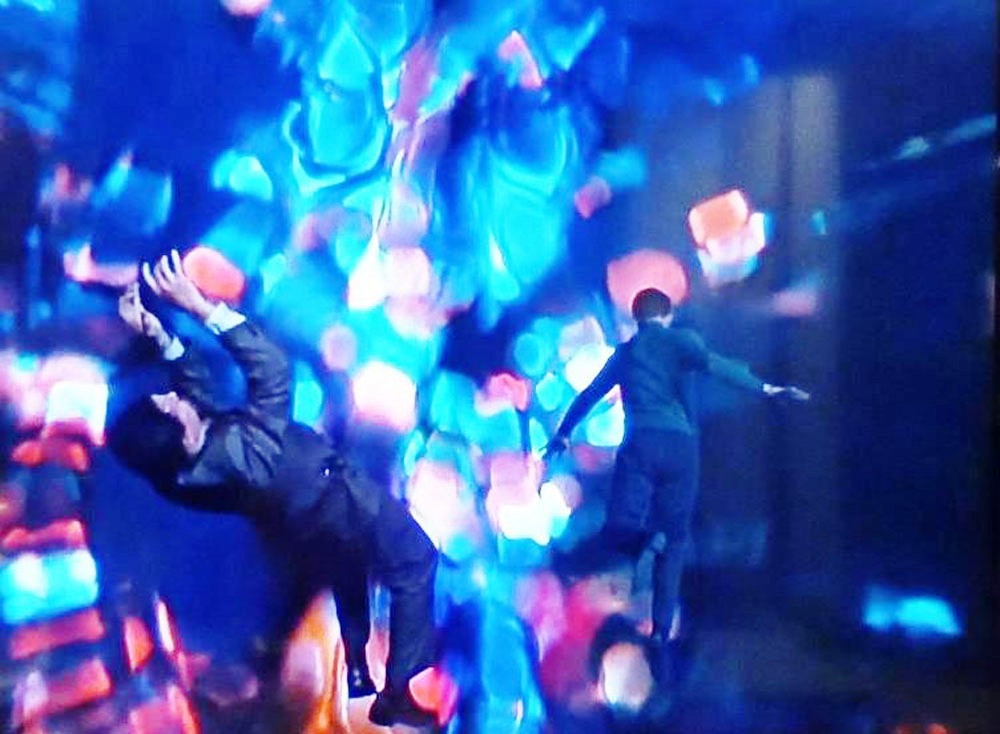
Doug and Tony hurtling through time, on their way to their next adventure.
By PETER BOSCH
“How come they always land in the dirt and roll around — but their clothes never get dirty?” The person asking the question was my father. The person he was asking it of was 11-year-old me in 1966. And the subject of the query was Tony Newman and Doug Phillips, the adventurers of The Time Tunnel.
The program was a must-watch in our household Friday nights. I didn’t know the answer to his question, even though he would repeat it every week, and I still don’t… unless each location in the past had a 24-hour dry-cleaning service.
The Time Tunnel first aired September 9, 1966, but producer Irwin Allen had been working on it since 1964. There had been a novel called that but it bore little resemblance to what Allen put together — a TV series about a multibillion-dollar government program called Project Tic-Toc, in which they hoped to send a person back or forward through time. (It’s no wonder that our national debt went from $286 billion in 1960 to $348 billion in 1968!)
The Time Tunnel’s pilot script was called “The Man Who Killed Time.” Allen was happy with it. 20th Century-Fox was happy with it. But ABC was not. The original writer was dismissed and the rewrites began. The episode, set aboard the Titanic, was renamed “Rendezvous With Yesterday.”
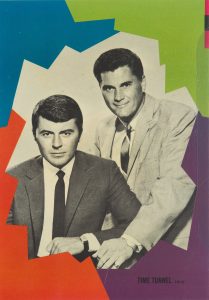
The cast of The Time Tunnel was small but memorable. James Darren, actor/singer, received top billing as Dr. Tony Newman, physicist and lead director of Project Tic-Toc. Robert Colbert played Dr. Doug Phillips, lead research scientist. Whit Bissell, who had been in George Pal’s production of H.G. Wells’ The Time Machine (1960), was Lt. General Heywood “Woody” Kirk. Lee Meriwether (Miss America in 1955 and who, just a couple months before The Time Tunnel’s debut, was Catwoman in the 1966 Batman movie) was Dr. Ann MacGregor, an electrobiologist. And John Zaremba was Dr. Raymond Swain, an expert in electronics.
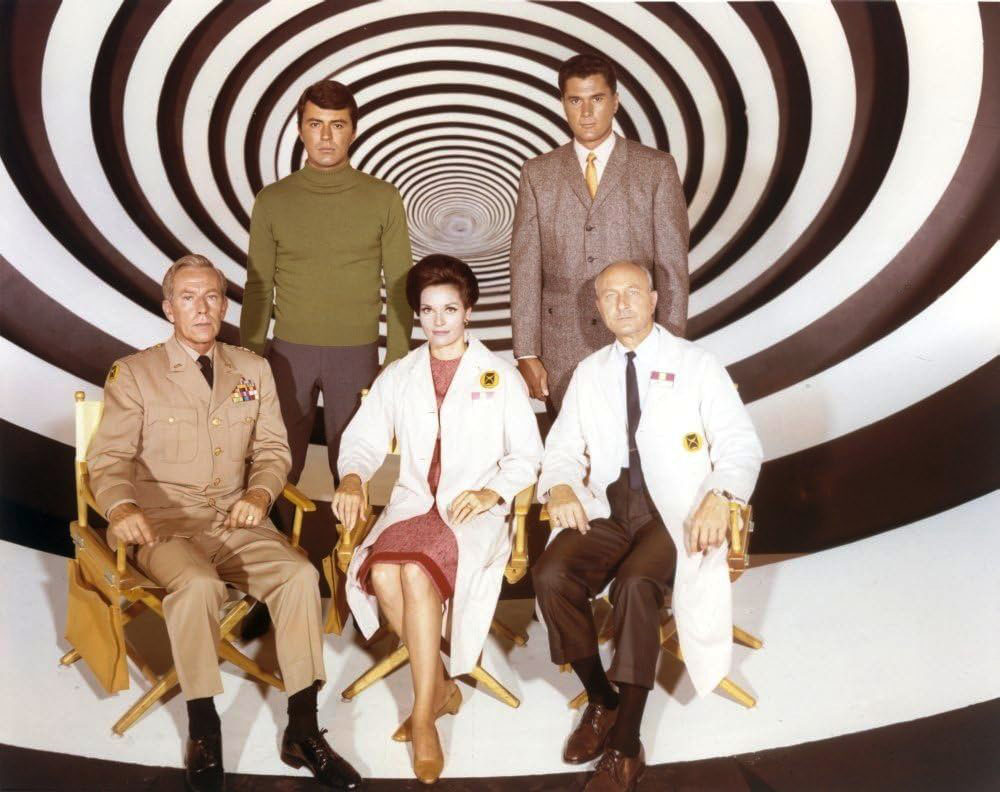
Top row: (left to right) James Darren and Robert Colbert. Bottom row: (left to right) Whit Bissell, Lee Meriwether, and John Zaremba.
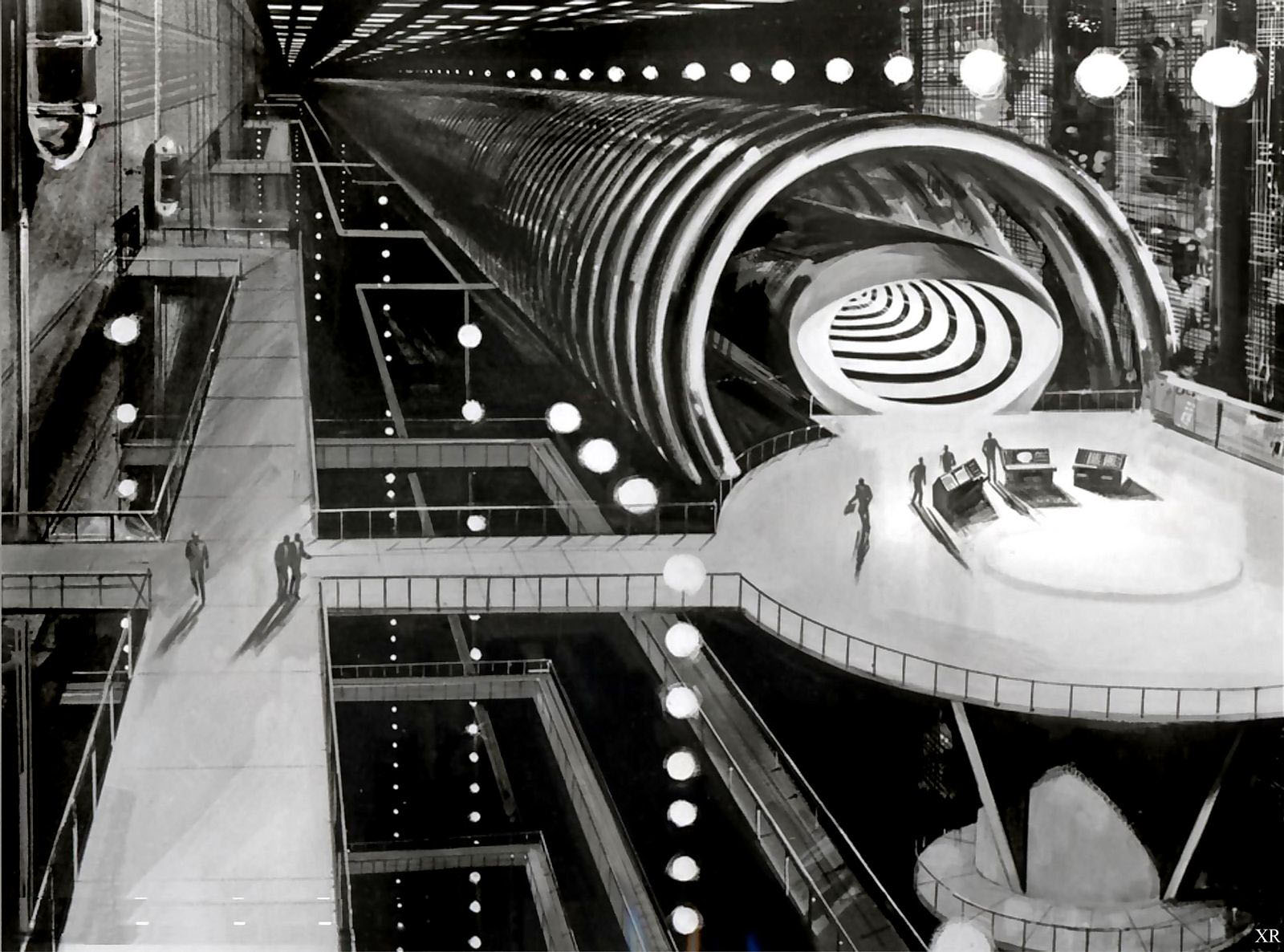
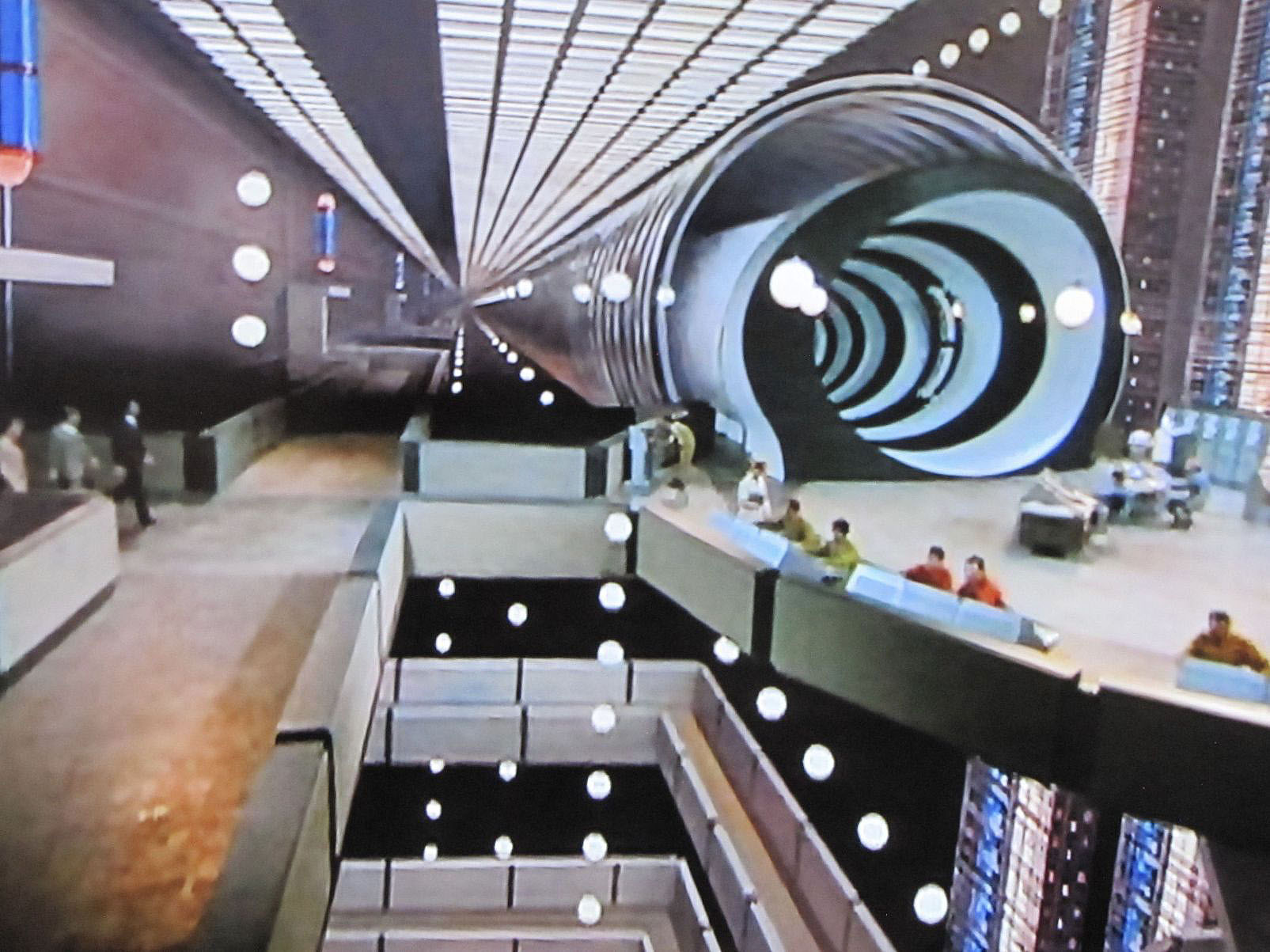
The real star of the show, though, was the Time Tunnel itself, designed by William J. Creber. Creber had worked with Allen before on the Flying Sub for Voyage to the Bottom of the Sea and the original Gemini 12 spaceship in Lost in Space. He would also handle art direction for two of Allen’s movies, The Poseidon Adventure (1972) and The Towering Inferno (1974), both of which earned him Academy Award nominations. (Among his other credits were the first three Planet of the Apes films.)
Check out the artist’s concept drawing of the Time Tunnel complex…
…and the actual set:
And the show was ready to go, with an outstanding title sequence — with music by John Williams!
Many fans consider “Rendezvous With Yesterday” the best of the series. It featured three exceptional guest stars: Gary Merrill as Senator Clark, who was there to decide if Project Tic-Toc would continue or be shut down (which led to Tony rushing to send himself back in time to prove it worked), Susan Hampshire as the lovely passenger on the Titanic who befriends Tony but harbors a painful secret, and Michael Rennie as the captain of the doomed ship.
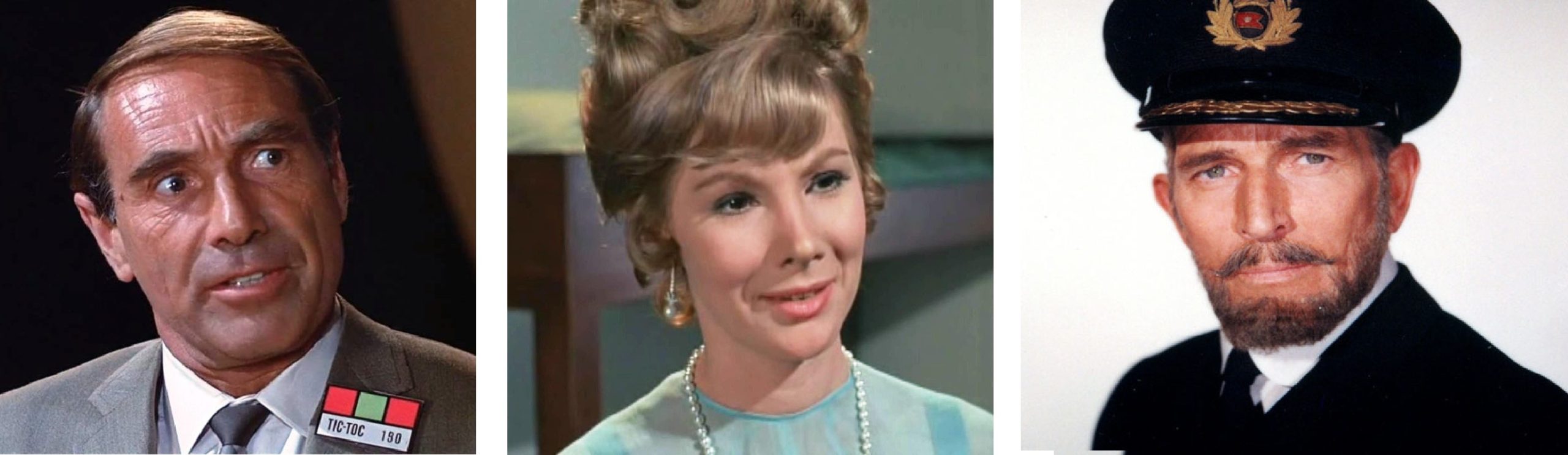
Gary Merrill, Susan Hampshire and Michael Rennie
Oh, yes, there was one other guest star who many don’t know was in that episode. His character had scenes with Hampshire and when the ship was sinking, he was the coward who disguised himself as a woman to get aboard a lifeboat. However, every one of the actor’s scenes ended on the cutting room floor — except for one. And you’ve probably seen it. Who was the actor? Dennis Hopper.
Following the escape from the Titanic, Tony and Doug were leaping into and out of other great historical events, and without a moment’s rest in between: Pearl Harbor, the Alamo, Custer’s Last Stand, the French Revolution, the War of 1812, the Trojan War, the Civil War, World War II, Krakatoa, and even rocketing to Mars.
During all that time, Tony and Doug never showed any duress from all those disasters of the week. However, that was not the case behind the scenes during the making of the television series.
The Time Tunnel was a show that was practically always over budget and the network came down hard on Allen since he was in charge. And Allen, in turn, turned his frustration onto the production staff. He cut scenes and characters from the scripts and when told by them how doing so caused storylines to make no sense, he replied (quite frequently), “Don’t get logical with me.” Action to him was more important than characterization or story. “This is a running-and-jumping show!” he told a director.
Another way he cut costs was by raiding the 20th Century-Fox film library and others for stock footage he could use. Instead of creating a new battle scene with dozens of extras, he took it from a previous film. Special effects for the science-fiction storyline of the trip to Mars? Anybody who had seen the 1950 film Destination Moon recognized the footage immediately. (For “Rendezvous With Yesterday,” all he had to do was pick out scenes from the 1953 film, Titanic, and because it was in black and white, just color tint them.)
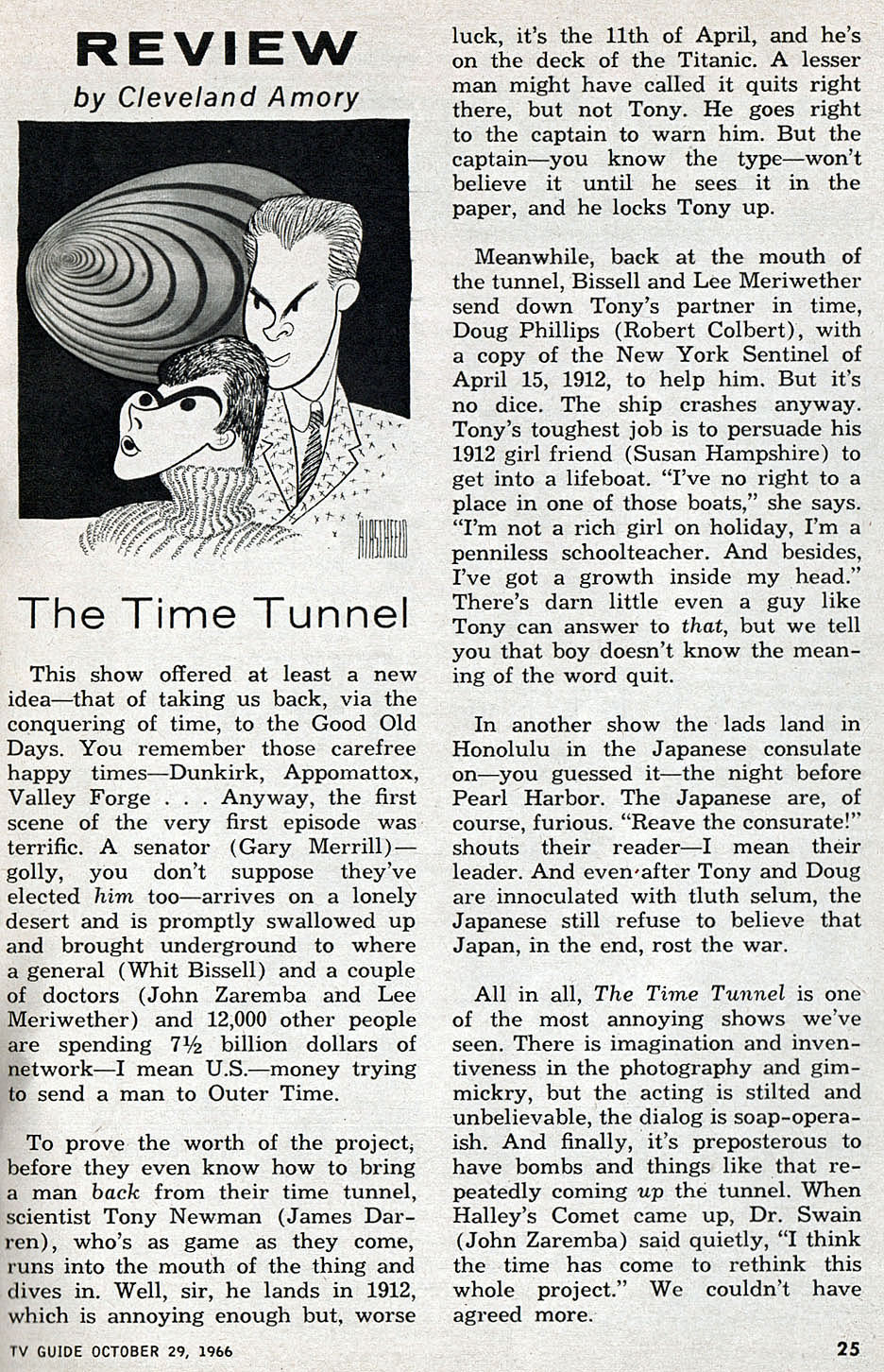
While the series had a good fan base, reviews from TV magazine critics were mixed, but none was harsher (and more racially inappropriate) than the one in TV Guide from Cleveland Amory:
Merchandising of TV shows often helps bring in some profits that would offset production costs, but The Time Tunnel actually had very few offerings. A coloring book, two board games, a View-Master reel set, two paperback novels, and two comic books.
Below are the fronts and backs of each comic, which also had nice photo-illustrated inside covers.
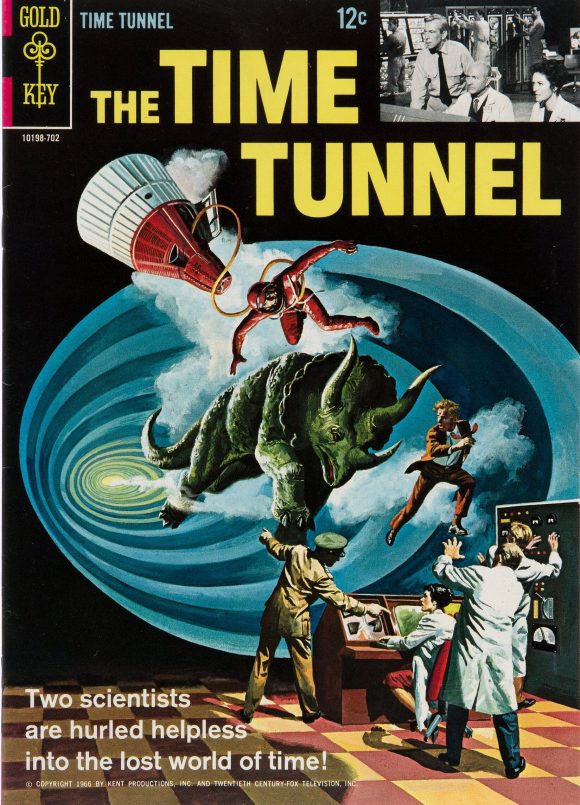
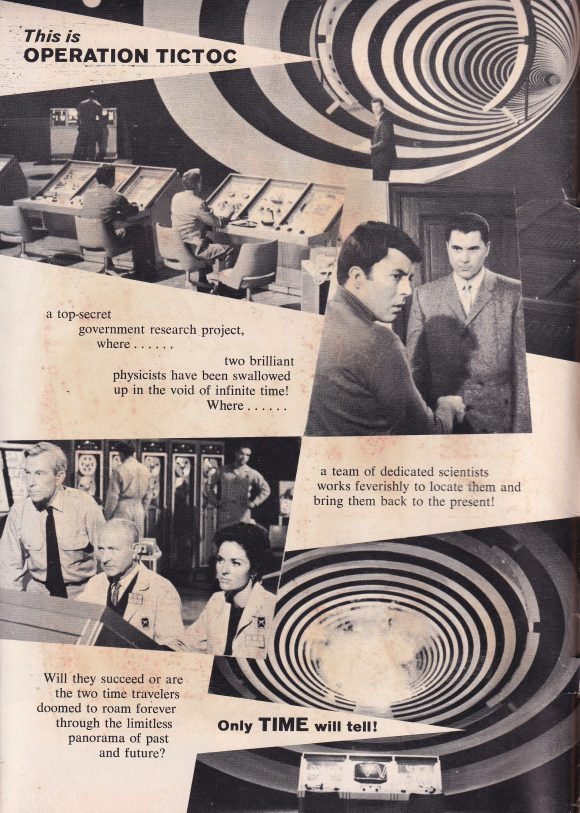
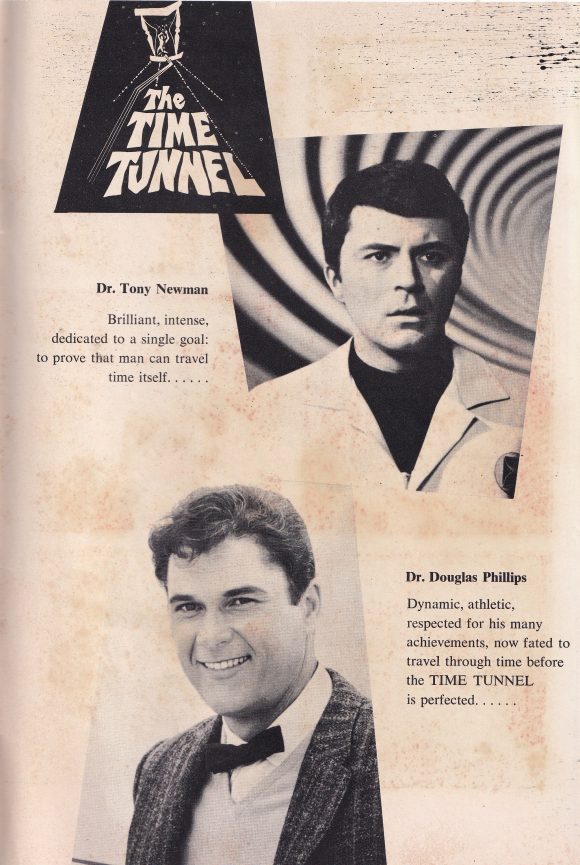
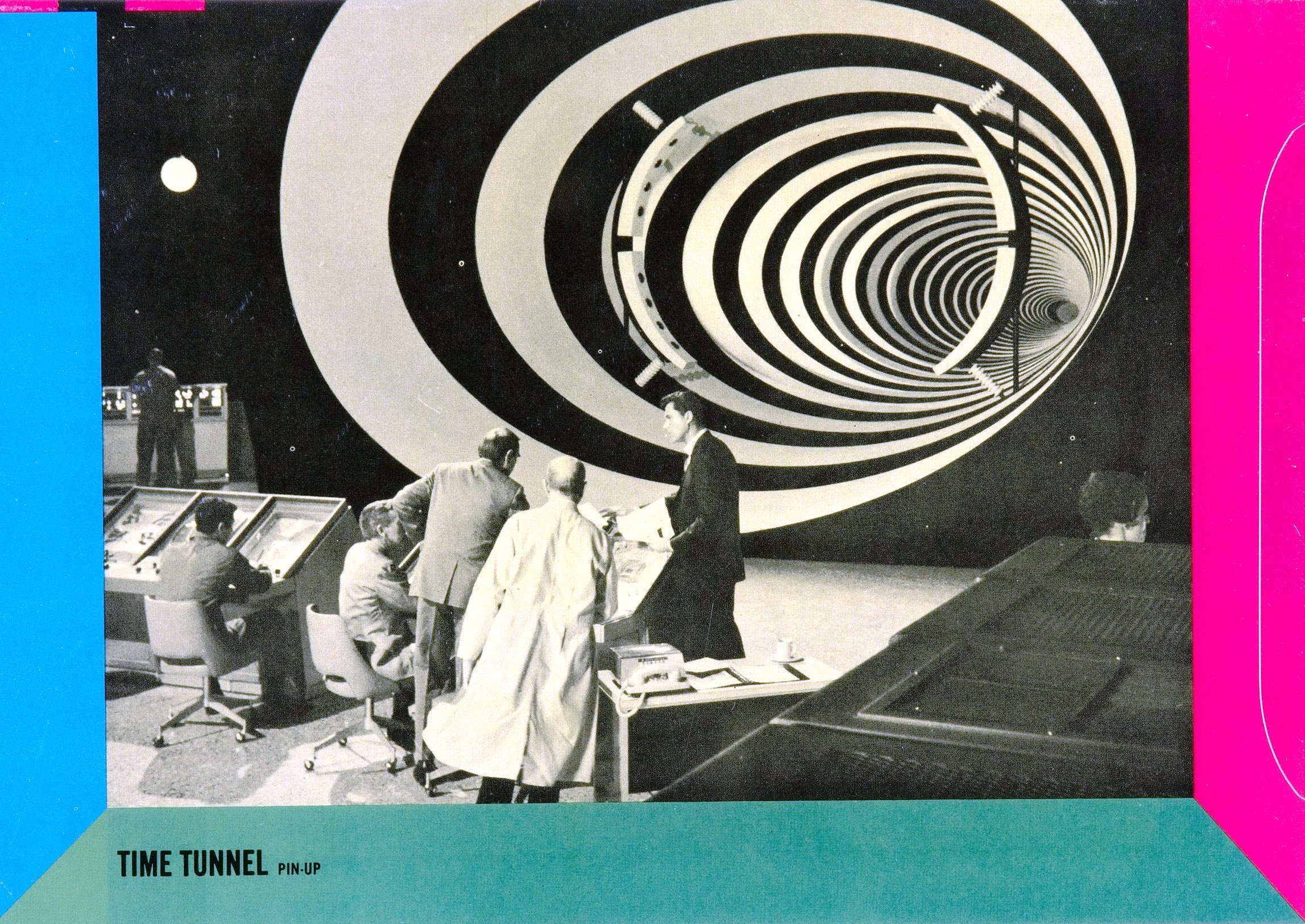
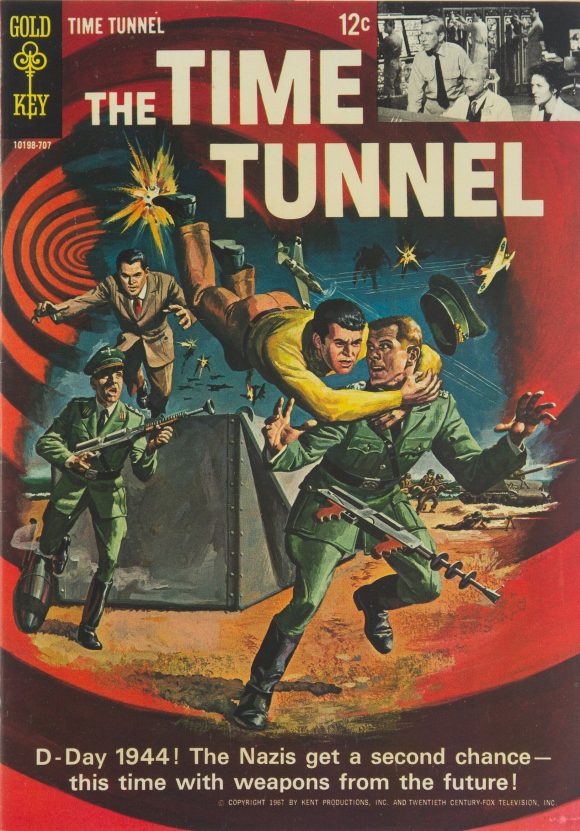
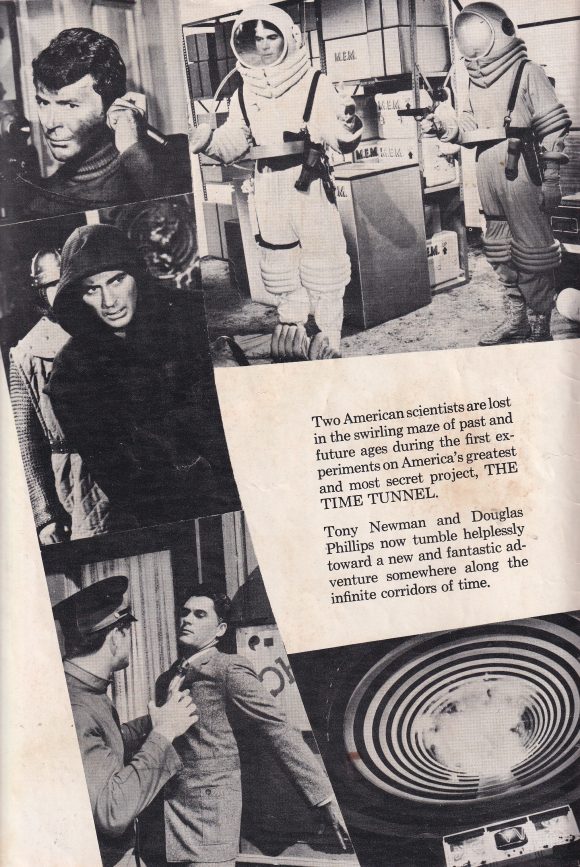
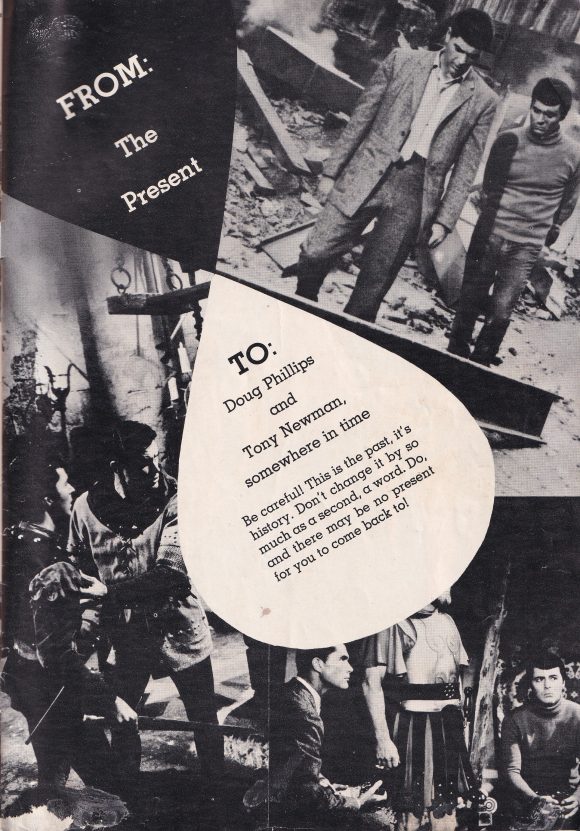
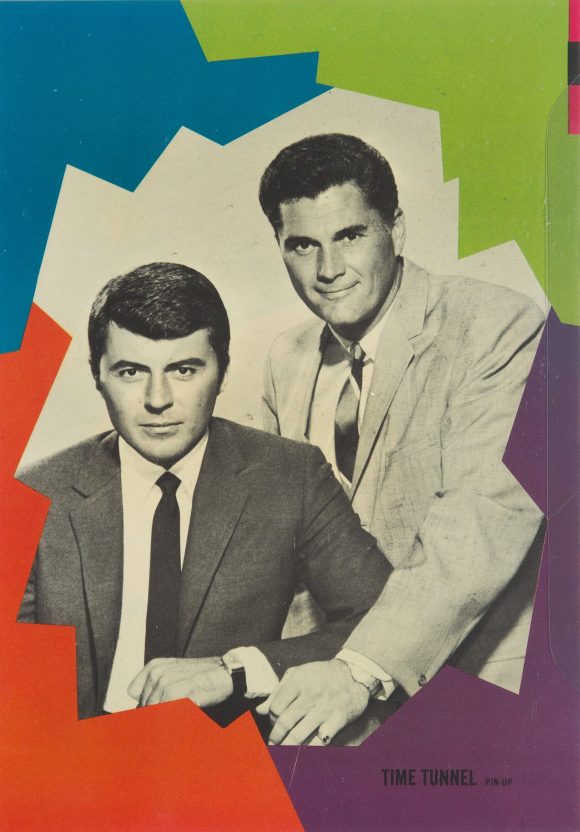
In Japan, though, they outdid all the American companies in 1967 with one of the rarest Time Tunnel collectibles… a model kit of the Tunnel itself.
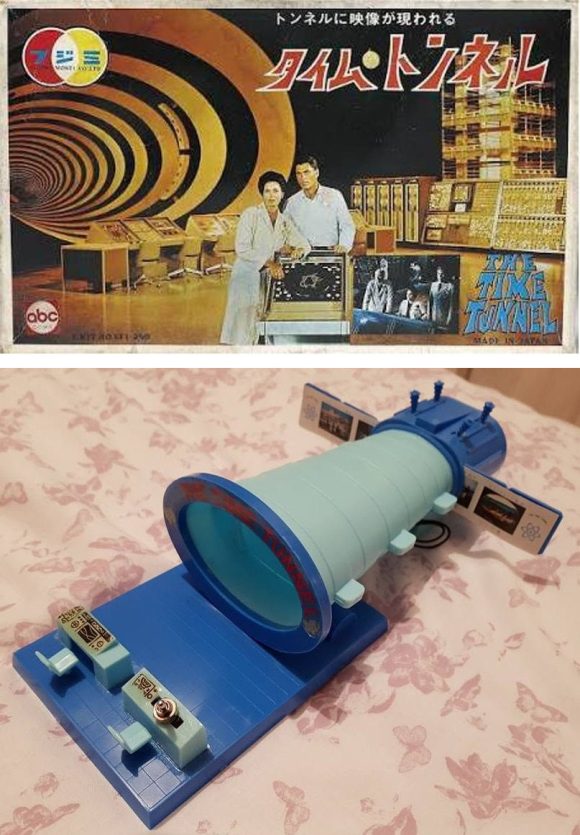
The Time Tunnel model kit was only available in Japan, produced in 1967 by the Fujimi Mokei Company. It featured lighted images at the end of the Tunnel.
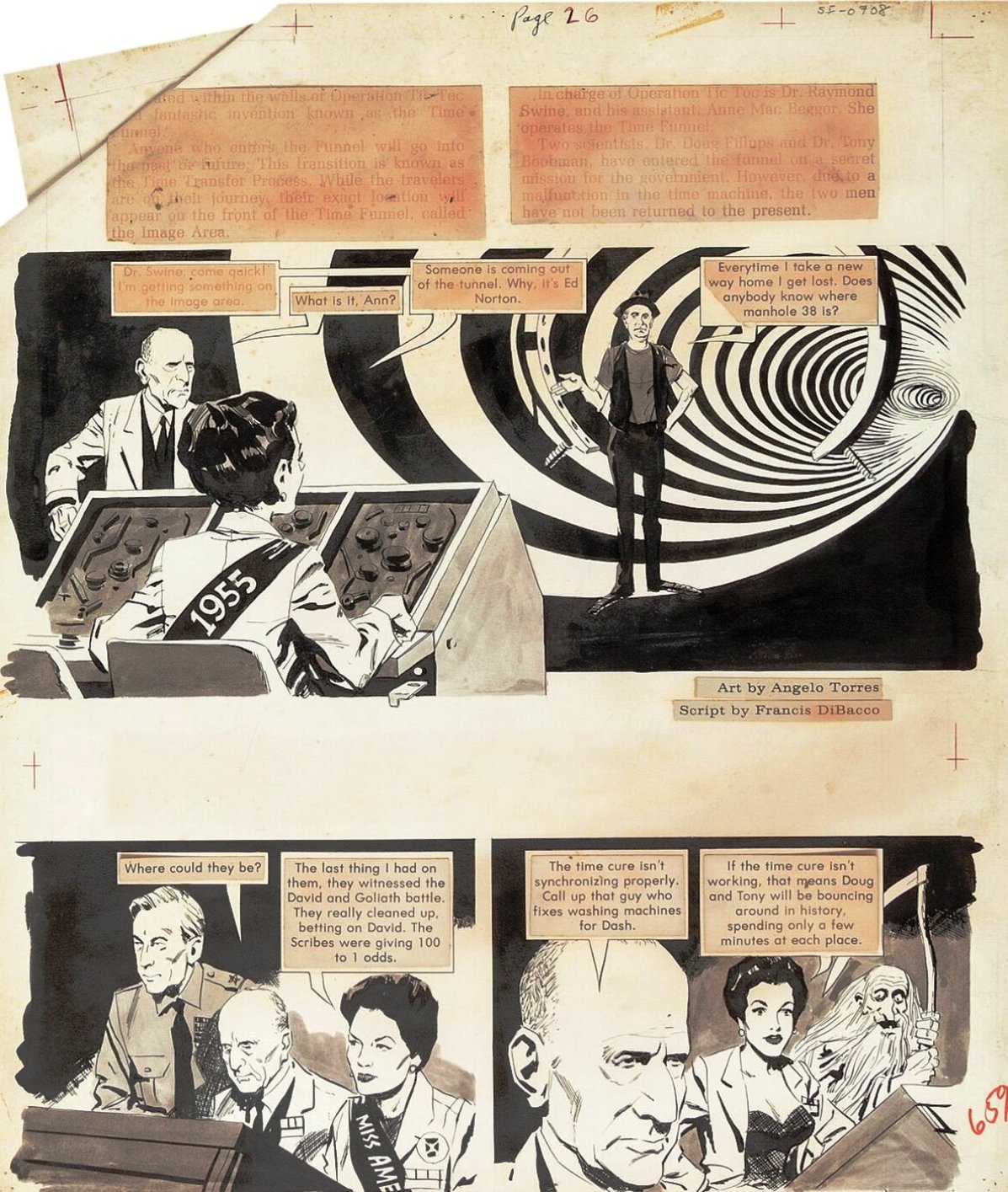
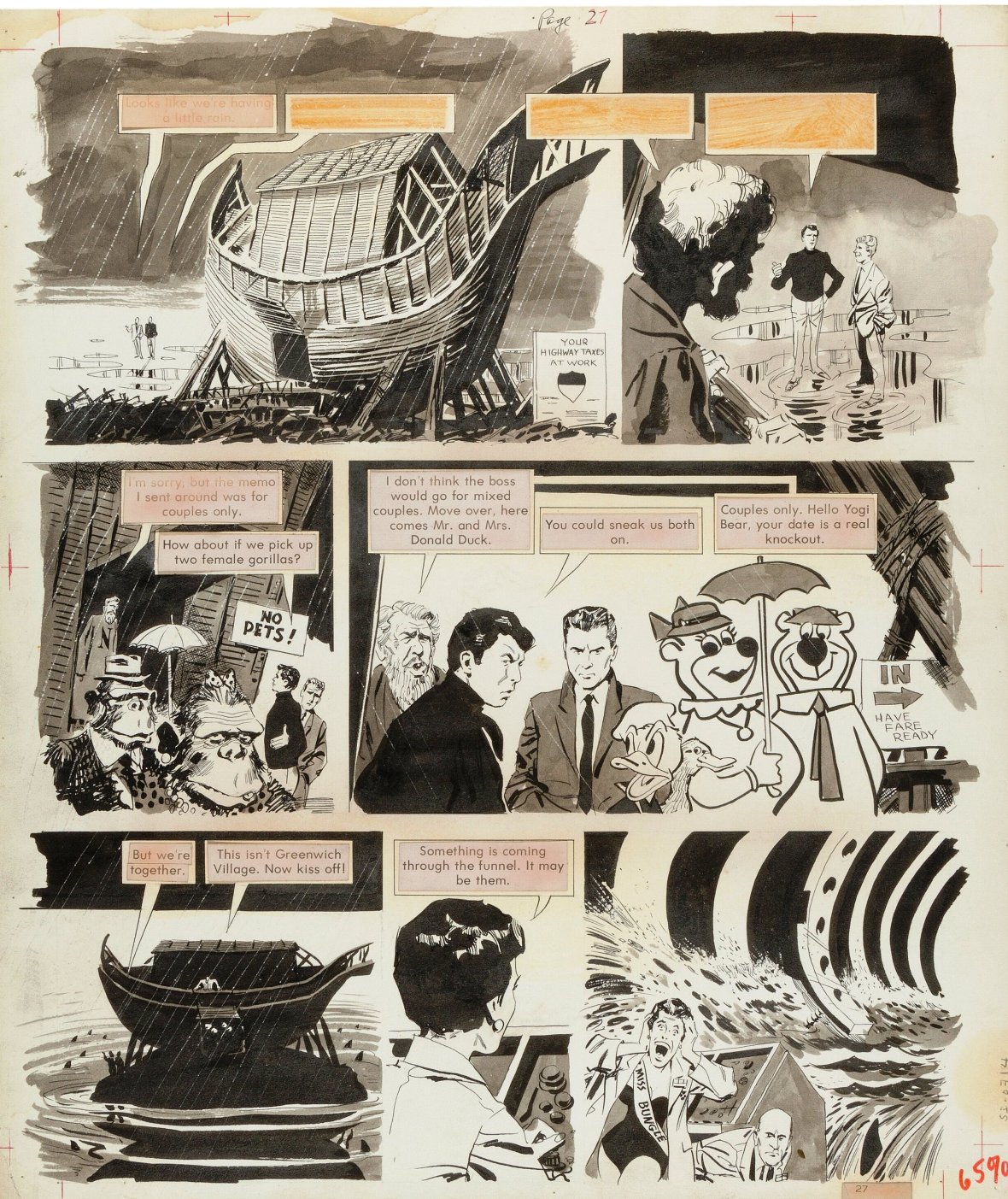
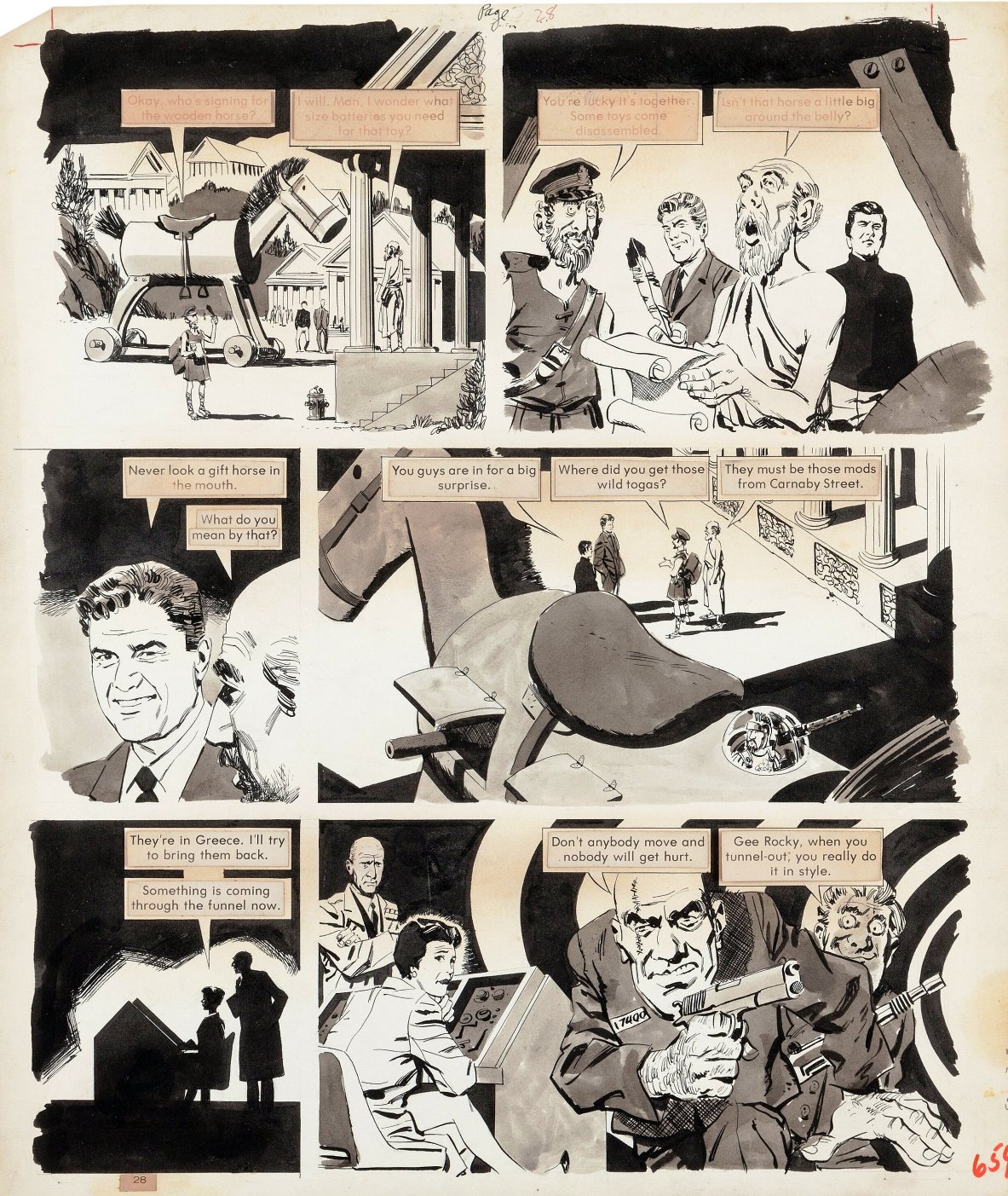
Back Stateside, you would have thought the show would have been fertile ground for Mad magazine to make fun of but they gave it a pass. However, their competitor, Sick magazine, gave it a jolly going over in its 53rd issue (June 1967), written by Francis Di Bacco and drawn by Angelo Torres. Below are the original art pages (in varying condition) for that full satire, which were offered up by Heritage Auctions in 2024.
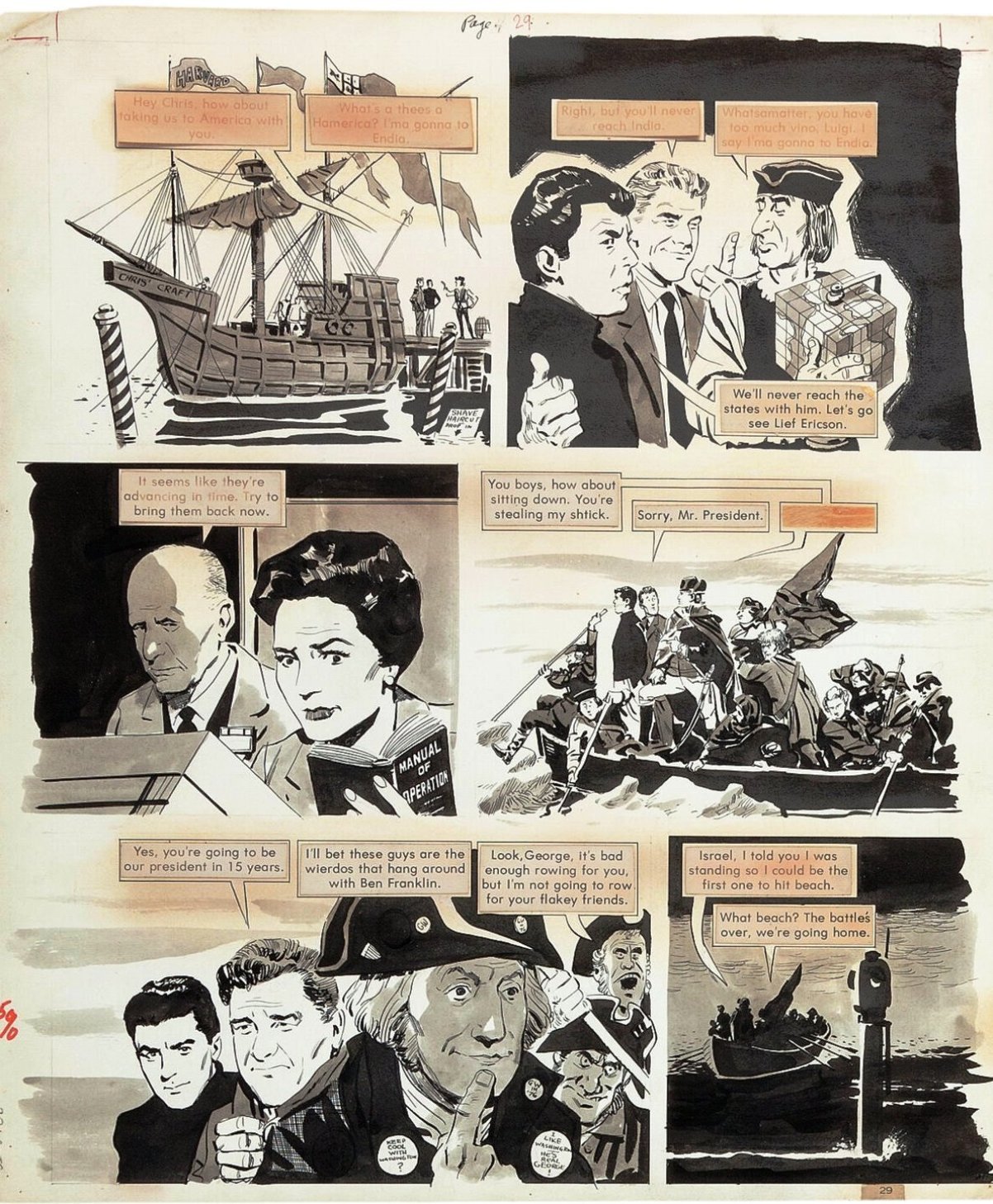
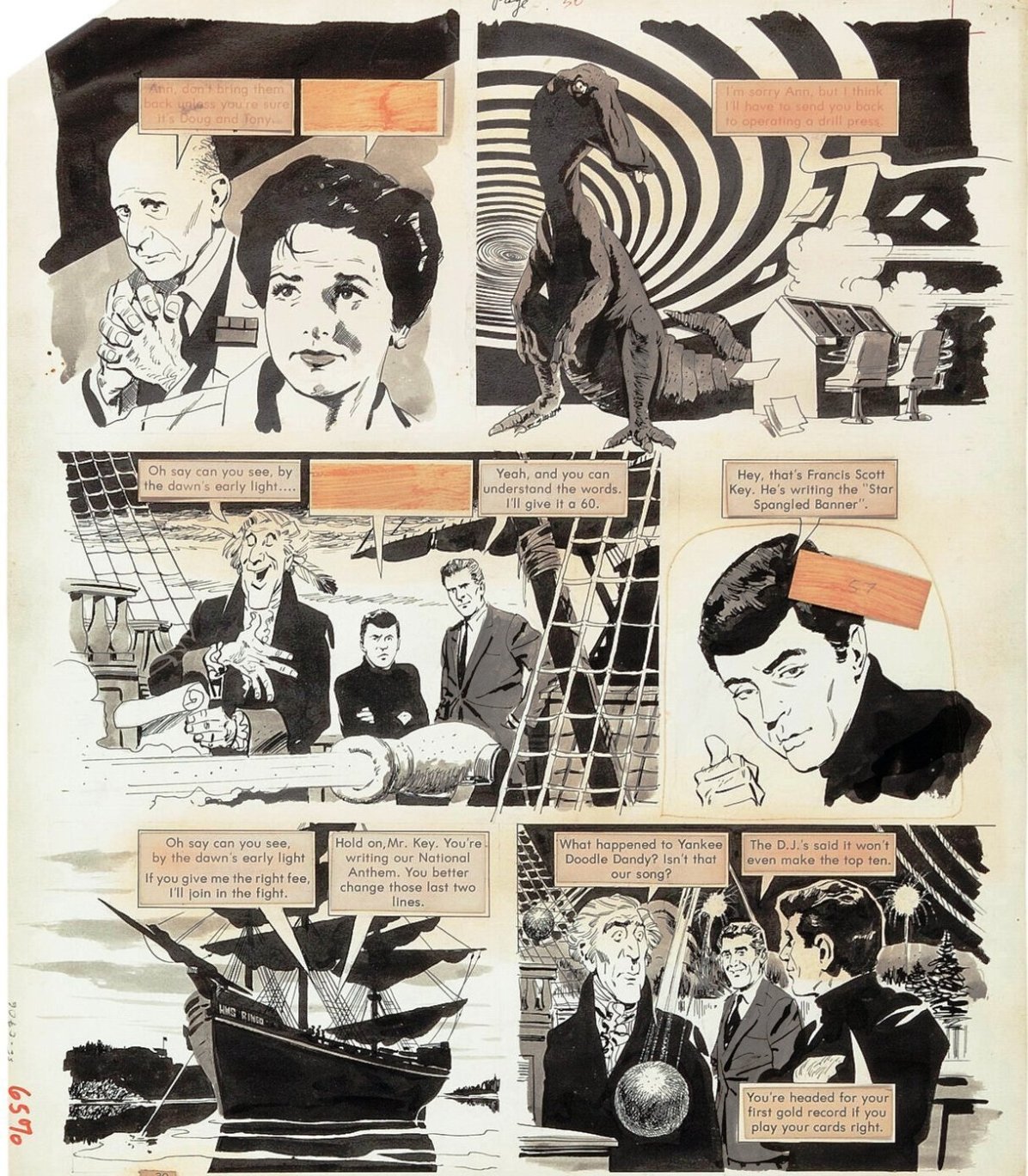
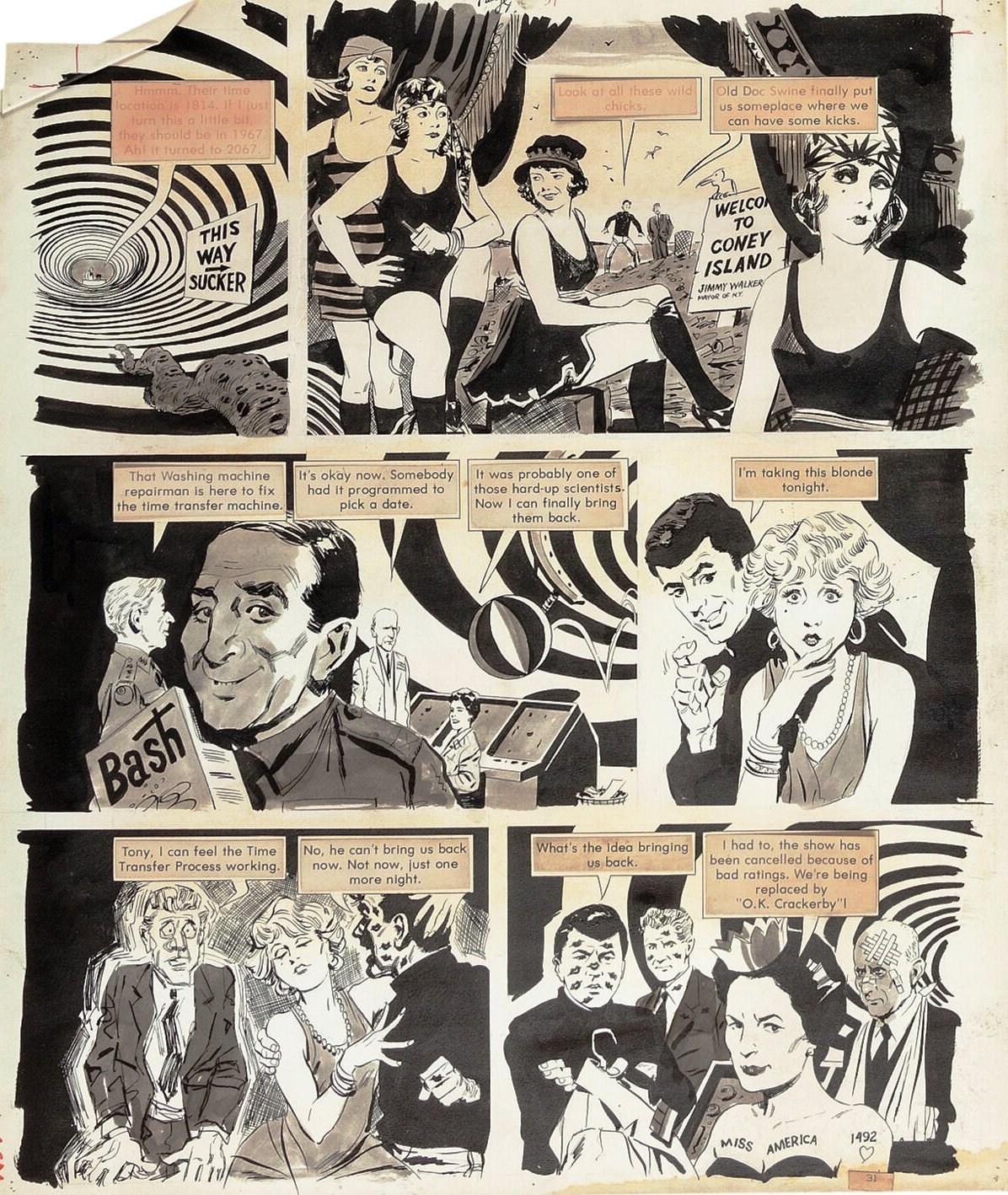
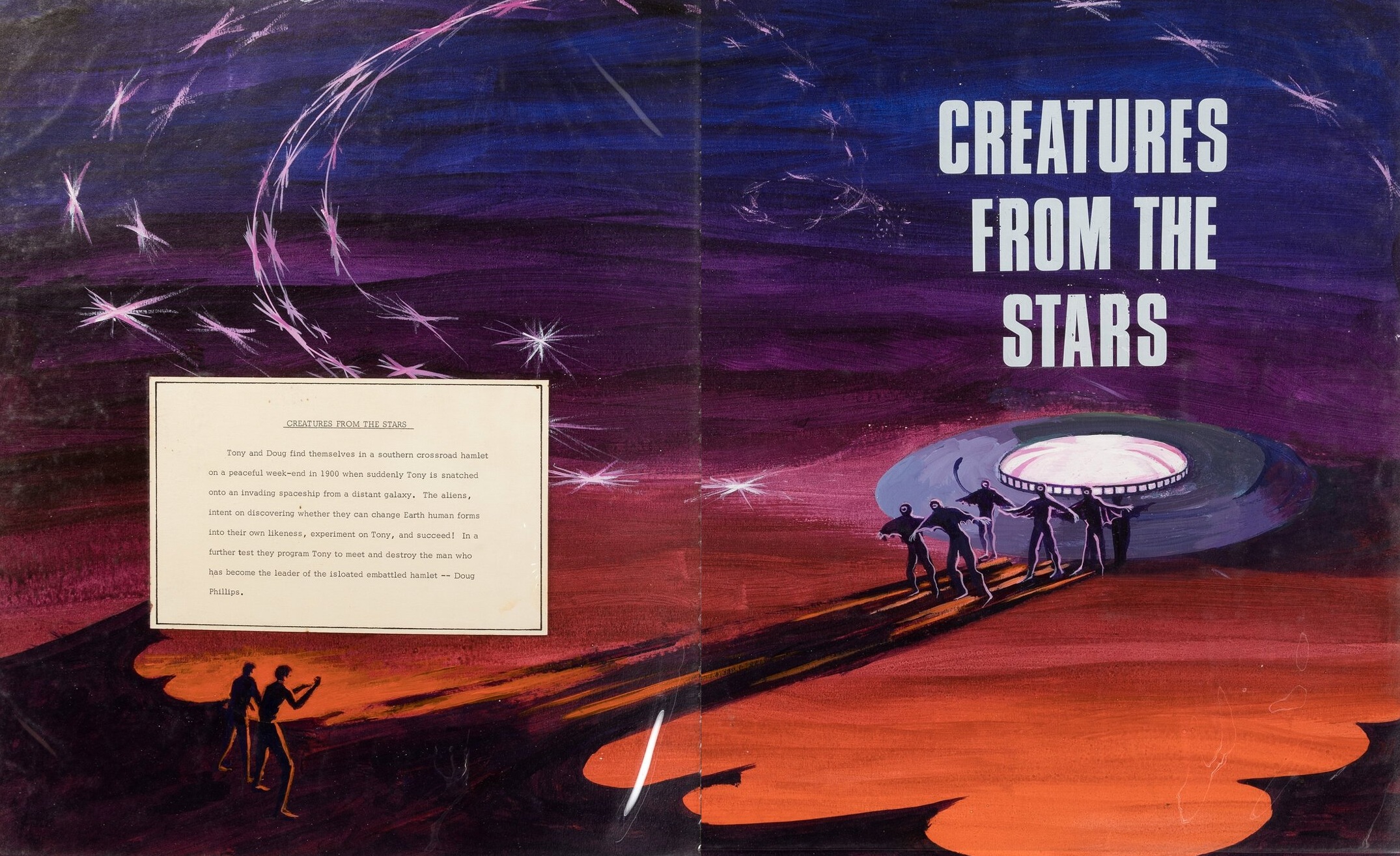
Irwin Allen had episodes in mind for the second season and made a few of them part of a 1967-68 promotion book:
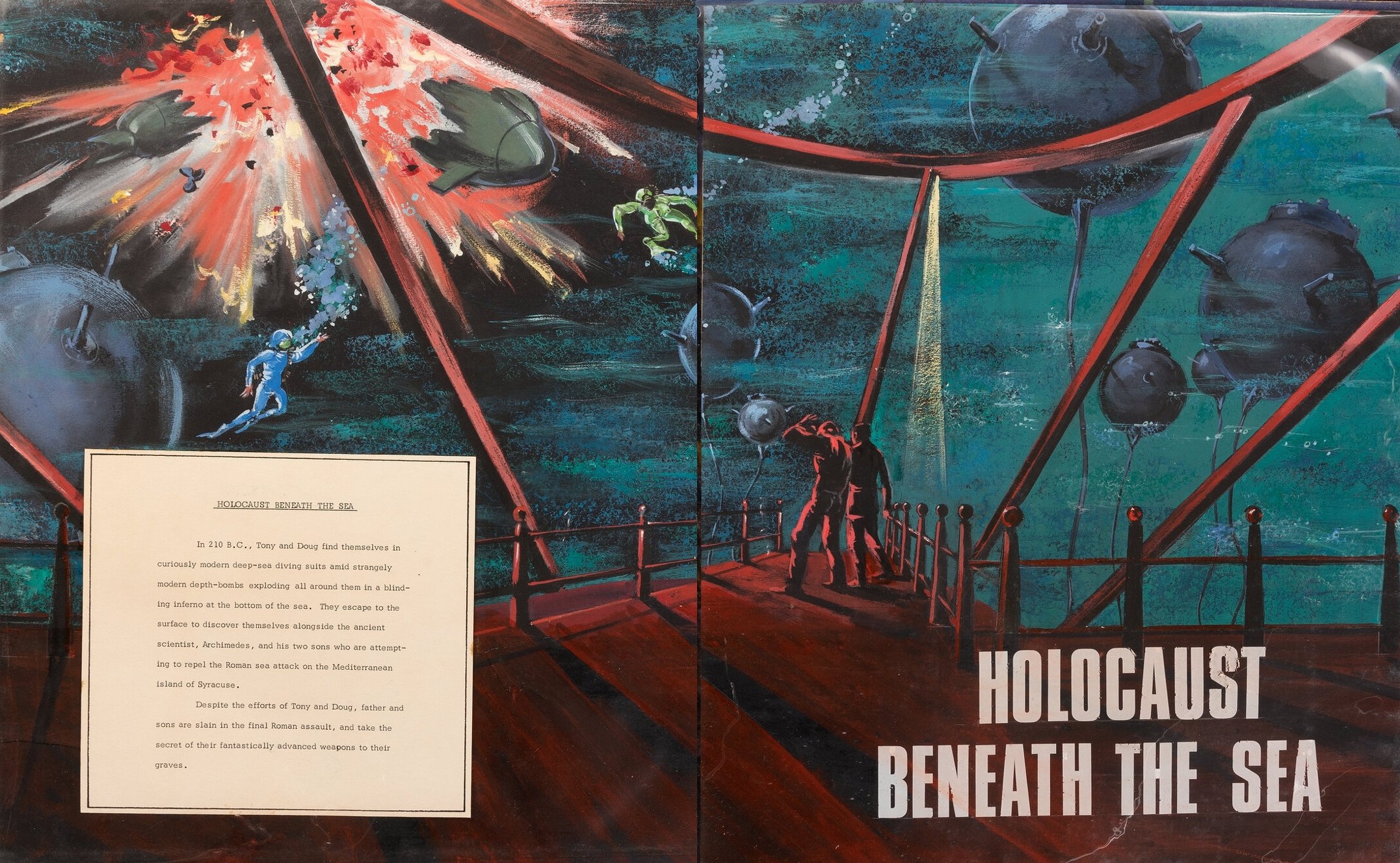
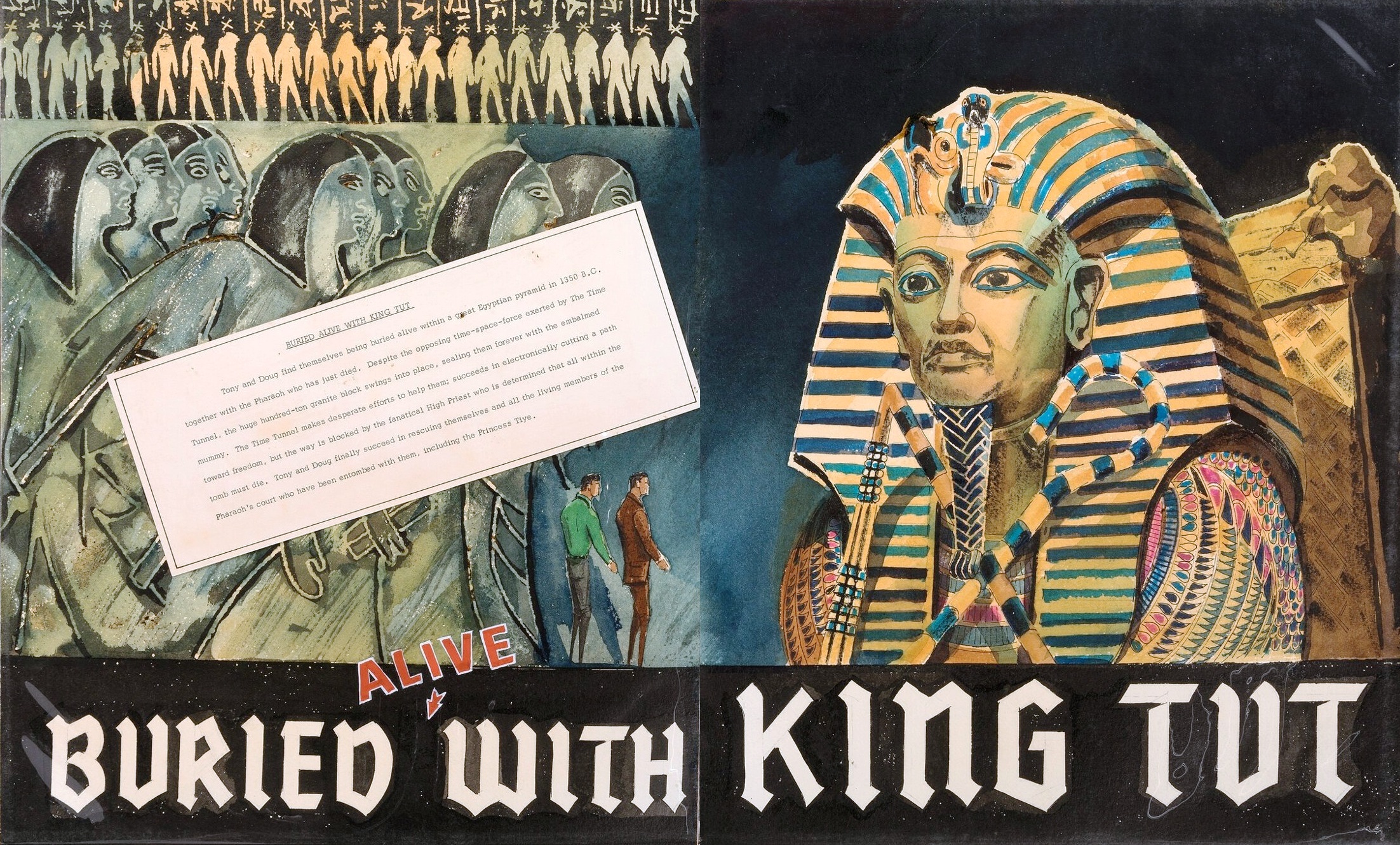
However, The Time Tunnel was cancelled following the 30th episode, “Town of Terror” (which aired April 7, 1967). There are different stories about the reason for the end of the series. One is that it was picked up for a second season by an executive at Fox but he was let go and the new person said no. Another suggested reason is that the show was just too expensive for ABC. A third explanation is that Irwin Allen was told the budget would be slashed and he refused to go along, cancelling it himself. And then, of course, the most likely, the show was low in the Nielsen ratings. (It was scheduled on Friday nights opposite The Man from U.N.C.L.E., Hogan’s Heroes, and The Wild Wild West.)
In 1976, Allen tried to do a new Time Tunnel-type series with a pilot about two men who travel back in time to find the cure for a disease killing people in the present. Sam Groom and Tom Hallick were the stars. For Groom, it was a return to the time travel concept, having played Jerry, a scientist technician, in five of the early episodes of The Time Tunnel. The new series didn’t sell and the pilot was re-edited into a one-shot TV-movie, Time Travelers.
Allen died in 1991, but there were still fans of the original series. In 2002, a new pilot was made in which Doug Phillips (David Conrad), an ex-Marine, is recruited by the government to help with a timestorm it accidentally created. Called “the 240,” due to it being out of control for 240 minutes, the timestorm changed history and, in a ripple effect, life in the present. The way to help get it under control was – you guessed it – a time tunnel through which he and four team members go into the past to fix things. One of his team is a female scientist named Dr. Toni Newman (Andrea Roth).
The pilot was well done and was more centered with emotion than the original series. Regretfully, the pilot was never aired, but can be seen on YouTube.
Maybe we will see Doug and Tony (or Toni) again. Time will tell. (No pun intended, just hope.)
—
MORE
— The Complete 1966 WEEK INDEX of Features. Click here.
— TV’s GREEN HORNET at 60: GOLD KEY’s Comics Were Faithful to the Show — While Giving Something New and Groovy. Click here.
—
13th Dimension contributor-at-large PETER BOSCH’s first book, American TV Comic Books: 1940s-1980s – From the Small Screen to the Printed Page, was published by TwoMorrows. (You can buy it here.) A sequel, American Movie Comic Books: 1930s-1970s — From the Silver Screen to the Printed Page, is out now. (Buy it here.) Peter has written articles and conducted celebrity interviews for various magazines and newspapers. He lives in Hollywood.


News reported through various sources and compiled with AI. This is automatically generated news content from known, popular, and reliable sources available at the time of publication.
We do not take any responsibility for, nor make any representations regarding, the accuracy, completeness, credibility, or
reliability of the content.
In case of any discrepancy, error, or copyright claim, we will promptly review and remove the content in question where appropriate.
We do not claim ownership of third-party content and assume no responsibility or liability whatsoever for any information contained herein. The credit, links and images are kept intact as an honest gesture, are property of its respective owners.