

 Editor's Desk





The World Will Overshoot 1.5°C and Must Now Remove Carbon, United Nations Says
body {background-color: #D2D1D5;}
Research & Developments is a blog for brief updates that provide context for the flurry of news that impacts science and scientists today.
Humanity is certain to exceed the warming limit set by the Paris Agreement, a legally binding treaty meant to cap the worldâs carbon emissions, according to a new report from the United Nations Environment Programme (UNEP).
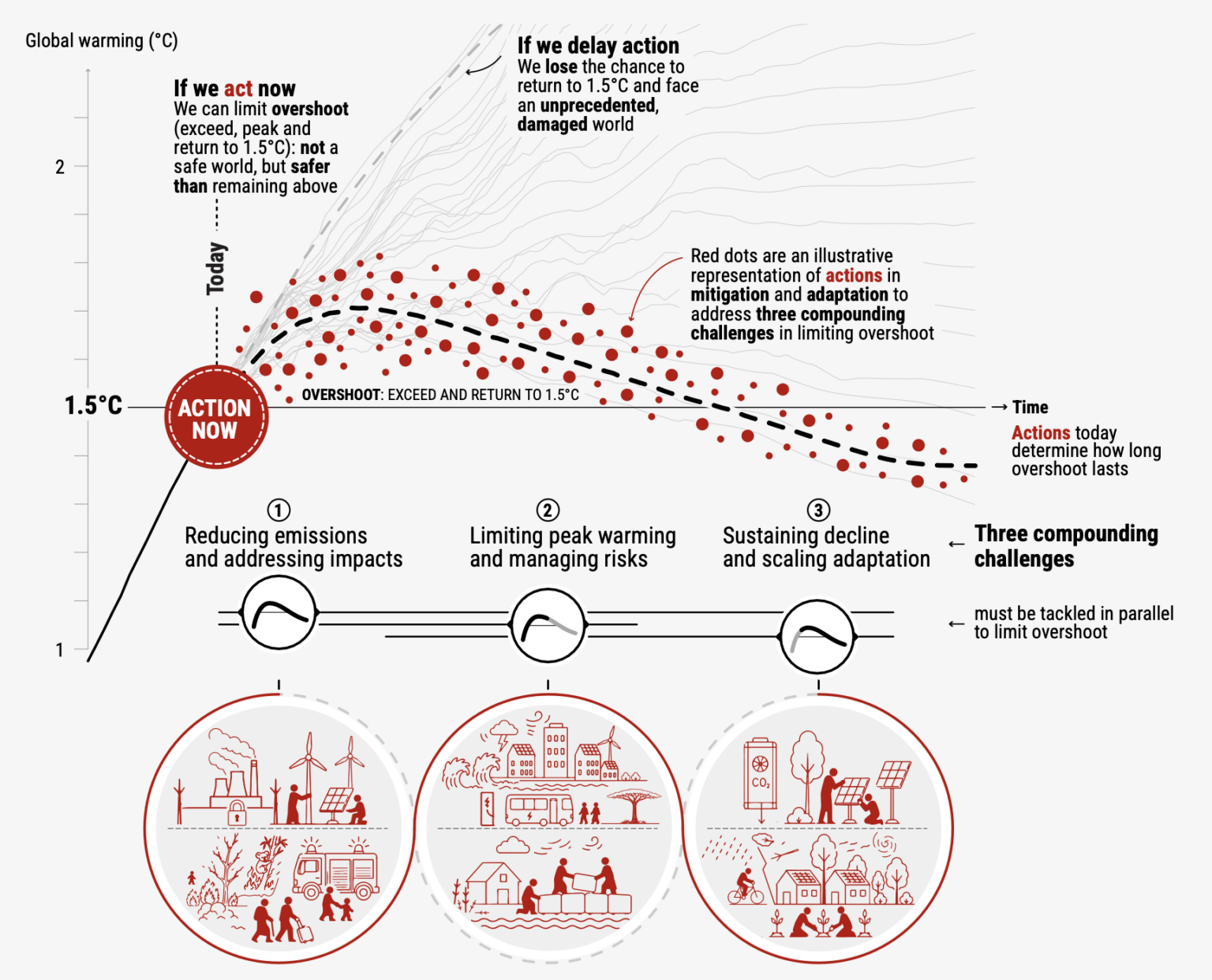
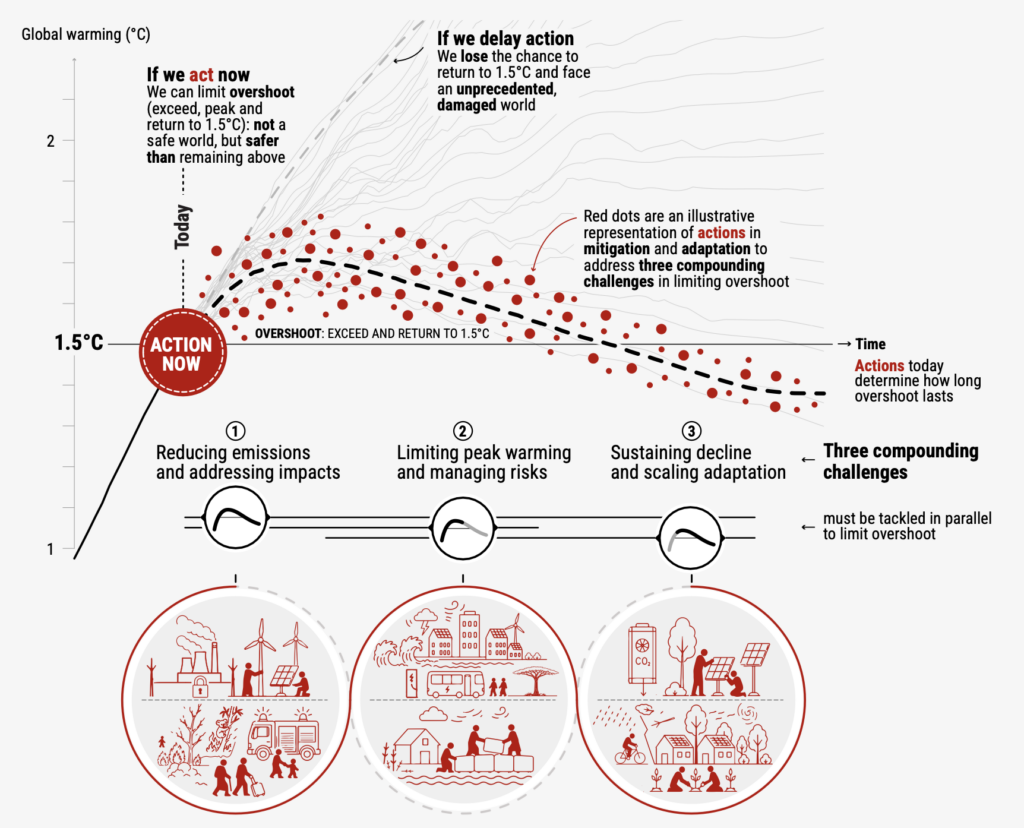
Now, to reduce severe threats to human health, food security, water supplies, and more, societies will need to reach net-negative greenhouse gas emissions by not only cutting those emissions, but expanding carbon dioxide removal projects, a pathway called âovershoot, peak and decline.â
The 1.5°C (2.7°F) goal âmust now be approached from above.â
Following such a pathway would require virtually eliminating greenhouse gas emissions by mid-century and rapidly deploying carbon dioxide removal technologies, including conventional tactics such as planting trees and restoring ecosystems, and new ones, such as carbon capture and storage.
âThis is by no means an acceptable or preferred pathway,â the report stated. âIt is simply the best remaining option.â
The 1.5°C (2.7°F) goal âmust now be approached from above,â Inger Andersen, the executive director of UNEP, wrote in the reportâs foreword. The report is the first time that UNEP has referred to staying beneath the 1.5°C (2.7°F) warming limit as impossible rather than unlikely.
The news that Earth will likely breach this limit was expected by climate scientists: In February 2025, a pair of studies published in Nature Climate Change determined that Earth had likely already entered the 20-year period in which global temperatures would exceed 1.5°C (2.7°F).
In order to bring global temperatures back to the 1.5°C (2.7°F) mark, Earthâs warming must not exceed 1.8°C (3.2°F), the new report states. Beyond that mark, cooling Earth back to the 1.5°C (2.7°F) level this century âbecomes increasingly challenging.â
Reaching the amount of carbon dioxide removal required for the âovershoot, peak and declineâ pathway would be an enormous task for the worldâs governments and economies. Technologies that remove carbon from the air and store it underground are still limited in scale, and so far, just 12 projects have been successful. Just to limit warming to 1.5°C (2.7°F), even without overshooting that limit, the world would need to deploy carbon dioxide removal technologies at rates faster than those seen for solar power, which is far from the current reality.
Scientists arenât sure Earthâs subsurface could even store the amount of carbon necessary to keep Earth at net-zero emissions. âJust maintaining net-zero COâ emissions could exhaust current estimated storage capacity in sedimentary basins by 2200,â the report stated.
Related
⢠Read the Report: âLimiting OvershootâNavigating Exceedance of 1.5°C and Pathways Towards Returnâ
⢠Climate Goals Missed, U.N. Says World Must Now Remove Carbon at Scale
⢠Carbon Brief: Q&A: The Current State of âCarbon Dioxide Removalâ Around the World
⢠UNEP: Overshoot Explained: 5 Things to Understand About a World Beyond 1.5°C
Glen Peters, a senior researcher at the CICERO Center for International Climate Research in Norway who was not involved in the UNEP report, told The New York Times that various obstacles are in the way of large-scale carbon removal projects. Large amounts of land would need to be reforested for conventional carbon removal, for instance, which could spark conflicts with agriculture. Wildfires, as well as climate change itself, could prevent or damage plant growth.
Still, a rapid upscaling of carbon dioxide removal, paired with strong governance frameworks to ensure ethical deployment, is critical, according to UNEP. Without such action, the breaching of dangerous tipping points in Earth systems, such as irreversible changes to ice sheets or the slowing of the Atlantic Meridional Overturning Circulation (AMOC), will become more likely, paired with growing human and ecological suffering.
âWe need stronger political will,â Andersen wrote. âDecisions taken now and in the next few years will determine whether viable options remain to reverse warming towards 1.5°C.â
âGrace van Deelen (@gvd.bsky.social), Staff Writer
These updates are made possible through information from the scientific community. Do you have a story about science or scientists? Send us a tip at [email protected].

Text © 2026. AGU. CC BY-NC-ND 3.0
Except where otherwise noted, images are subject to copyright. Any reuse without express permission from the copyright owner is prohibited.

News reported through various sources and compiled with AI. This is automatically generated news content from known, popular, and reliable sources available at the time of publication.
We do not take any responsibility for, nor make any representations regarding, the accuracy, completeness, credibility, or
reliability of the content.
In case of any discrepancy, error, or copyright claim, we will promptly review and remove the content in question where appropriate.
We do not claim ownership of third-party content and assume no responsibility or liability whatsoever for any information contained herein. The credit, links and images are kept intact as an honest gesture, are property of its respective owners.