
 Editor's Desk

Cinemas offer a platform for stories of resistance amid shrinking civic spaces in Africa
 News Desk
7 minutes read
News Desk
7 minutes read
Films don't change the world. Or do they?
Originally published on Global Voices
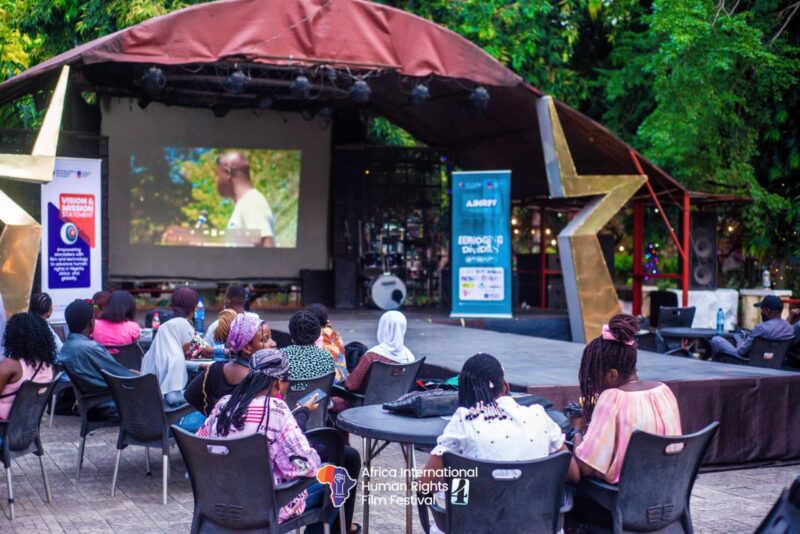
Image from the 4th edition (2025) of the festival, themed âBridging Divides.â Photo courtesy of the Africa International Human Rights Film Festival. Used with permission.
Across Africa, civic space is shrinking. Governments are increasingly using legal frameworks, internet shutdowns, and censorship to silence dissent, restrict press freedom, and criminalize activism. Across the continent, the ability of ordinary citizens to document, resist, and speak out is under constant pressure. In this context, unconventional advocacy tools, including film, are gaining traction among human rights defenders seeking to bypass traditional gatekeepers and reach a wider audience.
Can a film festival achieve what NGO reports, legal action, and protests sometimes fail to do: shift the narrative, strengthen solidarity, and hold those in power accountable? The Africa International Human Rights Film Festival (AIHRFF), now in its fifth edition, proves just that.
Organized by the Human Rights Journalists Network Nigeria and scheduled for December 8â10, 2026, under the theme âStories of Resistance,â the festival sits at an increasingly contested crossroads: storytelling and advocacy, editorial independence and institutional partnerships, between the promise of cinematic impact and the more difficult question of measurable change. Global Voices spoke with Executive Director Kehinde Adegboyega about the goals of this yearâs festival and what the organizers are still striving to achieve.
Jean Sovon (JS): As we approach the fifth edition of this human rights film festival in Africa, what makes AIHRFF the right vehicle for this mission? What justifies a Nigerian journalistsâ organization claiming this role rather than more established film institutions or human rights NGOs?
Kehinde Adegboyega (KA): The Africa International Human Rights Film Festival (AIHRFF) emerged from a recognition that storytelling, journalism, human rights advocacy, and civic engagement are deeply interconnected. While film institutions excel at promoting cinema and human rights organizations focus on advocacy and service delivery, AIHRFF sits at the intersection of these fields.
The Human Rights Journalists Network Nigeria brings a unique perspective rooted in documentation, public accountability, freedom of expression, and access to information. Our members understand the power of narratives to influence public opinion, policy debates, and social change. AIHRFF was therefore conceived not simply as a film festival, but as a platform where filmmakers, journalists, activists, policymakers, academics, and citizens can engage in dialogue around issues that affect peopleâs lives.
Over four editions, the festival has demonstrated its ability to convene diverse stakeholders, foster difficult conversations, and create opportunities for learning, advocacy, and collaboration. Rather than competing with film institutions or NGOs, AIHRFF complements their work by providing a space where storytelling becomes a catalyst for civic engagement and social reflection.
JS: Beyond screenings, can you cite a concrete case where a film presented at AIHRFF contributed to a measurable change?
KA: AIHRFF does not claim that a single screening directly results in a policy change or legal outcome. Social and political change is usually the product of sustained efforts by many actors over time.
However, the festival has consistently served as a convening platform that connects filmmakers, advocates, policymakers, journalists, and affected communities. For example, screenings on gender-based violence, digital rights, and civic freedoms have been followed by structured discussions and partnerships with advocacy organizations that have used the films as educational and mobilization tools beyond the festival.
Our impact is best understood as contributing to awareness, agenda-setting, coalition-building, and public engagement. We continue to strengthen our monitoring and evaluation framework so that future editions can better document downstream outcomes and policy influence.
JS: This yearâs theme is âStories of Resistance.â Resistance against whom, exactly? Some African governments may feel directly targeted. How does AIHRFF navigate between editorial freedom and diplomatic constraints in host countries?
KA: For AIHRFF, âStories of Resistanceâ refers broadly to the human capacity to respond to injustice, exclusion, discrimination, violence, censorship, environmental degradation, inequality, and other threats to human dignity.
Resistance is not directed at any particular government, institution, or political actor. It encompasses the experiences of individuals and communities who seek peaceful and lawful ways to defend rights, preserve culture, strengthen democracy, and improve social conditions.
The festival is committed to editorial independence while maintaining a constructive and inclusive approach. We encourage dialogue rather than polarization. Our objective is to create spaces where diverse perspectives can be heard and discussed responsibly, in line with international human rights principles and democratic values.
JS: The festival is open to filmmakers worldwide. In practice, what proportion of selected films actually come from Africa Is there a risk of reproducing an outside gaze on the continent rather than genuinely amplifying African voices?
KA: African voices remain at the heart of AIHRFF. While we welcome submissions from around the world because human rights challenges are global, our programming intentionally prioritizes African stories, African filmmakers, and issues affecting African communities.
International films provide opportunities for comparative learning and solidarity across regions, but they do not define the festivalâs identity. Our curatorial approach seeks to ensure that African perspectives are not merely represented but centered.
As the festival grows, we are increasingly investing in emerging African filmmakers, youth storytellers, and underrepresented voices from across the continent. Our long-term ambition is to strengthen African storytelling ecosystems while maintaining global engagement.
JS: The festival lists digital rights among its themes. Yet several African governments, including Nigeria, have practiced internet shutdowns and mass surveillance. How does the festival address violations committed by its own partner or host states?
KA: AIHRFF approaches digital rights from a rights-based perspective that is independent of governments, corporations, and political interests.
The festival provides space for discussions on internet freedom, privacy, surveillance, online safety, digital inclusion, and freedom of expression regardless of where violations occur. These conversations often include civil society actors, researchers, journalists, policymakers, and technical experts.
Partnerships with institutions do not determine the content of discussions or the themes selected for the festival. We believe that constructive engagement requires the ability to discuss difficult issues openly and respectfully, including challenges within our own societies.
JS: Who finances AIHRFF? And how does that potential dependency guarantee, or threaten, the editorial independence of your selections?
KA: AIHRFF operates through a diversified partnership model that has included support from international organizations, cultural institutions, civil society partners, foundations, and private sector actors.
The festivalâs editorial decisions are guided by its mission and curatorial principles rather than by the preferences of individual sponsors or partners. We deliberately seek a diversity of funding sources to reduce dependence on any single institution.
Editorial independence is essential to the credibility of the festival. Our partnerships are built around shared commitments to human rights, dialogue, creativity, and public engagement, while programming decisions remain the responsibility of the festival organizers and curatorial team.
JS: What happens to these films after closing night? Is there a mechanism to keep them circulating in communities without access to cinemas, or to reach courtrooms, parliaments, and classrooms where they could actually drive change?
KA: This is an important question and one we continue to develop.
The festival is not intended to be a stand-alone event but part of a broader ecosystem of engagement. Beyond the festival, we seek opportunities to collaborate with schools, universities, civil society organizations, media outlets, and community groups to extend the reach of selected films.
We are also exploring the development of year-round screening initiatives, educational partnerships, digital engagement campaigns, and thematic outreach activities that bring films into classrooms, community spaces, and policy discussions.
Our vision is for AIHRFF to evolve from an annual festival into a sustained platform for human rights education, storytelling, and civic dialogue that remains active throughout the year.
News reported through various sources and compiled with AI. This is automatically generated news content from known, popular, and reliable sources available at the time of publication.
We do not take any responsibility for, nor make any representations regarding, the accuracy, completeness, credibility, or
reliability of the content.
In case of any discrepancy, error, or copyright claim, we will promptly review and remove the content in question where appropriate.
We do not claim ownership of third-party content and assume no responsibility or liability whatsoever for any information contained herein. The credit, links and images are kept intact as an honest gesture, are property of its respective owners.