

 Editor's Desk




Forbidden movies: Russia bans films that reject so-called âtraditional valuesâ
 News Desk
5 minutes read
News Desk
5 minutes read
A movie about the Nuremberg trials made the forbidden list even before the law was enacted
Originally published on Global Voices
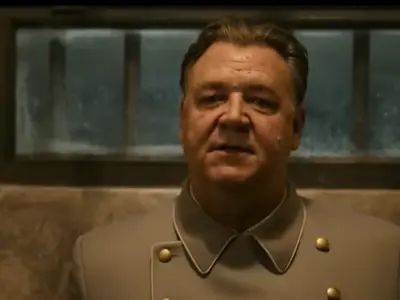
Screenshot taken from the official trailer of the film âNuremberg,â via the Sony Pictures Classics YouTube channel; fair use.
On March 1, 2026, a Russian law prohibiting the distribution and screening of movies that may be viewed as discrediting âtraditional Russian spiritual and moral valuesâ came into effect. According to the new rules, the Ministry of Culture will have the authority to refuse distribution licenses to screen movies deemed contrary to these values or which â[promote] their rejection.â The law also applies to online streaming services and social media.
According to some Russian media, the law will apply to both foreign and domestic films. Many well-known Hollywood movies are considered to be at risk, including works by directors like David Fincher, Quentin Tarantino, and Martin Scorsese. Authorities will pay particular attention to movies that may be interpreted as promoting ânon-traditional relationshipsâ or ârejecting family valuesâ.
In Russia, foreign streaming services have not worked since the start of the full-scale Russian invasion of Ukraine. However, domestic streaming services remain popular, and illegal streaming of pirated material is also on the rise; Putin signed a law in June 2024 that eased punishment for copyright infringement.
Streaming services may well have to delete a lot of movies. As Radio Svoboda noted, âtraditional values,â according to this law, include patriotism, civic-mindedness, service to the fatherland and responsibility for its fate, high moral ideals, a strong family, productive labor, and the priority of the spiritual over the material.
It is not yet known which particular movies are being targeted, although the film distribution company World Pictures confirmed that 2025âs âNuremberg,â which had been scheduled to premiere in Russia on March 19, 2026, will not be released in Russian cinemas, since the Ministry of Culture did not provide a distribution licence. Explaining its decision, the ministry referred to paragraph 19, subparagraph Z of the rules governing the issuance of distribution certificates, which mentions âother cases defined by federal laws.â
The historical drama by director James Vanderbilt tells the story of the criminal trials of Nazi Germanyâs leaders following World War II. Based on the book âThe Nazi and the Psychiatristâ by Jack El-Hai, the filmâs plot follows psychiatrist Douglas Kelley, who must determine whether Hermann Göring and other associates of Hitler are fit to stand trial.
The Sundance Film Festivalâs hit âSplitsvilleâ was one of the first movies that was reportedly denied release in Russia under the new law, based on its alleged âdiscrediting of traditional spiritual and moral values.â The movie is a humorous reflection by director Michael Angelo Covino on open relationships after forty, the midlife crisis, and sexual experimentation. According to Film.ru, just a year ago, a film like this would likely have made it onto the list of Russian releases without any problems.
Russian audiences also missed the new movie by Iranian director Jafar Panahi, âIt Was Just an Accident,â which won the Palme dâOr at the most recent Cannes Film Festival. Its official cinema release in Russia had been planned for October 2025.
âIt Was Just an Accidentâ did not receive approval for several reasons â Ministry of Culture officials stated that the film âcontains materials that violate Russian legislation,â including the promotion of violence, extremism, and non-traditional sexual relationships.
The story follows Vahid, a former political prisoner who gets an opportunity to take revenge on his abusers. One day, a family brings their car to the auto repair shop where he works, and Vahid clearly recognizes one of them. After devising a plan for revenge, he begins to doubt whether carrying it out is the right decision.
âParents Are Here,â a documentary by film scholar, director, and founder of Seans magazine Lyubov Arkus, was also denied a Ministry of Culture distribution license in 2025. It is the first and only documentary film â publicly known, at least â to have been denied the license.
Arkus herself described the situation on social media: âThis film of mine did NOT receive a distribution certificate. It was removed from festival programs where it had already been announced and even included in catalogs. That doesnât upset me very much. The real horror is that I am not allowed to show it.â
âParents Are Hereâ is a prequel to another documentary, âAntonâs Right Hereâ (2012), which told the story of a young man living with autism spectrum disorder. Arkus is the founder of Russiaâs first support center for people with autism.
The Russian release of the romantic comedy âThe Threesome,â starring Zoey Deutch, which had been scheduled to premiere in early September 2025, was also canceled. As was the case with âSplitsville,â the official reason for refusing to grant the license has not been announced. The film revolves around Connor (Jonah Hauer-King), who becomes relegated to the âfriend zoneâ by Olivia (Zoey Deutch). Hoping to make her jealous, Connor decides to start courting their mutual acquaintance Jenny (played by Jenny Brooks). The love triangle unexpectedly results in two unplanned pregnancies.
According to Film.Ru, officials were not troubled as much by the idea of open relationships as they were by the chaotic lifestyle of the characters themselves, which can also fall under the definition of ânon-traditional spiritual and moral values.â
Several other movies were banned even before the law was in place. The Ministry of Culture refused to issue distribution licenses to Armando Iannucciâs comedy âThe Death of Stalin,â for instance, as well as âLoveâ by Gaspar Noé, films from Ilya Khrzhanovskyâs âDAUâ project â allegedly because they contained âpropaganda of pornographyâ â and Paul Verhoevenâs film âBenedetta.â âFairytaleâ by Alexander Sokurov was banned on the same grounds as âNuremberg,â with officials citing âother cases defined by federal laws.â
News reported through various sources and compiled with AI. This is automatically generated news content from known, popular, and reliable sources available at the time of publication.
We do not take any responsibility for, nor make any representations regarding, the accuracy, completeness, credibility, or
reliability of the content.
In case of any discrepancy, error, or copyright claim, we will promptly review and remove the content in question where appropriate.
We do not claim ownership of third-party content and assume no responsibility or liability whatsoever for any information contained herein. The credit, links and images are kept intact as an honest gesture, are property of its respective owners.