

 Editor's Desk
Trinidadian film producer Danielle Dieffenthaller, who helped Caribbean people see themselves, dies at 60
âYou treated our stories with seriousness and respect, and expected [us] to do the sameâ
Originally published on Global Voices
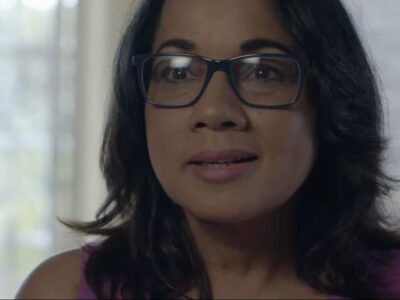
Screenshot of Danielle Dieffenthaller taken from the YouTube video âDanielle Dieffenthaller – ANSA Awards 2019â by PixelPlay Media Limited. Fair use.
On the evening of November 22, the official Instagram account of Kes the Band â one of the Caribbeanâs foremost soca music acts â announced the passing of the older sister of the bandâs frontman, Kees, guitarist Jon, and former drummer Hans Dieffenthaller. Danielle Dieffenthaller was a prominent Trinidadian television and film producer and director best known for the long-running local soap opera âWestwood Park.â Having been diagnosed with renal failure in 2018, Dieffenthaller had been on dialysis for years and was working towards a kidney transplant, but the process was stymied by heart complications. She died in hospice at the age of 60.
Having lived outside of Trinidad and Tobago for the majority of her teenage years, Dieffenthaller remembered coming back to Trinidad on vacation and seeing an after-school special where âeverybody on it looked like meâ; then and there, she decided this was what she wanted to do with her life. She returned home at 18 and got a job with the only TV station at the time, the state-owned Trinidad and Tobago Television, which ran a fair amount of local content via shows like âTurn of the Tide,â âMeena,â and âNo Boundaries,â on which she convinced producer and actor Horace James to hire her as a production assistant.
That was it â she had caught the filmmaking bug. Diffenthaller went to film school at Ryerson (now Toronto Metropolitan University), then spent some time in England, where she worked on the acclaimed Channel Four series The Bandung File. Upon her return to Trinidad, she met Georgia Popplewell and Walt Lovelace on the set of âBody Beat,â a Banyan series that educated teenagers about the AIDS epidemic. Together, the trio co-founded Earth TV, an independent production company that worked on programs such as âEco Watch,â various music videos, and even a film adaptation of the acclaimed Jean Rhys novel âWide Sargasso Sea.â
By the time âWestwood Parkâ hit local TV screens years later, Dieffenthaller had a wide range of experience under her belt and stepped into the role of producer/director with confidence. She was also insistent on maintaining ownership and control of the series, which ran for six successful seasons and was shown not just locally, but in various Caribbean territories, and syndicated in countries like Papua New Guinea, the United States, and the United Kingdom. So adept was the series at showing the complicated and often tenuous relationship between class and race in a post-colonial society like Trinidad and Tobagoâs that actor and theatre producer Richard Ragoobarsingh noted, âWestwood Park became, in my opinion, her magnum opus. It became part of Trinidad and Tobago's film history â a testimony to Danielleâs creative vision and persistence.â
In a telephone interview with Global Voices, Lovelace, who shot the series pilot, recalled Dieffenthallerâs determination: âShe was stubborn, so when she set her mind to something, she would do it.â She was a brave filmmaker, even in the literal sense. In 1990, during Trinidad and Tobagoâs attempted coup, Dieffenthaller, Lovelace and colleague Anthony Salandy managed to get access to film where no other local crew could, chronicling the insurrectionistsâ surrender and the release of hostages from parliament. âDanielle wanted to do things,â Lovelace recalls. “And I think the three of us at Earth TV shared a vision for trying to elevate the standard of production in the country.â Popplewell called Dieffenthaller âone of the fiercest and most adventurous souls I have ever known.â
Dieffenthaller would go on to produce other series, most notably âThe Reef,â set in Tobago, and a part of a pilot for âPlain Sight,â which focused on some of the urban communities that are often dismissed as nothing but criminal âhot spotsâ â but she saw the situation differently. âPeople donât know each other,â she explained. âSt. Barb's is not five miles from where I live, but people thought I was foreign because we donât know each other and we don't understand each other, and we have people saying, âThose peopleâ â it was never âus.ââ
When, in 2019, Dieffenthaller became the Anthony N. Sabga Caribbean Awards for Excellence Laureate in Arts and Letters, she stressed, âWe need to invest in images of ourselves. All kinds of images […] you're buying into an idea of how one must behave or can behave in a society.â Of her work being recognised in this way, writer Ira Mathur said, â[You] created a professional working world where Caribbean stories were handled with a glorious understanding of the complexity and richness of who we are as a people. You recognised the depth we carried in this new world, shaped by a fractured past, and you did your own reassembling of the broken pieces with an innate belief in us â never accepting the old idea that foreign was best. Your Sabga Award only confirmed what those who worked with you already knew: you treated our stories with seriousness and respect, and expected the rest of us to do the same.â
Upon learning of her passing, industry practitioners began posting tributes on social media. The Trinidad and Tobago Film Company said that Dieffenthallerâs work âtransformed our creative landscape,â while journalist Kristy Ramnarine remembered her as âa fierce advocate for the creative arts [who] championed local talent and pushed for the recognition and respect that Caribbean creators deserve. [Her] legacy will live on in every story [she] helped bring to life.â
The Bocas Lit Fest appreciated Dieffenthallerâs advocacy ânot only for the Caribbean film industry but also for Caribbean voices […] Danielle made a profound impact through her work with our youth programmes. She approached every workshop with patience, care, and a passion for nurturing young creative voices by giving them the tools to express themselves boldly and creatively. Her influence continues to live on in the students she guided and the stories they now have the confidence to tell.â
Facebook user Nigel A. Campbell called her âa champion of the creative sector. A pioneer who created sustained television entertainment that was global in its significance and spread, yet local in its aesthetic.â He also lamented the ways in which the space in which she operated failed her, in a similar vein to her friend Tillah Willah, who wrote, âWatching friends and colleagues mourn for Danielle Dieffenthaller, watching the sadness, the rage, the helplessness, the love, the fear that more of us are doomed to work ourselves literally to death out of a sense of commitment to a place that is stingy in its rewards for artists […] what happens to our sadness, to our rage? What happens to all our memories of a friend and a fighter? Where does the echo of that fighting spirit go if not into those she has left behind?â
Jeweller Jade Drakes, who also acted in âWestwood Park,â attempted an answer: âDani girl….You saw us and we see you […] We will never never forget you.â

News reported through various sources and compiled with AI. This is automatically generated news content from known, popular, and reliable sources available at the time of publication.
We do not take any responsibility for, nor make any representations regarding, the accuracy, completeness, credibility, or
reliability of the content.
In case of any discrepancy, error, or copyright claim, we will promptly review and remove the content in question where appropriate.
We do not claim ownership of third-party content and assume no responsibility or liability whatsoever for any information contained herein. The credit, links and images are kept intact as an honest gesture, are property of its respective owners.