

 Editor's Desk





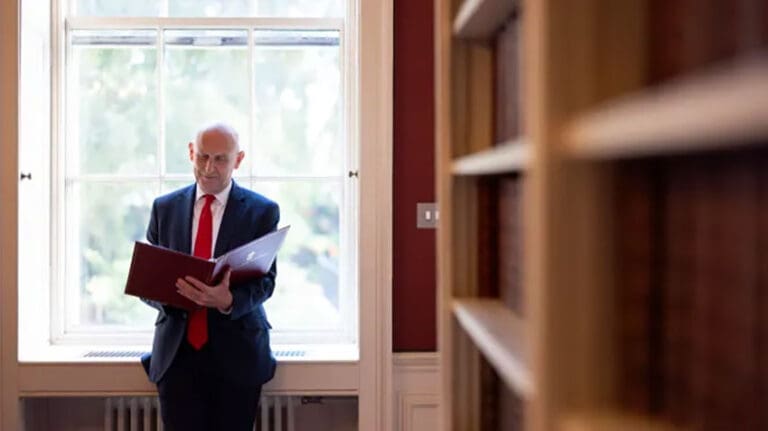
Rene Haas, chief executive of the chip designer Arm Holdings, has said artificial intelligence will help cure cancer “in our lifetime”, and predicted that humanoid robots will be in widespread use within the next five years.
Haas told the BBC that modelling how a DNA marker is affected by cancer was currently “too complex” a problem for either humans or the computers that run AI, but that computers were “going to solve it” as more models are fed into them and they become more sophisticated at running them.
“AI is going to … find a cure for cancer that today you and I, other humans [could] not in our lifetimes. I believe in our lifetime, AI will help cure cancer,” he said.
“Modelling how a DNA marker is impacted by cancer, it’s too complex a problem, not only for humans today, but the computers that run AI. However, going forward, as we feed more and more of the models into these computers, and the computers get more sophisticated to run the models, they’re going to solve it.”
AI already in use in NHS diagnosis
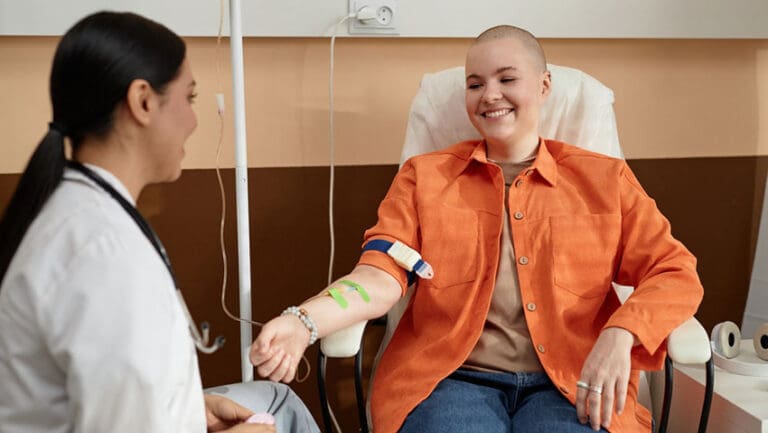
AI tools are already being used in NHS cancer diagnosis. The Department of Health and Social Care said on 10 June 2026 that more than four million patients had received a faster lung cancer diagnosis or all-clear thanks to AI tools, and announced £20m to roll out AI-powered X-ray tools to every NHS trust in England by 2029.
The department said early data showed the technology, which acts as a virtual “second pair of eyes” for radiologists, helped them analyse scans in an average of four days, compared with eight days for the most complex cases previously. The NHS is also using an AI forecasting system across 50 organisations to identify likely surges in A&E attendances days and weeks in advance.
Haas predicts humanoid robots within five years
Haas said AI would also pave the way for widespread humanoid robots within the next five years, but that chip shortages were stunting growth in the area.
“With artificial intelligence, these robots can see, learn, and essentially be reprogrammed for new tasks,” he said. “So, in the service industry, the robot that was programmed to make a bed can also learn how to arrange the towels in a room, or clean the dustbins, or whatever you want to go off and do.”
A report by Royal Bank of Canada has estimated that the global market for humanoid robots could be worth as much as $9tn by 2050, with basic household models potentially entering homes within the next five years but widespread adoption of fully capable domestic robots unlikely for up to 20 years.
Arm, which is listed in New York but keeps its global headquarters in Cambridge, has about 500 users of its chip designs worldwide, including Apple, Samsung, Qualcomm and Nvidia. The company says more than 350bn Arm-based chips have been shipped to date.
It employs more than 7,000 staff, including about 3,000 in the UK, and is the biggest technology company headquartered in Britain, with a stock market value of about $269bn (£199bn).
Haas joined Arm in 2013 and became chief executive in 2022. He has also been named chief executive of the international business of SoftBank, the Japanese group that is one of the biggest technology investors in the world and holds a stake in ChatGPT maker OpenAI. He stepped down from the board of the pharmaceutical group AstraZeneca in April 2026.
Earlier in 2026, Arm proposed a pay scheme for Haas that could make him a billionaire if he hits targets to turn the chip designer into a trillion-dollar company.

News reported through various sources and compiled with AI. This is automatically generated news content from known, popular, and reliable sources available at the time of publication.
We do not take any responsibility for, nor make any representations regarding, the accuracy, completeness, credibility, or
reliability of the content.
In case of any discrepancy, error, or copyright claim, we will promptly review and remove the content in question where appropriate.
We do not claim ownership of third-party content and assume no responsibility or liability whatsoever for any information contained herein. The credit, links and images are kept intact as an honest gesture, are property of its respective owners.