

 Editor's Desk




How to Break Free from the Tyranny of Certainty: The Japanese Concept of “Ma”
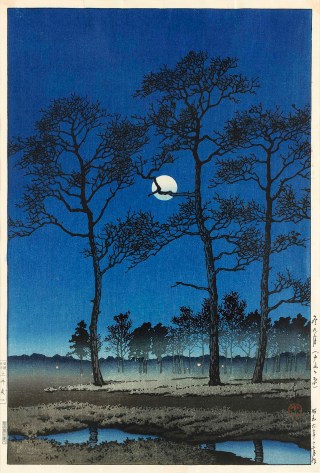
“Whatever inspiration is, it’s born from a continuous ‘I don’t know,’” the Polish poet Wisława Szymborska observed in her magnificent Nobel Prize acceptance speech. But despite all we know about the power of liminality and threshold states, we yearn for a firm foothold on one side of every blurry line and move through the fundamental mystery of life armored in opinions, mistaking the magnitude of our surety for the measure of the truth, resisting with every fiber of our being the fertile, flickering in-betweenness that beckons us to not-know in order to touch the beating heart of reality with something greater than understanding.
Certainty is the dominant addiction of the modern mind.
Japanese culture offers a potent antidote to it in the ancient concept of ma, which Ann Tashi Slater details in her moving memoir Traveling in Bardo: The Art of Living in an Impermanent World (public library):
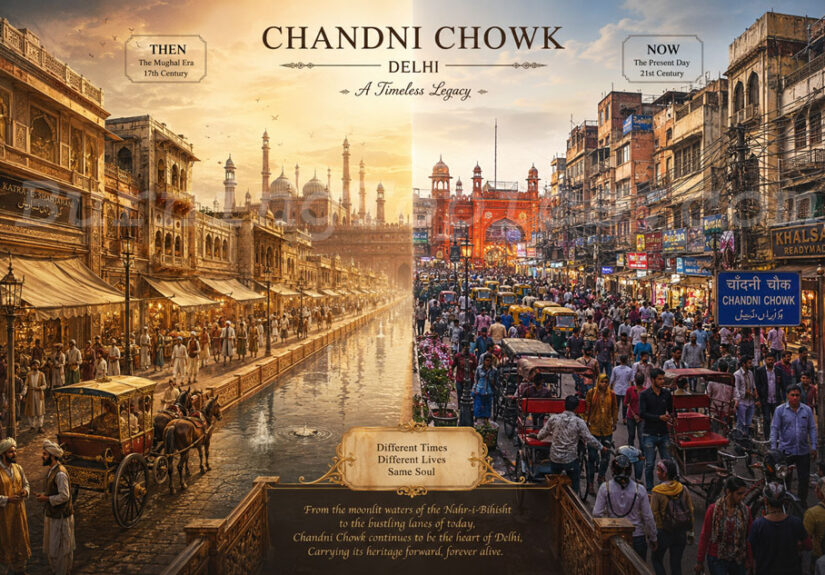
Ma means “interval” or “opening,” both in space and time. Often referred to as negative (empty) space, it’s positive in that it can birth something new. An invitation to heightened awareness, it’s seen, for instance, as open space in rooms and gardens. With regard to time, it’s a pause that invites contemplation. Ma is found in unpainted areas on folding screens, void areas in a photograph, silence during conversation, the hush between breaking waves. It’s about the vitality generated by emptiness, in the way a blank page gives rise to creative energy. It’s about being in relationship, because our engagement with ma allows fresh perspectives to emerge.

Encoded in ma is an ancient understanding of what modern science calls embodied cognition — the recognition that the body is the mind and we think not with the brain but with the world. Slater quotes architect Kengo Kuma:
In traditional Japanese space, the most important space is the void. We call that kind of void space ma. In the void, we can feel the change of light, the change of time, the change of smell, the change of temperature… The void and the human body are working together to feel something.
Drawing on one of my favorite books of all time, she adds:
The character for ma is “gate” (門) together with “sun” (日): 間. It evokes light filtering through a doorway, an idea suggested by Jun’ichirō Tanizaki in his essay about the Japanese aesthetic tradition, In Praise of Shadows… “The light from the garden steals in but dimly through paper-paneled doors,” Tanizaki writes, “and it is precisely this indirect light that makes for us the charm of a room.”
It strikes me that ma is literally written as light, for it carries the indeterminacy of light itself — how we have no way of knowing whether it will pass through the double slit as particle or wave, how consciousness may be the double slit of space and time through which reality passes between the everythingness we experience as life and the nothingness of the void, the interval repeating like a sunbeam flickering across a doorway.
donating = loving
For seventeen years, I have been spending hundreds of hours and thousands of dollars each month composing The Marginalian (which bore the outgrown name Brain Pickings for its first fifteen years). It has remained free and ad-free and alive thanks to patronage from readers. I have no staff, no interns, no assistant — a thoroughly one-woman labor of love that is also my life and my livelihood. If this labor makes your own life more livable in any way, please consider lending a helping hand with a donation. Your support makes all the difference.
newsletter
The Marginalian has a free weekly newsletter. It comes out on Sundays and offers the week’s most inspiring reading. Here’s what to expect. Like? Sign up.

News reported through various sources and compiled with AI. This is automatically generated news content from known, popular, and reliable sources available at the time of publication.
We do not take any responsibility for, nor make any representations regarding, the accuracy, completeness, credibility, or
reliability of the content.
In case of any discrepancy, error, or copyright claim, we will promptly review and remove the content in question where appropriate.
We do not claim ownership of third-party content and assume no responsibility or liability whatsoever for any information contained herein. The credit, links and images are kept intact as an honest gesture, are property of its respective owners.