
 Editor's Desk





With new book Aftermath, Ted Dintersmith joins a growing chorus of policy wonks, researchers, and advocates
 News Desk
11 minutes read
News Desk
11 minutes read
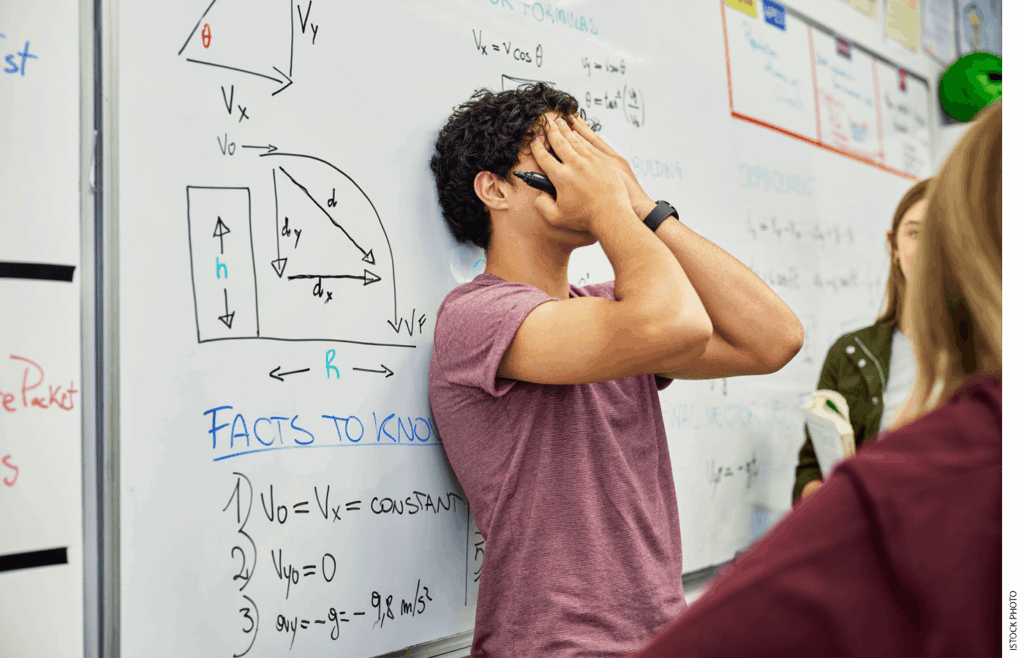
In his new book Aftermath, Ted Dintersmith joins a growing chorus of policy wonks, researchers, and advocates who say that the age of calculus is behind us and that future math education should focus entirely on statistics and relevancy to students’ lives. “The tragedy is that 50% of high schools still do offer calculus,” Dintersmith writes. “That we cling to obsolete priorities.”
This approach is misguided. Dintersmith writes engagingly about interesting real-world math applications that may well pique the interest of a high school student. Math teachers should make math interesting! But Dintersmith and others in the anti-calculus camp miss three key realities about math and about education.
Calculus Still Matters
The history of calculus is a tale of humans asking questions that seemed impossible to answer, of chipping away at them over years and decades and centuries, of churning through tedious calculations in the hopes of making even one small step forward. It is the embrace of hard work with no promise of reward—only curiosity about what else the world might have to offer and a determination to uncover its secrets.
Lasers, modern drug therapy, GPS, large language models, and weather forecasts are just some of the ways calculus is used in the world—by you and by me—every day. Sure, it often sits behind layers of computer code. No, the calculus involved isn’t part of the daily discourse about these tools. But it’s there! And it’s impossible to know what other innovations are on the horizon waiting to be discovered by someone who not only loves calculus but knows how to deploy it to push the boundaries of human ingenuity. “For more than 2,500 years, mathematicians have been obsessed with solving for x,” writes mathematician Steven Strogatz. “The story of their struggle to find the roots—the solutions—of increasingly complicated equations is one of the great epics in the history of human thought.”
Dinstersmith is correct that a book about math is a book about “civil society, innovation, education, the universe, [and] the future,” but in purposely excluding calculus from those lofty notions, he both misdiagnoses the causes of students’ disappointing math performance and writes a prescription bound for failure.
Calculus is the gateway to almost everything we have invented in the last century, to the technology that powers the world, and to the large language models to which many people appear willing to surrender their cognition and humanity. To tell kids that calculus doesn’t matter is to deny them access to a tool that has transformed the world around us in their lifetime. The fact that not every kid will take calculus doesn’t make it irrelevant. Dintersmith claims his book will help children “see the relevance, beauty, and power of math.” I, too, want that for all kids. But excluding calculus belies a true commitment to all that math has to offer.
Statistics Is Not a Silver Bullet
Statistics and other data science courses are great. They provide knowledge that employers want and can keep some students engaged in math or STEM courses who might otherwise give up entirely. Whenever the pendulum swings entirely in a new direction, however, we never get the promised result. As Rick Hess wrote way back in 2010, “Reformers get swept up in enthusiasms and manias rather than in problem-solving.” Surrendering calculus, as Dintersmith advocates, will not suddenly result in thousands of high school students successfully completing higher-level math courses. It sounds smart, of course. A rejection of the course that serves as a proxy for the ability to handle elite college coursework! An embrace of 21st-century skills! But less of one thing does not automatically result in more of something else, even more so when the “more” we want is math.
There’s a real case to be made for expanding access to statistics and data science, and the National Academies of Science, Engineering, and Medicine is making it: “Broadly, an understanding of data and computing is increasingly required to engage in society in general and in a wide variety of professions including but not limited to careers in science, technology, engineering, and mathematics (STEM). Increasing the number of people with literacy in data and computing has the potential to enhance civic life, facilitate learning to participate in society, and expand opportunities to improve our world.” The non-profit DataScience4Everyone says 25 percent of job listings today require at least some data science skills, yet 60 percent of employers say they cannot find candidates who have them. Simply prioritizing data literacy over traditional advanced math, however, is unlikely to change either student outcomes or the nature of American civic life. We’ve got to walk and chew gum.
There’s research showing that students who take AP Statistics rather than AP Calculus don’t see a meaningful difference in their long-term earnings. But that research looks at an already self-selecting group of students taking an advanced AP math course. The real benchmark is whether we can increase the number of high school students taking and passing any advanced math at all. Doing that will require an overhaul of how we teach math in elementary school.
The importance of younger students mastering foundational math skills is nowhere to be found in Dintersmith’s book, which leaves the reader without the well-established evidence that early math fluency is essential for later math success. Math, like reading, is a muscle that must be intentionally developed. You first build the cognitive routines so that when the child gets to more advanced topics, he spends minimal time thinking about the addition, multiplication, or factorization they require. Then you can interest students in an array of advanced math courses they can capably pursue. We want high school students ready for advanced math the way an Olympic sprinter is ready for the 100-meter dash—trained, conditioned, and ready to fly.
The idea of “learning by doing,” as Dintersmith describes the pedagogical principle undergirding his book, seems alarmingly similar to several of the “instructional illusions” outlined by learning scientists Paul Kirschner, Carl Hendrick, and Jim Heal in their 2025 book by that name. Whenever someone claims that what students need to succeed is more engagement or motivation, they should be reminded of the common misconceptions around engagement and motivation. Demonstrating math’s relevance might be one tool a teacher uses in developing a lesson plan aimed at building mastery of a complex subject. But ultimately learning is, in the words of one expert teacher, “built on often unpleasant friction: retrieval, reflection, feedback, and practice. Real learning demands focus and time, not constant novelty and high energy.”
Schools should offer statistics and include opportunities for students to explore data science in humanities courses as well as traditional STEM courses. The goal should be to give all children a strong math foundation and the skills to navigate a data-centric world while ensuring every child with the aptitude or interest to pursue advanced math can do so. It’s statistics and calculus. It’s dreaming of kids demanding more math than we could ever hope for. It’s a love for math in a world run by probabilities and integrals alike.
EdNext in your inbox
Sign up for the EdNext Weekly newsletter, and stay up to date with the Daily Digest, delivered straight to your inbox.
Don’t Give Up On Calculus Just Because It’s Hard
Part of the value proposition of public education must be to provide access to the hard stuff. Calculus is demanding, and that’s a good thing. More than two decades ago, a national poll of high school students found that nine out of 10 students said they would work harder if their school expected more from them. Sadly, most schools don’t seem to have gotten that memo and instead expect less and less. Dintersmith isn’t wrong that an emphasis on rote learning is often all most students get. But providing more relevant math applications while removing the most difficult math course offered in K-12 schools is not a sure path back to intellectual curiosity. Such an approach will leave students tripping over glaring potholes just when we want them to surge ahead. Pave the road, post clear signs, and provide ample off-ramps. Make trying the hard thing the goal with failure a badge of honor, an opportunity to learn.
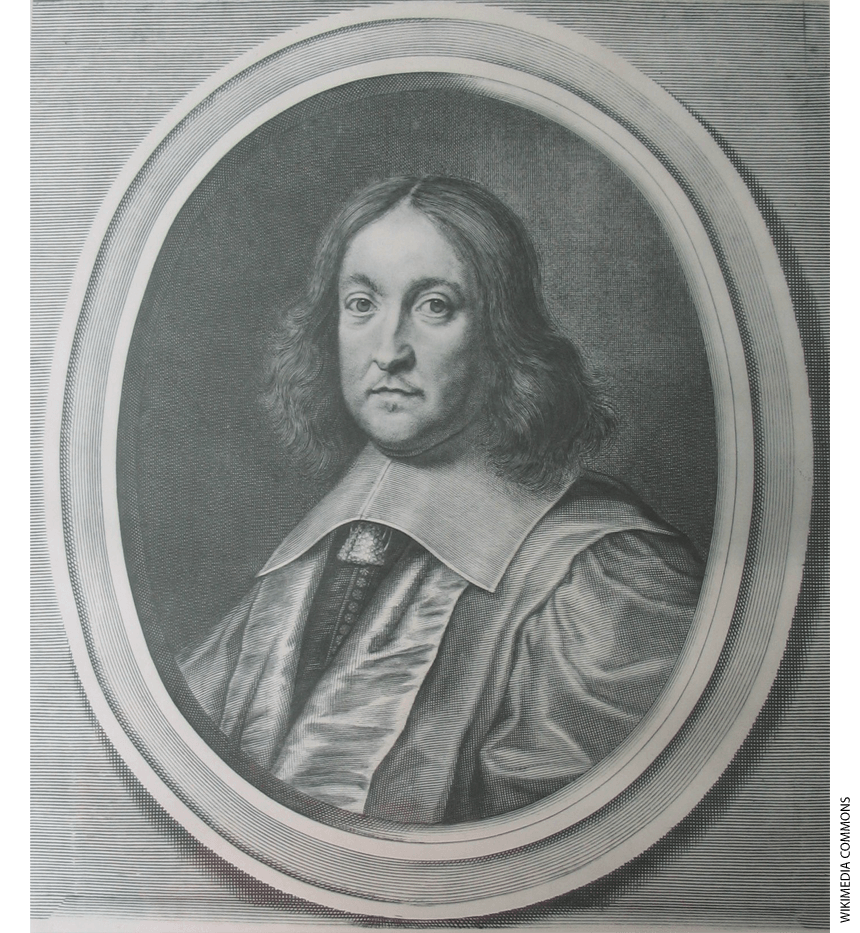
Before calculus as we know it emerged, Pierre de Fermat discovered the principle of least time—that light will always travel the path that takes the least amount of time, not the shortest distance. This evolved into optimization principles and ultimately predicted much of modern physics and mechanics. But to discover this, Fermat spent years doing boring, extremely difficult algebraic calculations by hand with the methods available at the time. Did I mention this was 1662? Hours upon hours, days and months of tedious, hard work. It might have amounted to nothing. He had no evidence, just a hunch about how refraction works mathematically. But then, eureka, he discovered one of the keys of the universe. This is the kind of perseverance we should want for students: pursuing knowledge for the sake of knowledge, with no guarantee of success. Offering them challenging material is the way to get there.
Should every kid take calculus? Of course not. But the ones who can absolutely should. The ones who don’t know if they can should be encouraged to try. If schools instead send a message to students and parents that calculus is unimportant, they will effectively relegate most kids who heed it to working for the ones who took calculus anyway. Which, for the record, will be the kids of every single person I know and the vast majority of the people who read this essay and Dintersmith’s book.
Doesn’t Add Up
Confusingly, Dinstersmith concludes his book by excoriating every standardized math assessment currently used in the U.S.: state summative assessments, the SAT, and NAEP. There is irony in rejecting all available evaluative data in a book about math. Most surprising is that Dintersmith would have his readers believe that the Covid-19 pandemic had little impact on math achievement. He mocks those who see a “‘generational emergency’ because kids coming off two COVID-disrupted years are hazy on absolute values, common denominators, [and] piecewise linear functions” and complains that “‘learning loss’ is now baked into the national narrative.”
The pandemic had two tremendous impacts on education. First, it did disrupt, slow, or erase learning for many children. To dispute this reality is to gaslight millions of American parents who are witnessing firsthand the gaps their children still have from those years, myself among them. We know it’s not a simple story, that the impact across schools and districts varied greatly. Researchers from Stanford, Harvard, Dartmouth, Johns Hopkins, and the University of Chicago continue to study “why some communities realized different learning outcomes compared to others . . . [to] help states design the next wave of educational reforms.” But to deny any impact on learning from the greatest societal upheaval of my lifetime makes it yet more difficult to take seriously the plea to recast math education in the way Dintersmith desires.
Second, the pandemic revealed the extent to which public education’s foundation was cracked well before school closures even started. To cite just one example, Dintersmith ignores the evidence that the scores of our lowest-performing students were in decline long before the onset of Covid-19. These twin challenges of learning loss layered on an already eroding system comprise the true educational emergency for this generation, for the next, and for all who will one day enroll their child in American public schools. That’s the aftermath I’m most interested in addressing.
Liz Cohen is vice president of policy at 50CAN and the author of The Future of Tutoring: Lessons from 10,000 School District Tutoring Initiatives.
The post Do Students Still Need to Learn Calculus? appeared first on Education Next.
News reported through various sources and compiled with AI. This is automatically generated news content from known, popular, and reliable sources available at the time of publication.
We do not take any responsibility for, nor make any representations regarding, the accuracy, completeness, credibility, or
reliability of the content.
In case of any discrepancy, error, or copyright claim, we will promptly review and remove the content in question where appropriate.
We do not claim ownership of third-party content and assume no responsibility or liability whatsoever for any information contained herein. The credit, links and images are kept intact as an honest gesture, are property of its respective owners.