

 Editor's Desk





Source: Journal of Geophysical Research: Biogeosciences
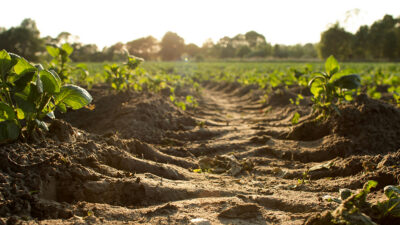
Methane-munching microbes in soil might be more important than previously thought, a new study finds. Soil is an important carbon sink, and scientists are still learning much about the diversity of its microbial communities. Theyâre being uncovered from Arctic soils to desert sands, and some of them are sucking down methaneâa greenhouse gas about 27â30 times more potent than carbon dioxide over 100 years.
Soil methanotrophs are organisms capable of biologically removing methane from the atmosphere. Current estimates vary widely, but soil methanotrophs may store an average of 28â35 gigatons of methane per year globally. And even that could be an underestimate, scientists suspect.
Previous efforts to estimate the global biological methane source from wetlands and inland fresh waters primarily used process-based modeling, which focuses on biogeochemical processes, and atmospheric inversion modeling, which starts with methane concentrations in the atmosphere and works backward to determine emission sources.
But estimates from these two approaches tend to differ. The bottom-up, process-based estimates of methane emissions from wetlands and inland fresh waters were higher than the top-down, atmosphere-based estimates. A larger soil sink could help offset some of these discrepancies, bringing net bottom-up estimates closer to those inferred from the atmosphere.
Oh et al. dig in to reconcile that discrepancy and refine the estimate of how much methane-munching soil microbes contribute to the global methane sink.
The authors added a third kind of modeling: data-driven machine learning. By running the three kinds of models in parallel and comparing their results, the researchers hoped to home in on a more reliable estimate with smaller uncertainties. They also tweaked the microbial dynamics in the process-based model and included previously overlooked places and microbes.
The three-pronged approach worked. Both process-based and machine learning models yielded similarly sized sinks. According to their estimates, microbes in soils take up 40â45 gigatons of global methane per year, significantly higher than estimates from older approaches. That value is also larger than estimates in global climate assessments, such as that of the Intergovernmental Panel on Climate Change. When incorporated in top-down atmospheric inversions, this larger soil methane sink also improved the modelsâ ability to reproduce observed atmospheric methane and its stable carbon isotope composition.
The findings suggest that the microbial soil methane sink has been underestimated and that the revised three-model approach may improve global carbon cycle modeling. (Journal of Geophysical Research: Biogeosciences, https://doi.org/10.1029/2025JG009668, 2026)
âRebecca Dzombak, Science Writer

Citation: Dzombak, R. (2026), It takes three to model methane right, Eos, 107, https://doi.org/10.1029/2026EO260268. Published on 20 August 2026.
Text © 2026. AGU. CC BY-NC-ND 3.0
Except where otherwise noted, images are subject to copyright. Any reuse without express permission from the copyright owner is prohibited.

News reported through various sources and compiled with AI. This is automatically generated news content from known, popular, and reliable sources available at the time of publication.
We do not take any responsibility for, nor make any representations regarding, the accuracy, completeness, credibility, or
reliability of the content.
In case of any discrepancy, error, or copyright claim, we will promptly review and remove the content in question where appropriate.
We do not claim ownership of third-party content and assume no responsibility or liability whatsoever for any information contained herein. The credit, links and images are kept intact as an honest gesture, are property of its respective owners.