
 Editor's Desk



After tropical cyclones, communities are often left in upheaval.
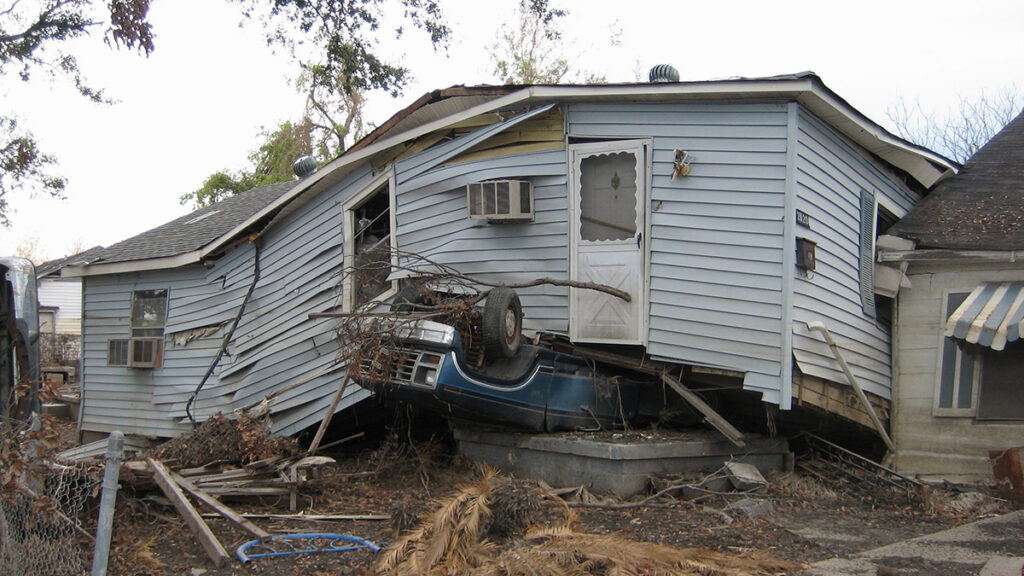
Source: GeoHealth
Those that had few resources to begin with tend to be especially vulnerable to external stresses, and often people experience homelessness, health problems, and other forms of insecurity as a result. But once the disaster response gets underway, communities recover and then actually tend to become less socially vulnerable than they were before the disaster, suggests new research by Jiang et al.
The researchers compiled data from 2,118 instances in which a U.S. county was affected by at least one tropical cyclone between 2005 and 2018 and compared the results with similar communities that did not experience cyclones. The social vulnerability indices (SVIs) of these communitiesâmeasures that include metrics such as English language proficiency, percentage ethnic minority, and percentage of people who live in crowded homesâinitially increased by around 2%. But after 9 years, that trend reversed. By 15 years after the cyclone, the average SVI was about 2% lower in affected communities than in those that never had a cyclone.
That shift may not be good for all residents of the community, however. Redevelopment projects present opportunities for developers to profit by creating desirable neighborhoods, and a previous study suggested that this trend can lead to gentrification. The result can be that the original community is forced to relocate elsewhere. This is consistent with the observation that people tend to move from rural to urban environments following environmental crisesâa phenomenon that’s been called “crisis-driven urbanization.” (GeoHealth, https://doi.org/10.1029/2025GH001727, 2026)
âSaima May Sidik (@saimamay.bsky.social), Science Writer
Citation: Sidik, S. M. (2026), How does social vulnerability evolve after a tropical cyclone?, Eos, 107, https://doi.org/10.1029/2026EO260255. Published on 4 August 2026.
Text © 2026. AGU. CC BY-NC-ND 3.0
Except where otherwise noted, images are subject to copyright. Any reuse without express permission from the copyright owner is prohibited.

News reported through various sources and compiled with AI. This is automatically generated news content from known, popular, and reliable sources available at the time of publication.
We do not take any responsibility for, nor make any representations regarding, the accuracy, completeness, credibility, or
reliability of the content.
In case of any discrepancy, error, or copyright claim, we will promptly review and remove the content in question where appropriate.
We do not claim ownership of third-party content and assume no responsibility or liability whatsoever for any information contained herein. The credit, links and images are kept intact as an honest gesture, are property of its respective owners.