

 Editor's Desk





Trump’s envoys treat war zones like real estate deals — and it’s backfiring: analyst
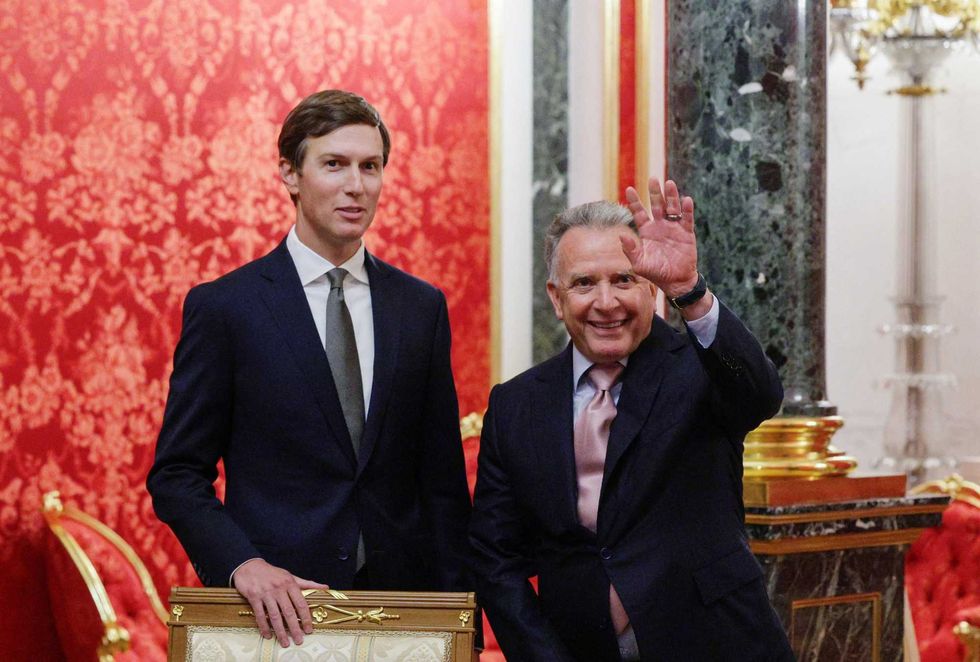
President Donald Trump’s two lead envoys for the world’s toughest conflicts — Jared Kushner and Steve Witkoff — are consistently misreading the wars they’re sent to end by treating them like real estate negotiations, with consequences a foreign affairs expert says have already proven costly.
Financial Times columnist Edward Luce argued Wednesday that Secretary of State Marco Rubio has largely stayed out of the Russia-Ukraine, Iran and Gaza negotiations shows he “can sense a losing bet.”
Trump instead favors Kushner and Witkoff, both billionaires with real estate backgrounds, whom Luce says pitch adversaries on postwar investment booms rather than addressing what those adversaries actually want.
“The core Kushner-Witkoff tactic is to seduce their interlocutors with the lure of postwar bonanzas,” Luce writes. “Why should Ukrainians and Russians keep killing each other when they could be partnering with the U.S. to dig up critical minerals and build AI data centers?”
That approach, Luce writes, fundamentally misreads the parties involved. Vladimir Putin’s goal is territorial reabsorption of Ukraine, not economic partnership, while Volodymyr Zelenskyy’s priority is national survival, the columnist argued.
Luce pointed to the envoys’ recent shuttle diplomacy, in which they visited Moscow before Kyiv and then presented Zelenskyy with tougher terms than he had already rejected, as evidence the pair’s proposals have effectively echoed Kremlin positions.
Luce also cited last November’s 28-point peace plan, which reportedly proposed the U.S. mediate NATO-Russia disputes despite America’s own NATO membership, as proof that subject-matter experts are largely absent from these negotiations.
Luce’s most serious claim ties the envoys’ approach to the U.S. strike on Iran.
Citing the Geneva nuclear talks in February, Luce argued that Witkoff and Kushner dismissed an Iranian offer they might have taken if only American nuclear experts had been present. That miscalculation contributed to Trump’s decision to launch a military strike days later, Luce argued.
“If Trump could get today what Iran was offering earlier this year — diluting most of its fissile material under supervision — he would leap at it,” Luce writes. “Which is another way of saying that Kushner and Witkoff are not giving him much value for money.”
On Gaza, the columnist noted that Kushner has described the territory as potentially “very valuable” real estate and suggested displacing its population in phases during reconstruction, framing a humanitarian crisis in developer’s terms.
Luce closed by raising conflict-of-interest concerns despite both men serving without pay, pointing to Kushner’s Albania luxury villa project, which sparked protests adopting the flamingo as a symbol of resistance, and a scrapped Trump Tower deal in Serbia.
“‘Albania is not for sale,’ says the normally pro-American Albanian street,” Luce concludes. “If Trump’s envoys would listen, other parts of the world are trying to tell them the same thing.”

News reported through various sources and compiled with AI. This is automatically generated news content from known, popular, and reliable sources available at the time of publication.
We do not take any responsibility for, nor make any representations regarding, the accuracy, completeness, credibility, or
reliability of the content.
In case of any discrepancy, error, or copyright claim, we will promptly review and remove the content in question where appropriate.
We do not claim ownership of third-party content and assume no responsibility or liability whatsoever for any information contained herein. The credit, links and images are kept intact as an honest gesture, are property of its respective owners.