

 Editor's Desk





The Arctic Report Card Matters More Than Ever; AGU Joins Partners to Publish in 2026
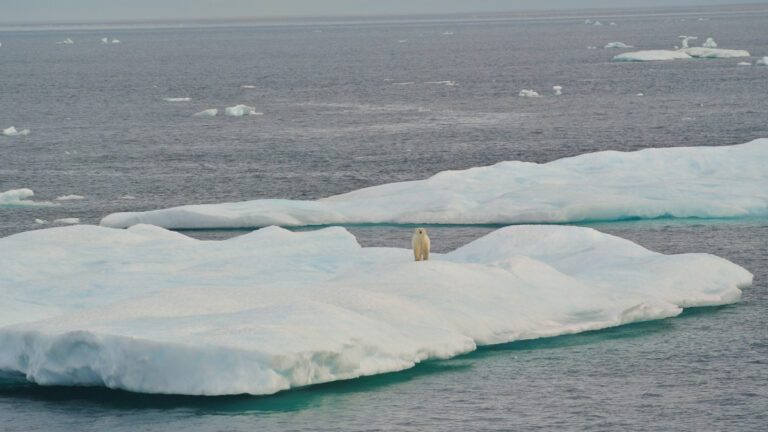
The Arctic is often described as a distant frontier. In reality, it is one of the most consequential regions on the planet.
For 2 decades, the Arctic Report Card (ARC) has provided an annual, peer-reviewed assessment of environmental conditions across the Arctic, helping scientists, decisionmakers, industries, and communities understand how one of Earth’s fastest-changing regions is evolving. Issued annually since 2006, the report has become one of the worldâs most trusted syntheses of Arctic observations and research.
The ARCâs importance stems from a simple truth: The Arctic matters far beyond the Arctic.
Changes unfolding across the region influence weather, climate, ecosystems, economies, transportation networks, and security interests around the globe. As Arctic temperatures continue to rise faster than the global average and sea ice continues its long-term decline, what happens in the far north increasingly affects people, organizations, and governments everywhere.
Despite the ARCâs value, NOAA recently announced that it will no longer facilitate or support the reportâs development. Under this decision, NOAA says it will continue to collect and make available Arctic data, but it will no longer provide the important coordination, review management, communications support, and other resources that have historically enabled publication of the report card.
The announcement that a uniquely valuable scientific resource would be disrupted at a time when understanding Arctic change has never been more important raised serious concerns for many in the Arctic research community. Researchers emphasized that the ARC serves not only scientists but also policymakers, educators, industry stakeholders, and communities seeking reliable information about ongoing environmental change.
Fortunately, the ARC will continue.
AGU has announced that it is partnering with the University of Colorado Boulder Cooperative Institute for Research in Environmental Studies (CIRES) and the University of Alaska Fairbanks (UAF) to support the 2026 ARC effort and the reportâs editorial team.
This partnership reflects a recognition shared across the scientific community: Continuity matters. Long-term observational records become more valuable with every passing year. Regular assessments such as the ARC provide critical context, helping connect individual observations into a coherent picture of change.
One of the most visible consequences of Arctic change is the opening of new maritime pathways.
As seasonal sea ice retreats, routes that were once inaccessible for much of the year are becoming increasingly navigable. This shift carries not only significant economic opportunities but also environmental challenges. Shipping companies, logistics providers, and governments are all watching closely how changing Arctic conditions could reshape global trade routes, reduce transit times between major markets, and alter patterns of maritime activity.
At the same time, operating in Arctic waters remains complex and risky. Weather variability, sea ice dynamics, and rapidly changing environmental conditions require robust observational data and scientific analysis to support navigation, risk management, and long-term planning. The ARC helps provide exactly that kind of information.
The Arctic is also attracting growing attention from a national security perspective.
Several strategically important nations share Arctic coastlines. Increased activity across Arctic waters has heightened interest in maritime awareness, monitoring capabilities, and regional infrastructure. Scientific observations and environmental intelligence help inform understanding of operating conditions across the region, supporting everything from navigational safety to situational awareness.
The value of Arctic information extends below the surface. Interest in seabed resources and terrestrial mineral deposits across and adjacent to the Arctic has grown substantially in recent years. Accessing and operating in these environments requires a deep understanding of changing weather patterns, permafrost conditions, sea ice trends, and environmental risks. Reliable scientific assessments help inform planning decisions, infrastructure investments, and long-term management considerations.
In additionâand criticallyâthe ARC serves far more than just the scientific community.
Commercial fisheries depend on observations and analyses that help them understand changing ocean conditions and ecosystem shifts. Arctic waters support important fisheries in their own right, but the Arctic also serves as a bellwether for broader changes occurring across Northern Hemisphere marine systems. Understanding these trends can help inform fisheries management and operational planning well beyond the Arctic alone.
The Arctic Report Card has never been solely about documenting environmental change. It is about providing society with the information needed to understand and respond to that change.
Similarly, maritime shipping and logistics companies monitor Arctic environmental conditions to evaluate emerging routes, assess operational risks, and support strategic planning. Insurers and reinsurers rely on environmental data and climate information when evaluating risk exposure across a number of sectors affected by changing Arctic conditions, including shipping, fisheries, infrastructure, and more.
In each case, informed decisions are absolutely critical. Those decisions depend on trustworthy observations, expert analysis, and a consistent record of environmental change over time. The ARC has become an essential source of that crucial information.
Maintaining the continuity of this annual assessment ensures that all the various people who need this information, including decision-makers, researchers, communities, and industries, continue to have access to trusted information about one of Earthâs most consequential regions.
The Arctic Report Card has never been solely about documenting environmental change. It is about providing society with the information needed to understand and respond to that change.
As the Arctic continues to transform, the need for rigorous observations, expert assessment, and trusted scientific communication will only grow. Supporting efforts like the ARC is therefore not simply an investment in Arctic science; it is an investment in the information infrastructure that helps communities, economies, and governments navigate an increasingly interconnected world.
And that is why the Arctic Report Card remains so important, not just for the Arctic but for all of us.
âChris Avery, Director, Science Assessment, AGU; and Kristen Averyt Hinton, Executive Vice President, Science, AGUÂ
Citation: Avery, C. and Averyt Hinton, K. (2026), The Arctic Report Card matters more than ever; AGU joins partners to publish in 2026, Eos, 107, https://doi.org/10.1029/2026EO260291. Published on 9 September 2026.
Text © 2026. AGU. CC BY-NC-ND 3.0
Except where otherwise noted, images are subject to copyright. Any reuse without express permission from the copyright owner is prohibited.

News reported through various sources and compiled with AI. This is automatically generated news content from known, popular, and reliable sources available at the time of publication.
We do not take any responsibility for, nor make any representations regarding, the accuracy, completeness, credibility, or
reliability of the content.
In case of any discrepancy, error, or copyright claim, we will promptly review and remove the content in question where appropriate.
We do not claim ownership of third-party content and assume no responsibility or liability whatsoever for any information contained herein. The credit, links and images are kept intact as an honest gesture, are property of its respective owners.