
 Editor's Desk



Kenyan filmmaker Emily Nderitu shows the world how to talk about climate change in Africa
â…Storytelling could be the missing pieceâ¦the bridge between lived experience and global policy.â
Originally published on Global Voices
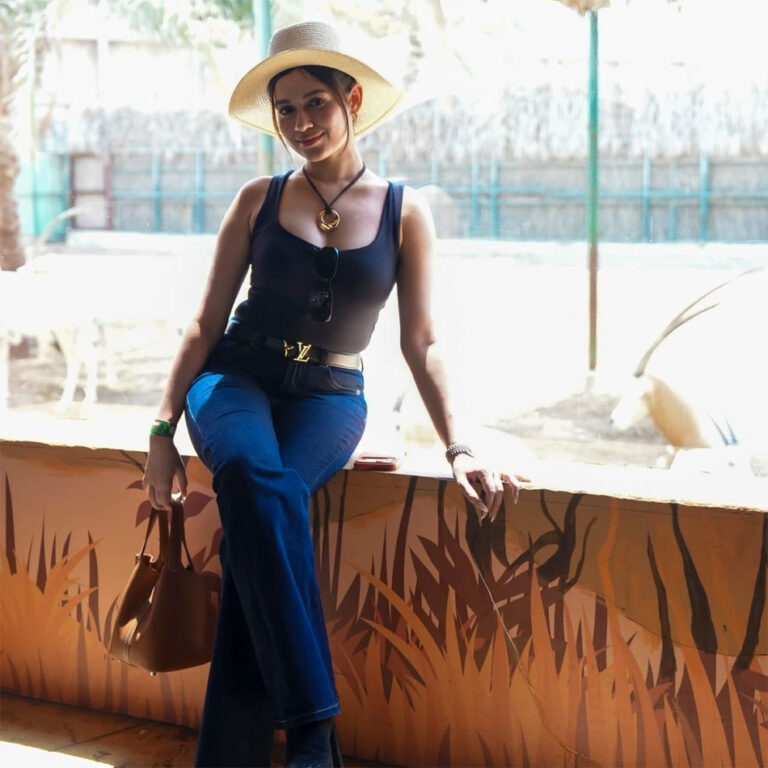
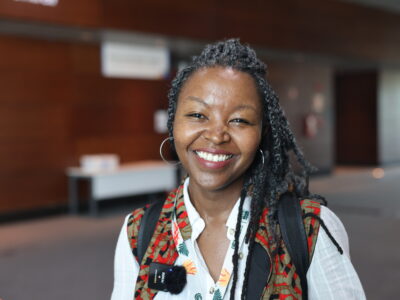
Emily Wanjiru Nderitu, posing for a picture, during the COP30 Climate Conference in Belém, Brazil, in November 2025. Photo by Seth Onyango, Bird Story Agency. Used with permission.
This story was originally published by Bird Story Agency on November 13, 2025. This revised version is republished below as part of a content-sharing agreement.
Every village in Africa has a story about the rain. Some are prayers, some are warnings, all are memories of what the land once gave freely, and now it doesnât. Emily Wanja Nderitu has built a career helping those stories find their way into the worldâs climate conversation, in a way Africans can relate to. Nderitu is part of a vital, growing contingent of young African change-makers ensuring the continentâs narratives do not get overlooked in the global discourse. Her weapon: film.
The humid air of the Amazon hangs heavy as dusk settles over the sprawling city of Belem, Brazil, during the 2025 United Nations Climate Change Conference (COP30), a world away from the familiar heat of her native Kenya.
Yet for Emily Wanja Nderitu, the setting feels familiar in another way: it is a frontline in the global climate struggle, a place where local stories must be told if justice is to be achieved.
Nderitu, who works with Doc Society, a global organization supporting independent storytellers, believes that Africaâs climate narrative must be reclaimed from the margins.
âCOP is an event. Climate is not an event,â she said with the calm assurance of someone who has spent years watching headlines fade faster than droughts end.
In the crowded halls of the conference center where global climate diplomacy is brokered, promises are often made, and just as often broken.
Changing how the world talks about the planetâs crisis
For nearly a decade, Nderitu has been trying to change how the world talks about the planetâs crisis and examining who gets to tell that story.
As an impact producer at Doc Society, she works behind the scenes, connecting filmmakers, activists, and cultural institutions across Africa to help them build stories that donât just stir emotion but move policy, shift power, and stay in communities long after the cameras leave.
Her work revolves around two initiatives: the Democracy Story Unit and the Climate Story Labs â both designed to fuse art, science, and politics. She explained:
We bring together storytellers, scientists, and policymakers to ask: what are the stories we need right now, in this place? And how do we make sure those stories live beyond the screen â that they create real impact?
Itâs an unconventional approach in a world that often treats climate communication as a technical affair. But Nderituâs lens is deeply human and unapologetically African.
She first stepped into the field in 2016 as the impact producer for Thank You for the Rain, an award-winning documentary following Kenyan farmer Kisilu Musya as he transformed from a struggling grower into a climate campaigner. She recalled:
That film changed me. It made me realise storytelling could be the missing piece⦠the bridge between lived experience and global policy.
Since then, sheâs worked with filmmakers across the continent to spotlight what she calls the wisdom in the everyday.
In Africa, we donât always say âclimate change.â We talk about delayed rains, the cows, and the crops. Climate is part of our daily conversation⦠part of who we are.
Africaâs secret weapon in the climate fight
That intimacy with the land, she says, is Africaâs secret weapon in the climate fight â but one the world rarely listens to. She said:
Nature is not out there; itâs intertwined with how we live, how we farm, how we pray. Our rituals, our seasons, our songs â they all tell you how deeply connected we are.
For Nderitu, the task isnât to romanticize ancestral knowledge, but to modernise how itâs valued.
We have generations of wisdom on how to adapt â on when to plant, how to share water, how to rebuild after loss. But when global platforms talk about âsolutions,â they often ignore that. They speak science; we speak survival.
She believes African voices must shape the climate narrative not just as witnesses but as strategists. She explained:
We need to tell our stories in our own way â through our realities, our languages, our humour, even our pain. And then we need to show the world what our vision for the future actually looks like.
That conviction drives the Climate Story Labs she helps run across the continent. Part creative incubator, part movement-building experiment, the labs bring together everyone from scientists to poets to local chiefs. âWe treat stories as living organisms,â Nderitu explained.
Impact doesnât have to trend. It just has to work
She recounts moments where storytelling has already led to change. A film screening on land rights in Kenya sparked a town hall that pushed local leaders to revise an outdated water policy. In South Africa, a community photo project on drought inspired a new school garden programme. None of these made international news, but they mattered.
âImpact doesnât have to trend,â she said. âIt just has to work.â
That quiet philosophy sets her apart from the noise that surrounds global climate conversations, especially the performative chaos of COP meetings.
I respect the ambition, but if all we do is talk here, weâre missing the point. The real work begins after COP â in the fields, in the films, in the small rooms where people decide what to do next.
For all its pledges, the worldâs premier climate summit has yet to match the urgency felt in places like Machakos, Kilifi, or Karamoja, where the line between survival and loss is drawn by the next rainfall.
Still, Nderitu remains optimistic â and her optimism is infectious. She affirmed:
Weâre not short of knowledge or courage in Africa. Weâre short of recognition. Storytelling can fix that. It can close the gap between visibility and value.
As COP30 unfolds, she and her colleagues are pushing for a new kind of climate diplomacy â one that begins not with targets but with truth. They envision a world where local stories shape global priorities, where a grandmotherâs memory of past droughts is treated with the same respect as a scientistâs model of the future.
âIf you want to change how people act, change what they believe,â she said. âAnd belief begins with story.â
In a conference dominated by numbers, Nderituâs weapon of choice â empathy â feels almost radical. But in her world, itâs also the most pragmatic tool available. Stories, she insists, can make people care. And people who care, act.

News reported through various sources and compiled with AI. This is automatically generated news content from known, popular, and reliable sources available at the time of publication.
We do not take any responsibility for, nor make any representations regarding, the accuracy, completeness, credibility, or
reliability of the content.
In case of any discrepancy, error, or copyright claim, we will promptly review and remove the content in question where appropriate.
We do not claim ownership of third-party content and assume no responsibility or liability whatsoever for any information contained herein. The credit, links and images are kept intact as an honest gesture, are property of its respective owners.