

 Editor's Desk




In this interview, we talk to Adam Schembri about the nature of sign languages, how they have been studied in the past, and how they are studied today.
Resources and Language Processing Contexts” by Thomas Hanke
Download | Spotify | Apple Podcasts | YouTube
References for Episode 61
Baker, A., van den Bogarde, B., Pfau, R., & Schermer, T. (2016). The Linguistisc of Sign Languages: An introduction. Amsterdam: Benjamins.
Hill, J.C., Lillo-Martin, D.C. & Wood, S.K. (2025). Sign Languages: Structures and Contexts. London: Routledge.
Johnston, T. & Schembri, A. (2007) Australian Sign Language (Auslan): An introduction to sign language linguistics. Cambridge: Cambridge University Press.
Kendon, A. (1988) Sign Languages of Aboriginal Australia: Cultural, Semiotic and Communicative Perspectives. Cambridge: Cambridge University Press.
Klima, E.S., Bellugi, U. (1979) The signs of language. Cambridge, Mass.: Harvard University Press.
Schembri, A., Fenlon, J., Cormier, K, Johnston, T. (2026) Sign Language Linguistics: Exploring BSL and ASL. Cambridge: Cambridge University Press.
Stokoe, W. C. (1960) Sign Language Structure: An Outline of the Visual Communication System of the American Deaf. Studies in Linguistics, Occasional Papers, Vol. 8, Buffalo, NY: University of Buffalo.
Wilkinson, E. & Morford, J.P (2024). Understanding Signed Languages. London: Routledge.
Adam Schembri’s website: https://sites.google.com/view/adamcschembri/home
Transcript by Luca Dinu
JMc: Hi, I’m James McElvenny, and you’re listening to the History and Philosophy of the Language Sciences Podcast, online at hiphilangsci.net. [00:09] There you can find links and references to all the literature we discuss. [00:12] Today we’re in Birmingham, England, talking to Adam Schembri, who’s Professor of Linguistics at the University of Birmingham. [00:19] Adam is, among other things, an expert on sign language linguistics. [00:24] He’s co-author, along with Trevor Johnston, of the 2007 book Australian Sign Language: An Introduction to Sign Language Linguistics, which can claim to be the standard work on Auslan, and co-author of Sign Language Linguistics, which is coming out in June 2026 with Cambridge University Press. [00:45]
AS: They’ve just told us it’s coming out in July. [00:47]
JMc: Oh, it’s coming out in July, OK. [00:49] So in this interview, Adam’s going to tell us about how sign languages fit into the broader theoretical landscape of linguistics. [00:57] So to get us started, can you tell us what sign languages are, what are their defining characteristics, and why do we consider them a kind of language? [01:06] I mean, etymologically, our word ‘language’ is derived from a word meaning ‘tongue’, which suggests to me that we think of speech, sounds that we make with our mouths and that we hear with our ears, as being the essential characteristic of language. But obviously modality is not the key thing if sign languages are also languages, so what’s going on there? [01:27]
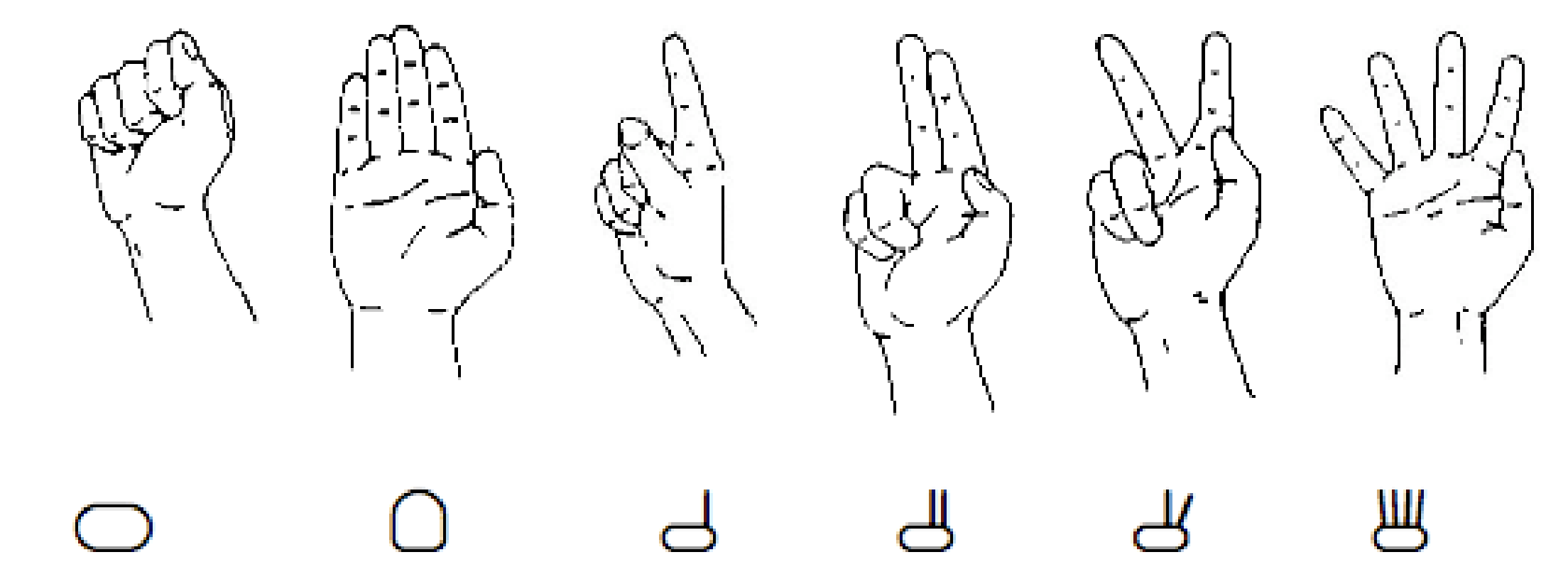
AS: Yeah, I mean, I think for a long time, if you look at the history of linguistics, sign languages were certainly dismissed. [01:33] So, you know, some of the big names in early 20th century linguistics, Bloomfield and other people, they didn’t consider sign languages to be languages. [01:42] Actually, though, if we go back a bit further in time in the 19th century, there are psychologists and others who did recognize sign languages as languages. [01:51] In particular, there are a couple of books written by scholars who worked on topics related to educating Deaf children who recognized sign languages as languages. [02:00] I mean, I think what I find really interesting is, I think sign languages are, you know, used by a tiny minority of the world’s population, and yet the implications for linguistics are enormous because they have really, I think, very subtly reshaped the whole focus of the field. [02:21] So I think there’s a lot more interest today in spoken language as multimodal systems, as speech and gesture packaging, and I think that’s probably come about because of the influence of sign languages. [02:34] But modern sign language linguistics, we generally consider an American researcher, William Stokoe, to be the key figure in the history of modern sign language linguistics. [02:48] There was earlier work by a Dutch researcher called Tervoort, which anticipated the work of Stokoe’s, but it was really Stokoe that was most influential because he took kind of a standard structuralist linguistic perspective and applied it to American Sign Language. [03:04] It must be said, he was working at Gallaudet College, which is a tertiary institution in the United States, rather unique in being a university or college that was established for Deaf people specifically. [03:18] So he was working there, and ironically, he was working there with Deaf and hearing academics, all of whom dismissed his interest in American Sign Language. [03:26] They thought this was just a kind of slang, broken English kind of way of speaking, so very similar to the attitudes that existed to African American Vernacular English at the time. [03:36] They kind of just thought of it as a broken form of English, but he learned to sign using what we would call signed English, so sign-supported English, so he would speak in English and he would support his spoken English with key signs. Right? [03:50] That was what he was told to do as a method of instruction, but often the Deaf students wouldn’t understand him, and he would see them translating for each other in class, and he’d go, “What’s going on there?” Like, “They’re communicating more effectively with each other than I am with them.” Right? [04:04] “I want to understand what they’re doing.” [04:06] And so he published a work which basically applied the minimal pair analysis to American Sign Language and showed that American Sign Language, the signs of American Sign Language were composed of smaller parts, right? [04:20] Sublexical elements. [04:22] He called them by fancy Latin names that we don’t want to use today, but generally in the field, they were known, they’re now known as handshape, location and movement, and he saw that the signs that the Deaf students were using at Gallaudet College were all combinations and recombinations of a set of handshapes, movements and locations. [04:44] And so by applying that analysis, he was able to demonstrate that signs weren’t, American Sign Language signs weren’t just holistic, imagistic symbols, but were created from sublexical components in the same way that spoken language words are. [05:02]
JMc: So is the key thing duality of patterning. [05:04]
AS: So it was the duality of patterning, yes. [05:06] I mean, it’s a bit more complicated than that, because we’ve realized actually the duality of patterning thing is a bit problematic for sign languages. [05:13] Many of these sublexical elements actually are meaningful as well, but that came later, and Stokoe actually revised his thinking on this much later. [05:23] But initially he was able to demonstrate in a 1960 publication, which didn’t have a huge impact at the time… [05:30] I think, kind of what really happened a bit later was two other researchers, Edward Klima, who was a linguist in San Diego and his partner, Ursula Bellugi, who was a psycholinguist, neuroscientist, they got really interested in this topic from about the late ’60s because they were interested in, if children have some kind of innate tendency to learn languages, what happens in the case of sign languages? [06:00] So they were really interested in this, and they set up a lab and some of the first sign language researchers, both Deaf and hearing, were trained in that lab and learned their craft there, and they published a book called The Signs of Language in 1979. [06:15] So like nearly 20 years after Stokoe, but this, it was the ’70s where sign language linguistics really took off in the United States, and then it began to spread to other parts of the world, including to Europe, and like the first international sign language research conference was, was in, I think in Stockholm in 1979, and so then it gradually spread from there. [06:34] And meanwhile, you know, there were these researchers like Adam Kendon and others, David McNeill, doing studies on co-speech gesture, and I think the two areas started to come together in the 1990s when people started to think about, “Okay, so how much are gestures like signs and how much are, how much signing can be equated with gestures?” [06:55] And I think both of the fields have fed off each other, but in linguistics, there’s still a lot of focus… [07:00] Like if you look at typology, for example, there’s still a huge focus only on spoken languages, right? [07:06] That’s partly our fault as sign language researchers. [07:09] We’re not very good at communicating with spoken language researchers or indeed at publishing things that are accessible to spoken language researchers. [07:16] It’s a two-way thing, right? [07:17] So sign, spoken language linguists, some part, you often don’t pay enough attention to the work that we’re doing or see implications in our work for their understanding of spoken languages either. [07:29] It’s clear it’s a language because it has both the structure of language and the use and the function of language, so it’s used in all the same ways. [07:39] Sign languages are used in all the same ways that spoken languages are. [07:42] You have sign language poetry, you have sign language… you can pun in a sign language. [07:47] You know, I mean, there’s so many ways that they are the same, right? [07:52] But the key difference is the visual modality, and there’s a lot of iconicity in spoken languages, but there’s a lot more, obviously, I will stand by this — even though there are people in my very department who have explored this issue, like Marcus Perlman and Bodo Winter, who are in my department here at Birmingham and have explored the iconicity of spoken languages and revealed that there’s a lot more iconicity in spoken languages than people realise — but I would still maintain iconicity is a much stronger driving factor in sign languages. [08:23]
JMc: So just on the structural level, so you mentioned that typologists, linguistic typologists are generally only interested in spoken languages. [08:31]
AS: Yeah, that’s often because the data is more easily accessible to them, to be honest. [08:35]
JMc: But are there direct equivalents between the sort of formal properties of spoken languages and the formal properties of sign languages? [08:42]
AS: Yeah, I mean, you can talk about sublexical structure, you can talk about a phonology of sign languages. [08:48] We’ve pretty much accepted that term, even though, as you point out, ‘language’ is based on the word for tongue, ‘phonology’ based on the word for sound. [08:55] We’ve been talking about the phonology of sign languages for the last 40 years, right? 40 or 50 years. [09:01]
JMc: What does that mean? [09:02]
AS: It means research into how the sublexical components of signs work: the hand shapes, the locations, the movements. [09:11] We now think of signs as being composed of five sublexical features: hand shape, hand orientation, location and movement. [09:20] So signs can contrast in all of those features, and there’s an additional fifth factor, which is called non-manual features, which involve things like facial expressions, or mouth gestures, or mouthing of English words, for example, which often co-occurs with signing. [09:35] All of these things can have meaningful, have a contrastive role to play in sign languages as well. [09:39]
JMc: Yeah, and you can parametrize them in the same way that you can parametrize like places of articulation. [09:44]
AS: That’s right. Right. [09:45] So it’s very similar. [09:46] It really is actually a lot more similar than you think, because if you think about it, speech is based on gestures of the oral tract, right? [09:53] So you have a place of articulation that’s equivalent to a location for a sign. [09:57] You have a manner of articulation that’s equivalent to the movement of the hand. [10:01] You have articulators. Are they the lips? Are they the tongue? And that’s equivalent to the handshapes, right? [10:06] So it’s a lot more similar when you think about speech as based on physical gestures. [10:12] Of course, we listen to the result of those gestures, but we also look at each other’s articulators and we use mouthing, you know, to assist our comprehension in face-to-face communication. [10:26]
JMc: Well, I guess it can also override auditory signals, like the McGurk effect, is it called? [10:30]
AS: Exactly. So we know that both things are really, really important. [10:33] There is actually studies showing that hearing signers like myself use more co-speech gesture, and in fact, our signing interferes with our co-speech gesture. [10:44] So we’ll often do a co-speech sign when we’re speaking. [10:48] Even to non-signing hearing people, that still happens. [10:52] Really interesting stuff about, we know now that bilinguals are actively suppressing one of their languages while using the other, because we know that with bimodal bilinguals like me, people who have a spoken language and a sign language, we don’t have to suppress the sign language as much, so it tends to come out. [11:11] Of course, you can’t do that if you’re a spoken language bilingual. [11:14] You can’t really simultaneously articulate words of two languages, but we know from bimodal bilinguals that actually you’re busy suppressing your other language while you’re speaking the one that you’re using at the time. [11:27] Anyway, so there’s also a morphology, so we can talk about, you know, derivational and inflectional processes in sign languages. [11:35] Obviously there’s a syntax, because you’ve got a vocabulary and there are ways to combine those elements to create a clause. [11:41]
JMc: So can we just talk about the morphology? How does that work? [11:45]
AS: Well, okay. So you get examples in sign languages of what many linguists would consider inflection, involve, for example, modifying verb signs to indicate subject and object arguments. [11:58] So there’s a subset of verb signs, which are called, they’re known by various names: agreement verbs, indicating verbs, directional verbs. [12:06] It depends on your theoretical framework, which what you call them. [12:09] I call them indicating verbs because they literally point to locations associated with the subject and the object argument. [12:16] Now, you’re sitting in front of me, James. So I can take the sign for ‘ask’, for example, and I can start the sign close to you and move it towards my chest, and that would mean in BSL, ‘You ask me’, and I do the reverse, you know, from me towards you, and that means ‘I ask you’, right? [12:36] And if there are two third-person arguments, neither you nor me, you know, I might set them up on the right and the left, and I would associate. [12:43] So I might say, you know, Mary on the right and John on the left, and so I’d fingerspell that name, point to the right, fingerspell John, point to the left, and then I can move the sign ASK from Mary to John, and that would mean ‘Mary asked John,’ right? [12:59] So this is considered… That’s why they’re sometimes called agreement verbs. [13:02] It’s considered a kind of person agreement marking. [13:05] It’s certainly… I don’t know whether you want to call it agreement. [13:08] Not all of us agree on whether it should be called agreement, but certainly it is flagging arguments, because it’s telling you who the subject and object arguments of the verb are. [13:18]
JMc: But is there a formal distinction in how the signs are produced between what you’re calling morphology and what you might call syntax, or is it those signs correspond to what is called verbal agreement in a spoken language, and so that’s why you consider it morphology? [13:33]
AS: Yes. Well, it becomes more syntactic if you have the arguments actually realized and to create the clause. [13:39] So obviously when you’ve got a clause with just a verb, you know, not much syntax going on because there’s just a single element, right? [13:46] But you can specify the arguments, or you can put in noun phrases that refer to the arguments and then get, you know, a fuller kind of clause with, with argument structure. [13:56] There’s a lot of research showing that, well, British Sign Language and Auslan are strongly pro-drop languages. [14:03] So there’s a lot, you know, in a narrative, for example, we’ve done studies of narratives, and you’ll find a majority of clauses are verb-only, but if you do have a transitive verb and you have two arguments, it tends to be SVO, right? [14:18] We suspect this is the influence of the surrounding spoken language, but you do find in sign languages that, like spoken languages, the word orders tend to be predominantly SOV or SVO, but you can get more flexibility in the argument structure. [14:33] So you can get, you know, other types of combinations, but sometimes they might be signalled in some way. [14:39] So for example, if you want to topicalize the object and move it to the front and have something like OSV, you might mark the object, because it’s not in an expected word order, with a brow raise, for example, or there might be a slight pause after the object. [14:53] So there are ways of signalling that you have topicalized that element. [14:57] So these are examples of the syntax of sign languages. OK. [15:01]
JMc: OK, and I guess that’s sort of equivalent to intonation in spoken language. [15:04]
AS: Yes. OK. Yeah. Very similar to the intonation patterns of spoken language. Yeah. [15:07]
JMc: OK. And when you talk about things like word order, you’re talking about the temporal order in which the arguments are realized. [15:12]
AS: Yes. Yes. Yes. Yes.
JMc: OK, because the spatial dimension is also important. [15:15]
AS: The spatial dimension is also, but it’s also segmental, right? [15:18] It’s also sequential in the sense that I start in one location, I move to another. [15:22] So even within the internal, like the sign-internal structure, there’s some sequentiality, but then you get co-occurring facial expressions and that’s a bit like intonation, and so that’s where you get more kind of simultaneity of structure. [15:36] So I could, you know, I could produce, “you ask me”, so I direct the sign, “you ask”, you know, ASK from your location towards mine, and if I do it with a brow raise, that might be a yes-no question, like, “Did you ask me something?” [15:52] Or if I did it with a brow furrow, it might be saying, “You asked me… what, exactly?” [15:57] You know, so there are ways of signalling those kinds of things. [16:01] Or I could shake my head, right? And that would be a negation. [16:04] So I could simultaneously shake the head while I produce that single verb sign, and that would negate it saying, “You didn’t ask me,” or “You don’t ask me something.” [16:13] So head shake being used for negation is a very common feature of sign languages, but there are also manual negators, so signs that are negators as well, and it’s much more common to use a combination of the manual negator and the non-manual, the head shake. [16:29] We found, we’ve just published a paper actually on negation in British Sign Language based on spontaneous data. [16:36]
JMc: So in terms of the sociolinguistic dimension of sign languages then, I mean, you mentioned that there’s poetry and that you can pun and you can do all of the things in sign languages, you can do all of the things that you can do in spoken languages, but in a large-scale spoken language, like English, for example, or German or Chinese, there are lots of different registers that are in different domains and no single person will command all of those registers. [17:02] And even, but a single person might use different ones in different circumstances, like if they’re giving a formal speech or just talking to friends. [17:11] And all of this is exhibited in sign languages as well? [17:12]
AS: That’s exactly the same. So like, you know, if I give a talk on linguistics in BSL, I will use linguistics terminology, so there’s signs for syntax, morphology, phonology. [17:22] These are not generally known to most signers, although a lot of signers do know. [17:27] This is the amazing thing is, because books like our book on Auslan have had a big impact on, you know, because they’re the only book, unfortunately, that’s the only book on the linguistics of the language, and lots of Auslan students in Australia read that book, right? [17:41] So they get a grounding in linguistics. [17:44] So linguistics has actually had a huge impact on teaching sign languages because a lot of the work that we’ve done as linguists feeds directly into sign language curricula, right? [17:54] And so a lot of the terms, so a lot of Auslan students in Australia will know, you know, words like ‘morphology’ and ‘syntax’ and ‘phonology’ and things like that, [18:04] and they’ll know the signs as well, but generally, of course, most members of the Deaf community don’t know those signs. [18:10] So yes, you do get register differentiation in sign languages as well, but obviously it depends on the size of the community and how much opportunity there has been for Deaf people to move into different domains. [18:23] So for example, in Australia, prior to the Disability Discrimination Act in the 1990s, signing Deaf people had a lot of difficulty accessing university education. [18:33] So there weren’t many, there wasn’t a very big professional class of Deaf people in Australia, but after the Disability Discrimination Act was passed, there was a huge backlog of Deaf people accessing universities in Australia in the 1990s. and now suddenly you’ve got a much more, you’ve got a larger professional class of middle-class people who’ve studied law, who’ve studied science, who’ve studied all kinds of things at university. [18:58] And so the vocab in Auslan for these things has expanded quite a lot. [19:03] But the other way that register differences are shown in Auslan is the use of fingerspelling. [19:08] So besides the sign language vocabulary, there is a system of fingerspelling where you have 26 combinations of your two hands to represent the 26 letters of the Roman alphabet, and fluent fingerspellers can very rapidly fingerspell quite long English words. [19:24] And so there’s a lot of incorporation of English technical vocabulary where there are lexical gaps in the language. [19:30] So in the past, there was a lot of reliance on the fingerspelling element, but because more Deaf people have gone to university and become, you know, professionals in law and science and other areas, sign language vocabulary has grown to meet that kind of demand. [19:44] But there’s still language planning involved. [19:46] So here in the UK, for example, there’s been a whole series of workshops by Deaf scientists and Deaf linguists to create vocabulary for the STEM subjects. [19:57] So a few years ago, where there was a group of people who got together and agreed on signs for the different planets, for example. [20:03] There hadn’t previously been standardized signs for the planets in BSL. [20:09] There’s an extensive online STEM vocabulary where standardized signs for a range of STEM concepts have been proposed. [20:17]
JMc: And those are sort of pure signs that draw on those? [20:19]
AS: Yeah, they draw on the visual elements, so things like, you know, the rings of Saturn are represented in the sign for Saturn and the great storm on Jupiter’s surface represented in the sign for Jupiter and things like that, so visual elements of the planets incorporated into the signs. [20:34] So yeah, they’re very visual, but they’re kind of standard ways. [20:38] So people now, for example, in Deaf schools, if they’re teaching that subject, they’ll go and consult the glossary so that they use the same signs that have been recommended as signs, but there’s still a lot of diversity in the community, right? [20:51] So people are going to come up with their own signs for things often as well, and often if you have an interpreter and a Deaf student studying a new area at the university, they will agree on a set of signs to use in that specific domain, and they may not be used by the wider community. [21:08] So you do get this register differentiation, but it’s a bit different from in English because English, of course, has a long history of being used in all of these domains by large numbers of people, right? [21:19] When you get a much smaller community with less access to all of these areas of life and study, then there’s been some catching up to do, but there’s nothing in the language that limits what can be talked about. [21:34] But it may be that there aren’t standard ways of talking about some very specific concepts that we have in English. [21:40]
JMc: And is there literature in the sense of, like, is there a Shakespeare of Auslan or of BSL? [21:45]
AS: No, there isn’t really an equivalent, but there are… because, of course, sign languages aren’t written languages, so you’re getting more of a kind of video literature now, like people, for example… [21:58] So, you know, sign language poetry began to be documented like in the ’80s and the ’90s with VHS recordings, but now, you know, there’s a lot more of that material online, so there are several sign language poets quite active in creating sign language poetry. [22:14] There are sign-language-specific visual forms. [22:17] So there’s something called Visual Vernacular, which is a Deaf theatre form in which people use signs and gestures that are as visual as possible in order to produce theatrical events that can be accessible to both Deaf and hearing audiences. [22:35] So that’s why it’s called the Visual Vernacular. [22:37] It’s supposed to reach out to people who don’t sign. [22:39] But that’s something that’s been created by theatres of Deaf people borrowing elements from mime and other things. [22:45] So there’s not really a Shakespeare equivalent, but there are certainly like poet laureates in the British Deaf community. [22:52] In fact, there is actually an award every year by the British Deaf Association to a poet laureate. [22:57]
JMc: Literature doesn’t necessarily depend on writing because like there’s also, you know, oral traditions. [23:02]
AS: Yes, yes. [23:03]
JMc: Sometimes with putative authors, you know, like Homeric epics. [23:06]
AS: Yes. No, we don’t really… there’s not really… [23:08] But there is a tradition of like Deaf jokes and Deaf stories that are passed down. [23:12] There are lots of really amazing Deaf jokes, some of them quite shocking for hearing people. [laughs] [23:20]
JMc: Because they… [23:21]
AS: because they involve mocking hearing people. [laughs] [23:25] There’s quite a famous joke about, you know, there’s an American and a Russian and a Deaf man on a train. [23:30] Right? And the American buys this big bottle of Coke and starts drinking it, but he only drinks a little bit of it, and then he throws out the Coke out the window. Right? [23:40] And the other people say, “What are you doing? You’re throwing the Coke away.” And he says, “Oh, there’s plenty of Coke in my country.” [23:44] And then the Russian starts drinking vodka, same thing, sips a bottle of vodka, throws the bottle away. “What are you doing?” [23:50] “Oh, there’s plenty of vodka in my country.” [23:52] So the Deaf man looks at the Russian and looks at the hearing, grabs them, throws them out the window, says, “Plenty of hearing people in my country.” [23:58] [laughs] [24:00] So those kinds of jokes, you know, so there’s lots of that kind of humour, and also Deaf storytelling. [24:07] You know, Deaf people love to tell stories about, specifically about their growing up experiences. [24:14] So many Deaf people grow up with hearing parents, and in the past, hearing parents who were encouraged not to sign by medical professionals who incorrectly believed it would interfere with the spoken language and literacy development of their Deaf children. [24:29] Right? We now know that actually Deaf children who acquire sign language from birth go on to develop really the best spoken language and literacy skills in the spoken language of the surrounding community, whereas often Deaf adults whose parents were hearing, who were encouraged not to sign, unfortunately, many Deaf adults in the adult Deaf community have varying degrees of what’s called language deprivation because they didn’t get exposed to an accessible language during the, you know, the sensitive critical period in the early stages of their life, and this can sometimes, you know, create challenges for their education because they don’t acquire their first language within that window, and it really is difficult then to acquire a second language. [25:15] English is a second language, and English literacy, and so it puts them at a real educational disadvantage for their entire life, and so it’s a very, very serious thing, and you only get this phenomenon of language deprivation in Deaf people because hearing children inevitably get exposed… [25:32] You know, I mean, there’s a few famous cases in linguistics like Genie, etc., but they’re extraordinarily rare. [25:38] You know, most hearing children can’t avoid acquiring one or more spoken languages from birth, but only with Deaf children do you get this phenomenon. [25:48] And mostly it reflects bad… It reflects misinformation, right, during most of the 20th century where medical professionals, speech pathologists, audiologists, educators of Deaf children really wrongly believed that sign languages were not bona fide languages and couldn’t provide a linguistic foundation for Deaf children to acquire the spoken language of their surrounding community. [26:12] And we now know that, tragically, that that was just a hugely incorrect view. [26:17]
JMc: Do you know why attitudes change like that? [26:20] Or do you have any speculations about it? [26:23] Because you mentioned that in the 19th century, there was work on sign languages, but it seems to have, there seems to have been a dip. [26:29]
AS: Yes.
AS: So in 18… It’s quite famous. [26:32] This is another famous part of Deaf folklore. [26:35] Everyone talks about the 1880 Milan Congress. [26:40] So there was the Congress of Educators of the Deaf, right? [26:44] So there was an international association for education of Deaf children and it would have a congress, and in 1880, there was a congress in Milan in which primarily the hearing majority of educators at this congress declared that spoken language should be the language of instruction in schools for Deaf children and that the focus should be on spoken language, right? [27:08] We suspect this was actually because many of the Deaf children that were entered Deaf schools in the 19th century tended to be children who had acquired deafness at some point in their childhood, right? [27:21] So they already had a foundation in spoken language before they became deaf, right? [27:25] And the children who were born deaf were a minority in that population. [27:30] So they weren’t really as well understood as perhaps the larger number of Deaf people, Deaf children who had acquired deafness during their childhood and therefore had some speech, right? [27:40] So we think it was probably this kind of alongside a kind of very Darwinian notion that sign languages were somehow lesser than and that spoken languages represented, you know, some kind of peak human achievement. [27:55] So yeah, so sign languages were banned from the education of the Deaf. [28:01] Now, this affected different countries differently. [28:04] So, here in the UK, it affected a lot of schools pretty much from the 19th century and into the 20th century. [28:09] In Australia, the effect was less dramatic, and in some other parts of the world, it was less dramatic. [28:16] So sign language continued to be used in schools for Deaf children intothe 20th century, but we still had a period in Australia of what’s called oralism, where there was an exclusive focus on spoken language as a language of instruction and a focus on using hearing aids and whatever available technology there was to assist Deaf kids’ listening skills and lip reading skills, but this didn’t work for many, many Deaf kids. [28:41] And even today with cochlear implants, which have proven so successful for many Deaf children and given them near-normal experiences of spoken language acquisition, even many of these children, you can’t always predict when you implant a child whether the cochlear implant will work for that child or not. [28:59] Even with today’s technology, lots of those kids actually who use cochlear implants, some of them will come to the signing Deaf community later in life because they find that they’re actually more comfortable with using sign languages. [29:10] So the recommendation from linguists and from many people in the Deaf community today is even with successful cochlear implantation or hearing aid use, give the child access to sign language alongside access to a spoken language from as early an age as possible because the sign language is the only fully accessible language for that Deaf child and can form a really rock-solid foundation for their acquisition of other languages in the future. [29:40]
JMc: We can accept that sign languages are full-featured languages on a par with any spoken language, but why is it that hearing people by default will learn a spoken language and use it and not a sign language? [29:54]
AS: That’s a very interesting question. [29:56] We do know that in fact lots of Indigenous communities, including Australia, have alternate sign languages which they use in certain circumstances. [30:05] So the most well-known cases are, of course… [30:08] I mean, apart from the Cistercian monks in Europe, OK, so, of course, there were monks in Europe that had vows of silence that used sign languages in those situations. [30:16] Similarly in Australia, you know, there are periods of spoken language taboo. [30:20] So in certain groups of Indigenous Australians, you know, there are long periods in which particularly women, the female relatives of a deceased person, experience a period of speech taboo in which they’re not allowed to speak, and they use sign language in those circumstances. [30:37] But similarly, a lot of those sign languages are also used in other contexts like during hunting in order to not disturb the prey. [30:45] Also, there’s been a lot of studies showing multimodal narrative practices in which Indigenous people will speak while retelling a story but throw in a few signs as well, as well as doing sand drawing, you know, while they’re, you know, seated on the ground and telling a story. [31:03] So quite multimodal experiences using speech, sign, sometimes music, sometimes drawing. [31:09] And in the North American case is Plains Indian Sign Language, where different tribes of Native Americans would get together and use sign language, use Plains Indian Sign Language as a lingua franca, so to communicate across the different spoken languages. [31:23] So we do know that there are actually a lot of communities that are bimodal in this sense, bimodal bilingual, they use a sign language as well as a spoken language. [31:32] But yeah, it’s really interesting question why hearing communities tend to be predominantly spoken language ones. [31:39] I mean, there are possible reasons. [31:42] The use of spoken language when there is no light, OK, or maybe also using a spoken language enables you to use your hands for something else at the same time as you’re using, as you’re speaking, you know, when you’re giving instructions on a manual task in a sign language, you have to alternate between signing the instructions and then doing the task, right? [32:02] So it might be something as trivial as that, that mean that hearing people prefer spoken languages. [32:09] But I think the key thing to remember is yes, speech is the primary means of communicating, but that doesn’t mean that they, you know, hearing people in face-to-face communication, don’t also use their bodies and their hands. [32:21] They do that a lot, right? [32:23] But it just turns out that in terms of the message, the spoken language gesture package, most of the information is in the speech, right? [32:32] But there’s still a lot of information that’s represented gesturally that isn’t always encoded in the speech, right? [32:40] So it is important to remember that spoken languages, even though they are the primary means of communication for the majority of hearing communities, they are multimodal as well, so I think we forget that at our peril. [32:53]
JMc: And how did you get into sign languages? [32:55]
AS: My first partner had Deaf parents. [32:57] So my first partner, when I was at university, he’s what’s called in the Deaf community a CODA, Child of Deaf Adults, right? [33:06] And so a CODA is usually a hearing child who grows up with Deaf parents. [33:11] And so a CODA will often acquire their sign language as their first language, their heritage language of the home, and they will acquire a spoken language some other way, right? [33:22] So yeah, my first partner had Deaf parents, and so his first language was Auslan. [33:27] He was a very fluent signer, and I was with him for a long time before I got the courage to go to sign language class, because he’d always say, “Go to class,” right? “Go to class, and then you can talk to my Deaf friends,” right? You know. [33:38] And so eventually I got up the courage to go to sign language class, and then once I started to reach a certain level of fluency, he started to sign back to me, and then it just grew from there, because he had a… we had a whole community that were just waiting to talk to me, like all of his friends, some of his family. [33:55] Yeah, I was very lucky, because I got so much support from the Deaf community, because I was already kind of on the outskirts of the Deaf community already through my relationship with my partner. [34:07] And then we broke up, but we stayed friends, and then I decided to study to become a sign language interpreter, and then I met my next partner in that sign language class, and we were partners for 20 years. [34:21] And he and I became sign language interpreters in Australia, and so we, again, the relationship with the Deaf community then just continued, because I had a partner who could sign as well. [34:30] And so we would often socialize with Deaf people, and actually, when you do have a sign language as a hearing person, you find so many opportunities to use it. [34:39] It’s incredibly useful. [34:42] You want to be in a nightclub, you’re the only people having a conversation right across the dance floor and getting your partner to get the next round of drinks, exactly what you want, because you can sign it to them. Right? [34:53] And everyone else is shouting over the music, but you’re having a great conversation with all of your friends. [35:02] But yeah, it’s incredibly useful. [35:04] So I can see why, for example, in Indigenous communities in Australia, where storytelling becomes multimodal, you can see why that happens, right? [35:13] Because it opens up a whole new potential for communication in another channel that can co-occur with the spoken channel, so once you have it, why wouldn’t you do it? [35:23]
JMc: And what is it like being a non-native signer, so effectively being an outsider to the community, but being an expert on the linguistics of it, on the science of it? [35:33]
AS: Yes. I’ve seen a real change during my career. [35:38] So I started my Ph.D in 1995. [35:41] I went to the first international sign linguistics conference, which was in Montreal in 1996. [35:46] I went to that conference, and the field then was predominantly hearing people. [35:51] It was really dominated by hearing people who were very interested in, for example, applying linguistic theories to sign languages. [35:59] So it seemed like sign languages were the ultimate test case for the use of universal grammar and things like that, so there was a lot of theoretical linguistics and a lot of hearing people, and a lot of hearing people who didn’t sign very well, right? [36:13] And who would often work with Deaf research assistants, and their communication might not be very effective with that person, and then, you know, the Deaf research assistant or the Deaf consultant would do a lot of the work recruiting participants for their experiments or their studies or what have you. [36:30] But obviously, that was a profoundly kind of colonial setup, and of course, as more and more Deaf people have gotten Ph.Ds in linguistics and moved into roles in academia, there’s been a lot of challenging of this, and I’ve seen how the field of sign language linguistics has shifted and become more inclusive. [36:49] So in 1996, there was no expectation… [36:53] I had a poster. I didn’t have an onstage presentation, but most of the hearing people, and pretty much all of the hearing people who did an onstage presentation at that conference spoke in English, right? [37:04] It was actually in Montreal, so… but everyone presented in English. [37:08] I don’t remember anyone presenting in French, but people all presented in a spoken language, right? [37:12] Basically in English. [37:14] These days, if you go to an international sign linguistics conference, there’s much more of an expectation that a hearing person like me will present in a sign language, right? [37:24] And usually a sign language conference, so for example, the most recent one, the major conference, the major international conference in our field is called TISLR, Theoretical Issues in Sign Language Research, right? [37:35] So the last TISLR was in Addis Ababa in Ethiopia. [37:39] The official conference languages were Ethiopian Sign Language, American Sign Language, which is a sign language of wider communication, and something called International Sign, which is a kind of contact sign language that’s developed spontaneously through mixing of Deaf people. [37:55] And so these were the official sign languages. [37:57] You could present in one of those sign languages or in English. [38:01] I simultaneously presented with a hearing colleague. [38:04] She spoke in English, and I signed the talk, right? [38:07] So that’s just become the norm, that there’s an expectation that hearing people like me, not only that we should learn to sign fluently so we can communicate directly with people in the Deaf community and with our Deaf colleagues, but also that we present at these conferences in a sign language so there’s no need for, to go via an interpreter, right? [38:27] There’s also an expectation that senior hearing scholars like myself provide opportunities for Deaf people. [38:34] In the U.K., we recently had Nick Palfreyman, who is now Professor of Sociolinguistics at the University of Lancashire. [38:42] He just gave his inaugural professorial lecture actually last week. [38:46] He also gave his talk in International Sign so that it could be recorded and be accessible to people from all over the world. [38:51] So he’s the second signing Deaf professor in sociolinguistics. [38:56] The first was Annelies Kusters, who’s at Heriot-Watt University. [39:00] There’s still a long way to go. I mean, we still need many more Deaf people in the field. [39:03] We still need more Deaf researchers, you know, we still need that, but the field has changed a lot in the last, you know, if I’m thinking about compared to 30 years ago in 1996. [39:13] We have come a long way, but we still have challenges to make sure that we include more Deaf people in sign language linguistics, and also the kinds of research that they can do is amazing. [39:24] I mean, the research that both Nick and Annalies have done is groundbreaking stuff. [39:29] I mean, you know, because being from within the community and having a Deaf perspective and having Deaf lived experience, it leads to all sorts of very different questions. [39:39] I think there’s still a role for people like myself, people from outside the community, because we’re interested in different things in some cases, but sometimes we’re interested in the same things. [39:47] And I think, yeah, I think there’s still a role for both, but I think there is an expectation, and it’s a very fair expectation, that people like me should provide opportunities and support Deaf scholars. [39:59]
JMc: Perhaps just one last question, which was, so there’s writing, which has a sort of symbiotic relationship with spoken language. [40:07] Writing is in a sense of representation of spoken language, although it’s also its own thing. [40:12] Like it has its own affordances and its own modality. [40:16] Is there some sort of equivalent for sign languages? [40:19] I mean, you mentioned before that you can video sign language performances to sort of create a permanent record of them, but you can also record speech, right? [40:29] That’s not what writing is. Is there some sort of equivalent? [40:33]
AS: I mean, in some places there is something called sign writing, which was developed as… it was actually adapted from Labanotation, which is a notation system for notating dance. [40:46]
JMc: OK. [40:48]
AS: So it was adapted by someone called Valerie Sutton to sign languages, [40:53] and she created the Sutton SignWriting system. [40:56] This is used in some schools in some parts of the world as a way to create literacy in a sign language. [41:05] So there are different symbols for the handshapes, locations, movements, etc., facial expressions used in the system, but it hasn’t really caught on very widely in schools for Deaf children around the world because most Deaf kids, most Deaf communities are really, really focused on accessing the written form of the spoken language of their community, the majority spoken language of the community. [41:33] So most of them, you know, most educational approaches focus on developing literacy in the spoken, the national spoken language of their country, so like, schools in the UK generally don’t do any kind of SignWriting, so, you know, they go straight to acquiring literacy in English. [41:53] There are notation systems for representing sign languages. [41:58] So one system that I was trained in was called the Hamburg Notation System, which was created by the University of Hamburg. [42:06] So it’s called HamNoSys, and this is a very iconic system that there are sets of symbols for handshakes, locations, movements, and I was trained to use this in the early ’90s when I started doing sign language research for my Ph.D, and in fact, I’ve got it in my Ph.D dissertation. [42:22] But the interesting thing is that the technology kind of overtook us, so once we got digital video and it became cheaper and easier to store on computers, we then moved straight to ELAN, right? [42:33] So ELAN being, you know, the video annotation system that was originally devised for co-speech gesture and sign languages, and that’s become the standard way now to record and to document sign languages. [42:50] So, yeah, there are sign language writing systems, but they’ve never really taken off. [42:55] There aren’t, for example, any, to my knowledge, any Deaf communities where a majority of people have literacy in a sign writing system. [43:03] They’ll have literacy within, you know, the national language of their particular country, right? [43:08] But also interesting in terms of the symbiosis between spoken languages and sign languages. [43:13] So there’s, even though sign languages are distinct in terms of their vocabulary and grammar, they exist in constant contact with the surrounding written spoken language, right? [43:24] So in the case of Auslan and British Sign Language, what you get is the incorporation of English words via fingerspelling, but also mouthing, which is the silent articulation of a word while producing a sign. [43:38] So you get a lot of the use of mouthing and the fingerspelling, and it’s interesting because it’s a bit like, it’s not the spoken language that’s being represented in the sign language fingerspelling system — it’s a signed representation of the written word. [43:51]
JMc: Well, thanks very much for answering those questions. [43:55]
AS: No, no problem. Thank you for coming to Birmingham.
News reported through various sources and compiled with AI. This is automatically generated news content from known, popular, and reliable sources available at the time of publication.
We do not take any responsibility for, nor make any representations regarding, the accuracy, completeness, credibility, or
reliability of the content.
In case of any discrepancy, error, or copyright claim, we will promptly review and remove the content in question where appropriate.
We do not claim ownership of third-party content and assume no responsibility or liability whatsoever for any information contained herein. The credit, links and images are kept intact as an honest gesture, are property of its respective owners.