

 Editor's Desk


Antarctica Is Releasing Mercury Faster Than Ever Because of Climate Change
Want updates from a trusted source about how climate change is altering pollution pathways? Preference Eos in your searches!
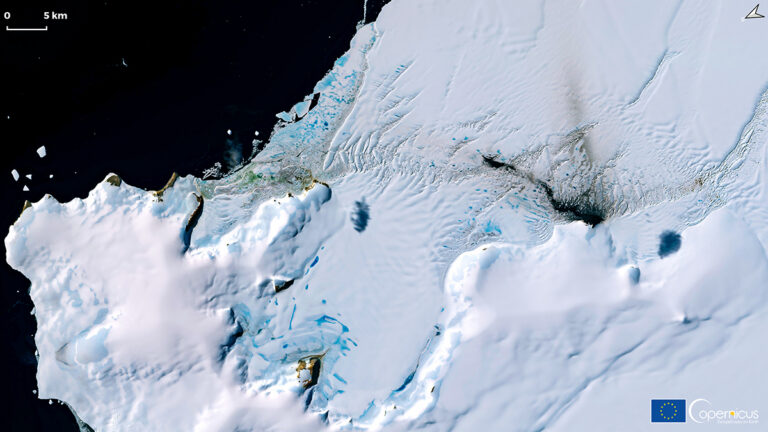
Antarctica is 600 miles (about 1,000 kilometers) from any major city, almost entirely uninhabited, and surrounded by a cold and inhospitable ocean. It might seem like the last place to expect anthropogenic pollution. But the continentâs freezing temperatures trap airborne and marine pollutants, a situation that has historically made it a sink for contaminants such as mercury, a heavy metal that can harm human and wildlife health.
âGlobal mercury pollution and climate change are not independent environmental problems.â
According to a new study published in the Proceedings of the National Academy of Sciences of the United States of America, mercury is accumulating in Antarctica much faster thanks to increasing anthropogenic mercury emissions.
Additionally, the study found the continentâs ice cap is releasing mercury faster than ever before as Antarctic ice melts in a warming climate and frees up long-stored mercury that then flows into the surrounding ocean. Together, these processes are turning Antarctica into an active source of mercury pollution rather than a long-term storage area, the authors write.
âClimate change acts as an amplifier of mercury cycling,â Maodian Liu, an environmental scientist at Peking University in China and coauthor of the new study, wrote in an email. âGlobal mercury pollution and climate change are not independent environmental problems.â
Dual Pathways
Previous research has shown that mercury reaches Antarctica through the atmosphere, traveling from sources such as coal plants and mining operations to settle on Antarctic ice and the Southern Ocean. And studies have suggested that mercury accumulation has increased in some regions of Antarctica over the past 2 centuries.
But there has been little evidence to tease apart two mechanisms of mercury accumulation: atmospheric deposition from human sources and the remobilization of trapped, frozen mercury as Antarctic glaciers melt.
To further investigate, Liu and the research team analyzed 16 sediment cores collected from the continental shelf off the Antarctic Peninsula. They used a variety of chemical analyses to determine the amount and sources of mercury that was deposited in the sediment over the past 200 years.
Nearly all the sediment cores showed a significant increase in mercury accumulation since industrialization (the mid-18th century). On average, cores in the region showed a 160% increase in accumulation since industrialization, with rates accelerating particularly quickly beginning in the 1950s.
âClimate change is not only increasing the amount of glacial meltwater but is also releasing legacy mercury that was previously stored on the Antarctic Peninsula.â
Further simulations of Earthâs mercury cycle and budget showed that glacier melt has greatly increased the amount of mercury that Antarctic glaciers are releasing into the ocean: The analysis showed a 550% increase in such releases of mercury since industrialization. The research team estimated that about 56% of the mercury detected in their Antarctic Peninsula seafloor cores originated from the atmosphere; the rest likely originated from glacier melt, weathering, and erosion of Antarctic ice and sediment.
âClimate change is not only increasing the amount of glacial meltwater but is also releasing legacy mercury that was previously stored on the Antarctic Peninsula,â Liu wrote.
The fact that the study indicates changes in the transport and processing of mercury in such a remote area makes the research noteworthy, said Charles Driscoll, an environmental engineer at Syracuse University who was not involved in the new research. Similar processes are happening elsewhere in the world: In the Arctic, permafrost thaw has begun to release trapped mercury into ecosystems, and in the northeastern United States, increasingly intense storms are accelerating erosion and mobilizing nutrients and metals, including mercury, Driscoll said.
The new study adds context to other indications of a changing global mercury cycle and shows a consistent global pattern, Driscoll said.
Methylmercury Matters
Once mercury accumulates in sediment, it can transform into methylmercury, a more toxic form that more readily accumulates in living organisms. Methylmercury enters and travels through the Antarctic food web, taken up by plankton, then krill, fish, seabirds, and marine mammals.
At sufficiently high doses, methylmercury can harm animalsâ neurology, behavior, growth, and reproduction, Liu wrote. And because some Antarctic krill and fish make their way into commercial fisheries, mercury pollution has the potential to affect human health, too.
Driscoll said heâd like to see more research to answer the question of how much mercury in the cold waters of the Antarctic shelf could be transformed into methylmercury; the process typically happens faster in warmer temperatures.
Liu hopes future research will determine whether the trends he and the research team noticed around the Antarctic Peninsula are representative of Antarctica as a whole.
Even if new mercury emissions from coal combustion, mining, and other human activities decrease, mercury stored in Antarctic ice will continue to be released as ice melts, meaning âenvironmental mercury burdens are unlikely to decline immediately in step with emission reductions,â Liu wrote.
âGrace van Deelen (@gvd.bsky.social), Staff Writer
Citation: van Deelen, G. (2026), Antarctica is releasing mercury faster than ever because of climate change, Eos, 107, https://doi.org/10.1029/2026EO260262. Published on 14 August 2026.
Text © 2026. The authors. CC BY-NC-ND 3.0
Except where otherwise noted, images are subject to copyright. Any reuse without express permission from the copyright owner is prohibited.

News reported through various sources and compiled with AI. This is automatically generated news content from known, popular, and reliable sources available at the time of publication.
We do not take any responsibility for, nor make any representations regarding, the accuracy, completeness, credibility, or
reliability of the content.
In case of any discrepancy, error, or copyright claim, we will promptly review and remove the content in question where appropriate.
We do not claim ownership of third-party content and assume no responsibility or liability whatsoever for any information contained herein. The credit, links and images are kept intact as an honest gesture, are property of its respective owners.