

 Editor's Desk



Heat, Drought, Wildfires: Climate Change Supercharges Disasters in Europe
This article originally appeared on Inside Climate News, a nonprofit, non-partisan news organization that covers climate, energy, and the environment. Sign up for their newsletter here.
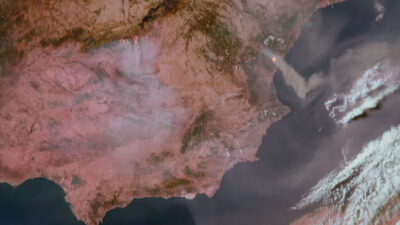
Parts of Western Europe are experiencing some of their worst wildfires in modern history amid one of the continentâs hottest-ever starts to the summerâduring a severe drought.
These weather extremes are interconnected as dry and hot conditions fuel worsening flames, particularly in France and Spain. Roughly 330,000 people there have been forced to flee their homes this monthâone of the largest evacuations in Europe since World War II. In Franceâs Bordeaux region, an intense blaze created its own weather system known as a fire cloud, which could trigger lightning that sparks new flames.
With another heat wave in the region this week, firefighters are scrambling to contain as many of the fires as they can before conditions worsen. The United States and Canada in recent weeks have also contended with a deadly mix of heat, fire and smoke that blanketed skies and worsened air quality across vast portions of the Northeast and Midwest regions of America.
Scientists and officials say these intertwined extremes are supercharged by climate changeâand a warning of whatâs to come if greenhouse gas emissions continue to surge.
âFire-Breathing Dragon of Cloudsâ
So far this year, wildfires in southwestern France have burned through about 287,000 acres. In the southwest Gironde region, one blaze alone has scorched an area four times the size of Paris, triggering widespread evacuations near Bordeaux, the wine capital of the world.
âThe fires which â â are hitting our country have reached a level previously unheard of,â French Prime Minister Sébastien Lecornu wrote on X â â on Saturday.
The largest fire in Gironde is so intense that it formed a pyrocumulonimbus, a large storm cloud generated when intense heat from a fire rises high enough in its smoke plume to meet cooler air in the upper atmosphere. There, moisture condenses to form a cloud. While that doesnât often produce precipitation that could put out the fires, it can form something that makes them worse: lightning. NASA has referred to these micro-weather systems as the âfire-breathing dragon of clouds.â
âItâs a David-versus-Goliath scenario: The idea is that, at some point, weâll find a weak spot and strike there.â
âImagine a campfire so large and hot that the smoke rising off it turns into a storm-like cloud,â Theodore M. Giannaros, a fire meteorologist at the National Observatory of Athens, told The Associated Press.
While fire clouds have been seen in Canada, the U.S. and Australia, officials say they are unprecedented in France. These conditions have made the large fire in Gironde exceptionally difficult to fight, Agence France-Presse reported.
âWe donât know how the blaze will spread; the fire front is constantly shifting. We cannot fight it directly,â Lt. Col. Eric Brocardi, the spokesman for the National Firefighters Federation of France, told AFP. âItâs a David-versus-Goliath scenario: The idea is that, at some point, weâll find a weak spot and strike there.â
Authorities say that fire has stabilized but is not fully contained, and a heat wave this week could stoke the flames once more or help fuel new fires. Meanwhile, in Spainâs Madrid region, multiple fires have forced about 79,000 people from their homes as hundreds of firefighters attempt to douse the flames with water-dropping aircraft and cut dry underbrush to limit the spread. Fires have also burned in the United Kingdom, including a blaze that broke out at the iconic Arthurâs Seat hill formation in Scotlandâs capital city of Edinburgh.
Inside Scoop: My colleague Johnny Sturgeon, who is based in London, saw the Edinburgh fireâs impact firsthand on a recent visit. I asked him to share what he witnessed:
As I cycled along Edinburghâs winding roads to watch the World Cup final with friends, plumes of gray drifted up from the cityâs world famous Arthurâs Seat. A few hours later, as Spain was crowned champion, crews were still out battling to contain Scotlandâs latest wildfire.
In many ways, however, the sight of smoke and the news of another raging inferno were unsurprising.
Heat waves have plagued the U.K. since the popular hiking spot was last ablaze in May. And as parts of the country now face this yearâs fourth heat wave, many other public parks are an arid yellow, devoid of recent rain and utterly dry. Little wonder to many Brits that almost 20 significant wildfires were burning across England and Wales by mid-July.
While major blazes continue in Scotlandâs Cairngorms National Parkâwith a major incident declared and hundreds of villagers told to evacuate this weekendâthe fire in the nationâs capital was brought under control not long after the footballâs final whistle. The land, however, is scarred. The once-green bushes are gone, charred-black stains left in their place.
Climate Connection
Spainâs prime minister, Pedro Sánchez, called the fires in the region âthe most painful expression of a climate emergencyâ and has urged the government to better plan for global warming impacts.
âThe scientific evidence linking increasingly extreme fire weather, as well as increasingly extreme wildfires themselves, to climate warming is clear.â
Climate scientist Daniel Swain echoed this warning in a recent post on X.
âThe conspicuous overlap between record-breaking warmth, dryness, and/or low snowpack and these fires is simply not a coincidence. The scientific evidence linking increasingly extreme fire weather, as well as increasingly extreme wildfires themselves, to climate warming is clear,â said Swain, an expert on extreme weather based at the University of California Agriculture and Natural Resources.
As a continent, Europe is heating up twice as fast as the global average, according to the European Unionâs Copernicus climate service. And researchers say climate changeâs fingerprints are all over the extreme weather that has hit Western Europe so far this summer. A recent attribution study found that the severity of the intense heat waves in the region, which I have covered in recent newsletters, would have been impossible without climate change.
The fallout from fires and heat have disrupted daily life in Spain and France in a slew of ways: families forced from their homes, crowded evacuation shelters, the final route of the famed Tour de France cycling competition shortened.
In the United States, firefighters are working to contain 92 large fires stoked by hot and dry weather, particularly out West. Smoke billowing from the region and British Columbia is once again forecast to blanket skies across the U.S. and Canada this week, the Washington Post reports.
But the most severe consequences of this hot, fiery summer have been far deadlier. In the United States, five wildland firefighters have died in recent weeks from injuries sustained while fighting or responding to blazes. Between June 17 and July 2, France recorded more than 5,700 excess deaths as parts of the country baked under a heat wave that regularly brought temperatures above 100 degrees Fahrenheit. More than 10 people have died in Europeâs wildfires since the start of July, The New York Times reports.
âThese are difficult hours,â Sánchez said at a Monday news conference while discussing the fires. âThis climate emergency is exceeding every threshold and scale that scientists have long warned all of Spain and Europe about.â
More Top Climate News
People are betting in prediction markets over wildfire outcomes, which experts say could create perverse incentives to commit arson, Laura Paddison reports for CNN. During the Los Angeles County wildfires in 2025, for instance, users on online prediction markets traded on a variety of factors, such as how many acres would burn and where the fire would spread. Fire researchers fear the implications of this trade market, not only for the crimes it could encourage but for the ways it could distance people emotionally from the suffering of others and the danger of these events.
President Donald Trump said last week that more than 200 businesses and politicians signed a voluntary pledge to help ensure Americans arenât footing the bill for the steep rise in electricity costs associated with data centers, Brad Plumer and Maxine Joselow report for The New York Times. First announced by Trump in February, the âratepayer protection pledgeâ aims to put the onus on tech companies to pay a greater portion of costs associated with the facilities that help power artificial intelligence. Though the pledge is largely symbolic, the Times reports, big players have signed on, including utilities like NextEra Energy and Southern Co. and some data center developers.
Researchers in Florida are bringing pieces of coral from underwater nurseries ashore ahead of a possible bleaching event this summer, Marta Lavandier and Tammy Webber report for The Associated Press. Due primarily to marine heat waves and bleaching, elkhorn corals in Florida are functionally extinct in the wild. Scientists have been propagating them in nurseries offshore, but decided to take them to a facility on land before bleaching could disrupt this effort.
Inside Climate News reporter Lauren Dalban contributed translation for this article.
âKiley Price (@kileyprice.bsky.social), Inside Climate News

News reported through various sources and compiled with AI. This is automatically generated news content from known, popular, and reliable sources available at the time of publication.
We do not take any responsibility for, nor make any representations regarding, the accuracy, completeness, credibility, or
reliability of the content.
In case of any discrepancy, error, or copyright claim, we will promptly review and remove the content in question where appropriate.
We do not claim ownership of third-party content and assume no responsibility or liability whatsoever for any information contained herein. The credit, links and images are kept intact as an honest gesture, are property of its respective owners.