

 Editor's Desk




Podcast episode 56: Nick Enfield on linguistic signs and concepts
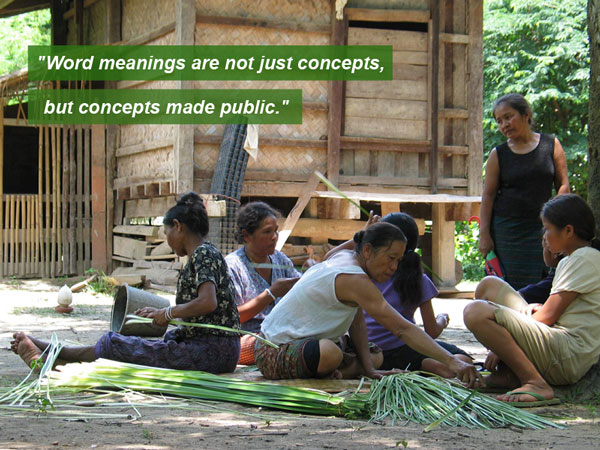
In this interview, we talk to Nick Enfield about his research into the connections between linguistic signs and concepts.
Download | Spotify | Apple Podcasts | YouTube
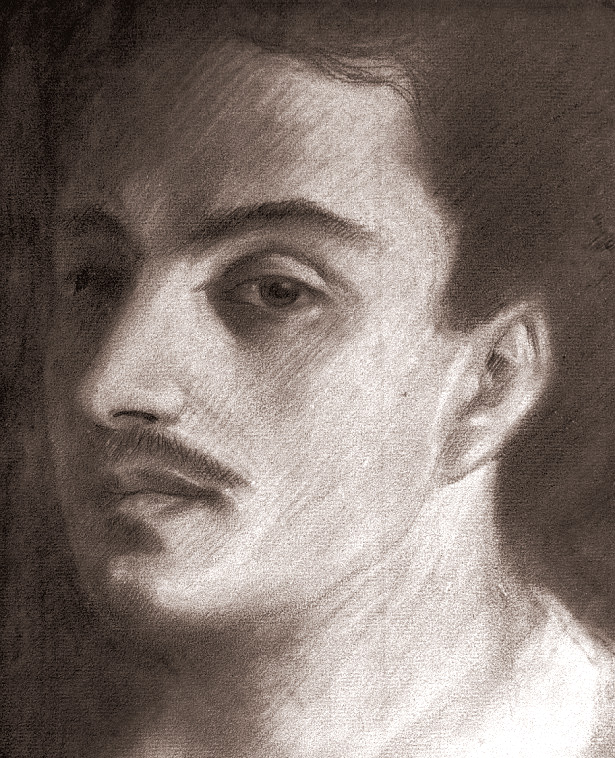
Image from Nick Enfield’s website
References for Episode 56
Dunbar, R. I. M. (2004). “Gossip in Evolutionary Perspective”, Review of General Psychology, 8(2): 100-110. https://journals.sagepub.com/doi/full/10.1037/1089-2680.8.2.100
Enfield, Nick J. (2022), “Linguistic concepts are self-generating choice architectures”, Phil. Trans. R. Soc. B 378: 20210352. https://doi.org/10.1098/rstb.2021.0352
Enfield, N. J. (2026). “The enchronic envelope”, Psychological Review, 133(2): 296–314. https://doi.org/10.1037/rev0000553
Kockelman, Paul. (2005). “The semiotic stance”, Semiotica, vol. 2005(157): 233-304. https://doi.org/10.1515/semi.2005.2005.157.1-4.233
Langacker, Ronald W. (1987), Foundations of Cognitive Grammar, 2 vols. Stanford: Stanford University Press.
Makkreel, Rudolf (2021), “Wilhelm Dilthey”, The Stanford Encyclopedia of Philosophy (Spring 2021 Edition), Edward N. Zalta (ed.), https://plato.stanford.edu/archives/spr2021/entries/dilthey/
Ogden, Charles Kay, and Ivor Armstrong Richards (1956 [1923]), The Meaning of Meaning, London: Kegan Paul.
Tomasello, Michael. 2008. Origins of Human Communication. Cambridge, Mass.: MIT Press. https://doi.org/10.7551/mitpress/7551.001.0001

News reported through various sources and compiled with AI. This is automatically generated news content from known, popular, and reliable sources available at the time of publication.
We do not take any responsibility for, nor make any representations regarding, the accuracy, completeness, credibility, or
reliability of the content.
In case of any discrepancy, error, or copyright claim, we will promptly review and remove the content in question where appropriate.
We do not claim ownership of third-party content and assume no responsibility or liability whatsoever for any information contained herein. The credit, links and images are kept intact as an honest gesture, are property of its respective owners.